Neem Tree may provide clues for affordable HIV treatment
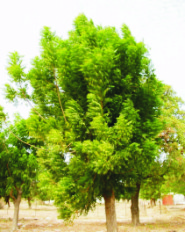 Traditionally in Indian subcontinent, Neem tree (Azadirachta indica) is considered as an important medicinal plant. Extracts from neem leaves, flowers and bark are routinely used to fight pathogenic bacteria and fungi. Neem branches are used instead of toothpaste and toothbrushes to keep teeth and gums healthy, and neem extracts are used to control the spread of malaria. Practitioners of Ayurvedic medicine even prescribe neem extracts, in combination with other herbs, to treat cardiovascular diseases and control diabetes.
Taking this clue from traditional Indian medicine system, Dr. Sonia Arora, Assistant Professor at Kean University in New Jersey initiated work to test the effectiveness of Neem extract against HIV infection. The results are very encouraging and she presented them as a poster at the Experimental Biology 2012 meeting in San Diego. Her preliminary analysis seems to suggest that there are compounds in neem extracts which target proteins essential for HIV replication.
On mining scientific literature, her group identified 20 compounds (including their derivatives) present in various types of neem extracts which could potentially interact and inhibit proteins critical for the HIV life-cycle. Dr. Arora’s group further discovered that most of the neem compounds attacked the Protease, a crucial enzyme essential for making new copies of the virus.
Currently, Dr. Arora”s group is performing experiments to validate their computer models/predictions using actual samples. If her work bears out, Arora is hopeful that the neem tree will give a cheaper and more accessible way to fight the HIV-AIDS epidemic in developing countries, where current therapies are priced at levels out of reach of many people.
(Source: Federation of American Societies for Experimental Biology (FASEB)
Millions of birds perish at Communication Towers?
 Every year nearly 7 million birds die as they migrate from the United States and Canada to Central and South America, according to a new USC study published on April 25 in the journal PLoS ONE.
The birds are killed by the 84,000 communication towers that dot North America and can rise nearly 2,000 feet into the sky, according to the authors of “An Estimate of Avian Mortality at Communication Towers in the United States and Canada.”
Placing that figure in context, the Exxon Valdez oil spill killed 250,000 birds and the Empire State building is 1,250 feet high.
“This is a tragedy that does not have to be,” said lead author Travis Longcore, associate professor in the USC Spatial Sciences Institute at the USC Dornsife College of Letters, Arts and Sciences.
The taller the tower the greater the threat, the study found. The 1,000 or so towers above 900 feet accounted for only 1.6 percent of the total number of towers. Yet these skyscraper towers killed 70 percent of the birds, about 4.5 million a year, Longcore said.
Most of the birds spent winter in places like the Bahamas and summer in Canada. With names like the Common Yellowthroat and the Tennessee Warbler, they could fit in the palm of one’s hand.
“These birds eat insects and keep our forests healthy,” Longcore said. “They are quite beautiful. We have a long history of appreciating birds. Millions of people watch birds.”
However, the birds are not generally killed by running into the tower itself but the dozens of cables, known as guy wires, that prop up the thin, freestanding structure, Longcore said.
During bad weather, the birds were pushed down by cloud cover and flew at lower altitudes. The clouds also removed navigation cues, such as stars, leaving only the blinking or static red lights of towers.
The blinking did not fool the birds, but towers with a static red light resulted in more dead birds.
(Source: University of Southern California.)
Lighting the way on heart attacks
Daylight may prevent problems, limit damage?
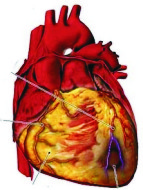 AURORA, Colo.- There are lots of ways to treat a heart attack – CPR, aspirin, clot-busters and more. Now CU medical school researchers have found a new candidate: Intense light.
“The study suggests that strong light, or even just daylight, might ease the risk of having a heart attack or suffering damage from one,” says Tobias Eckle, MD, PhD, an associate professor of anesthesiology, cardiology, and cell and developmental biology at the University of Colorado School of Medicine. “For patients, this could mean that daylight exposure inside of the hospital could reduce the damage that is caused by a heart attack.”
What’s the connection between light and a myocardial infarction, known commonly as a heart attack?
The answer lies, perhaps surprisingly, in the circadian rhythm, the body’s clock that is linked to light and dark. The circadian clock is regulated by proteins in the brain. But the proteins are in other organs as well, including the heart.
Eckle and Holger Eltzschig, MD, a CU professor of anesthesiology, found that one of those proteins, called Period 2, plays a crucial role in fending off damage from a heart attack. With an international team of expert scientists, including collaborators from CU’s Division of Cardiology and the mucosal inflammation program, they published their findings in the April 15, 2012, edition of the research journal Nature Medicine.
During a heart attack, little or no oxygen reaches the heart. Without oxygen, the heart has to switch from its usual fuel – fat – to glucose. Without that change in heart metabolism, cells die and the heart is damaged.
And here’s where the circadian rhythm comes in. The study showed that the Period 2 protein is vital for that change in fuel, from fat to glucose, and therefore could make heart metabolism more efficient. In fact, strong daylight activated Period 2 in animals and minimized damage from a heart attack.
Future studies will try to understand how light is able to change heart metabolism in humans and how this could be used to treat heart attacks in patients.
(Source: University of Colorado, Denver)?