A miracle in Gujarat farmer story
July 5, 2026
  • Read Ecopy
  • Circulation
  • Advertise
  • Careers
  • About Us
  • Contact Us
Android AppiPhone AppArattai
Organiser
  • ‌
  • Bharat
    • Assam
    • Bihar
    • Chhattisgarh
    • Jharkhand
    • Maharashtra
    • View All States
  • World
    • Asia
    • Europe
    • North America
    • South America
    • Africa
    • Australia
  • Editorial
  • International
  • Opinion
  • RSS @ 100
  • More
    • Op Sindoor
    • Analysis
    • Sports
    • Defence
    • Politics
    • Business
    • Economy
    • Culture
    • Special Report
    • Sci & Tech
    • Entertainment
    • G20
    • Azadi Ka Amrit Mahotsav
    • Vocal4Local
    • Web Stories
    • Education
    • Employment
    • Books
    • Interviews
    • Travel
    • Law
    • Health
    • Obituary
  • Subscribe
    • Subscribe Print Edition
    • Subscribe Ecopy
    • Read Ecopy
  • ‌
  • Bharat
    • Assam
    • Bihar
    • Chhattisgarh
    • Jharkhand
    • Maharashtra
    • View All States
  • World
    • Asia
    • Europe
    • North America
    • South America
    • Africa
    • Australia
  • Editorial
  • International
  • Opinion
  • RSS @ 100
  • More
    • Op Sindoor
    • Analysis
    • Sports
    • Defence
    • Politics
    • Business
    • Economy
    • Culture
    • Special Report
    • Sci & Tech
    • Entertainment
    • G20
    • Azadi Ka Amrit Mahotsav
    • Vocal4Local
    • Web Stories
    • Education
    • Employment
    • Books
    • Interviews
    • Travel
    • Law
    • Health
    • Obituary
  • Subscribe
    • Subscribe Print Edition
    • Subscribe Ecopy
    • Read Ecopy
Organiser
  • Home
  • Bharat
  • World
  • Operation Sindoor
  • Editorial
  • Analysis
  • Opinion
  • Culture
  • Defence
  • International Edition
  • RSS @ 100
  • Magazine
  • Read Ecopy
Home General

A miracle in Gujarat farmer story

Archive ManagerArchive Manager
Jan 14, 2012, 12:00 am IST
in General
Follow on Google News
FacebookTwitterWhatsAppTelegramEmail

A Matter Of Economics

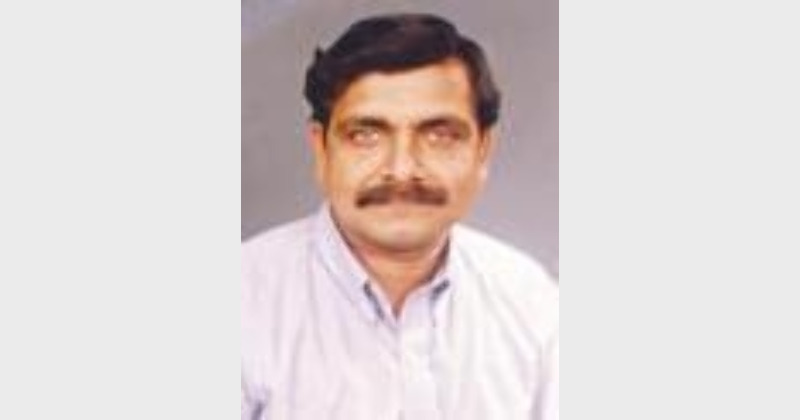
By Dr R. Balashankar

Growth has no meaning if it does not transform the lives of the poor. And if it cannot lift the living conditions in villages it is futile. That the Gujarat Chief Minister Narendra Modi has in the last one decade changed the face of his state is well established. But the miracle in the Gujarat model, the high growth trajectory and structural changes that Modi  has brought about in agriculture is yet to be widely appreciated.

The Planning Commission has noted it. The International Food Research Institute (IFRI) and other national and international agricultural bodies have acknowledged the amazing growth in agriculture in Gujarat. Consider also the fact that the national agriculture scene  is witnessing neglect, policy perversion and decline in post-liberalisation India. The entire focus being hogged by the corporate and consumerist overdrive.

Modi model has presented a total vision statement in action where industry, agriculture, technology, infrastructure and the consumer find synergy for the making of a welfare state. Which other Chief Minister thought of the importance of 24-hour assured power supply throughout the state as the best guarantee for growth? Who else can boast of building rural roads and markets as a precursor to rural development? Modi first ensured the availability of sufficient water  for irrigation before attempting a food revolution in a region not especially known for agriculture.

By March 2008, all the 13,693 village panchayats of Gujarat were equipped with required computer hardware and the internet connection. The project was implemented by Gujarat Government in partnership with IL&FS for infrastructure support and Google for technical expertise. This project represents a very successful PPP model implementation in Gujarat for infrastructure creation, maintenance, and operation. Significant role is played by Reliance Infocom in project implementation and Airtel in satellite connectivity. It is a combination of this and many such factors that has prompted comments like “phenomenal,” “incredible” and “miracle”— double digit annual agriculture growth when the overall national agriculture growth is limping at below two per cent.

Ravindra H Dholakia and Samar K Datta of IIM Ahmedabad in their interesting study (reviewed in Organiser dated  December 25, 2011), High Growth Trajectory and Structural Changes in Gujarat Agriculture make a critical appraisal of the scene. Their conclusion, “the spectacular agricultural growth in Gujarat in recent times has been  the result of a well thought out strategy, meticulously planned and co-ordinated scheme of action, sheer hard work and sincere implementation of programmes, political will to take bold decisions and commitment to economic policy reform by the state government. As such there is nothing magical or incredible about this growth story. It is reasonably replicable in other states and regions if firm determination exists.” This is the moot point.

In seven years the country has seen how absence of policy initiative and commitment to implementation of policies have gravely endangered the India story under Manmohan Singh.

How Modi fixed his goals and achieved them ensuring balanced growth at all levels is a fascinating instance in nation building. Samir K Datta, chairman of the Centre for Management in Agriculture says, the CMA faculty were being consulted and involved in the planning process, when the state government was evolving a good management system for Gujarat agriculture. On a visit to CMA, former President APJ Abdul Kalam, who was so impressed by the agro-revolution in Gujarat suggested to the faculty to take up a serious research study on the subject. Datta says, in any case it was a core area of the CMA mandate and naturally it could not “sit as a mere spectator when Gujarat agriculture made history by achieving double digit growth rate.” We will examine the details of this rare success story in a couple of future columns.

The CMA study explains how e-gram scheme, introduced by Modi Government has helped agricultural markets through efficient price discovery for best value, access to scientific expertise for farmers, and weather information. In addition, the common service centres have many spillover benefits for the villages of Gujarat, such as panchayat to panchayat communication, issue of documents (birth and death certificate, land ownership certificate) by village panchayats, payment of electricity and telephone bills, visa application, and e-postal service etc. The most relevant effect of the e-gram scheme is to provide a significant boost to the commercialisation of agriculture and encourage farmers to view agriculture as a potentially profitable business by opening up new horizons. People who talk of retail FDI as the panacea for Indian farmers, should take a look at the Gujarat experiment.

The performance of Gujarat has been more than exemplary in promoting agricultural production and exports during the last decade. In the same period, the growth of infrastructure was tremendous. The agricultural sector showed an unprecedented and sustained growth rate. The agricultural prices have sustained and not sunk in response to the rise in production and productivity, thereby letting the producers reap the benefits of improved agricultural output. This has become possible only because of  market expansion through exports, which was not possible earlier due to missing export-facilitating infrastructure.

Infrastructure has improved over the previous decade. The number of ports and their turnover has increased manifold. Road network, including rural roads, highways, and port-roads, has become extensive. Water and power, perhaps for the first time in the history of independent India, are systematically available for the masses at affordable prices. Also, the usage conflict among domestic, agricultural, and industrial sources is not reported.

Reform is about  fixing the sinews of development. This is what Gujarat has done.  FDI and MNC can wait and come in the natural course.

The usual lack of warehousing facilities has  been tackled through an innovative system of extensive Public-Private Partnership.  The penetration of both rural and urban telephony in Gujarat is comparable to world class and is still improving. Although overall connection numbers for internet in Gujarat are not encouraging, the successful implementation of e-gram scheme has virtually minimized the difference of technological facilities available between urban and rural areas. Here is gramodaya in action.

ShareTweetSendShareSend
✮ Subscribe Organiser YouTube Channel. ✮
✮ Join Organiser's WhatsApp channel for Nationalist views beyond the news. ✮
Previous News

Education in India: quo vadis?

Next News

SPECIAL POLL REPORT

Related News

A representative image

VB-G RAM G in UP: How new rural employment scheme replaces MGNREGA with 125 days of guaranteed work

Representative Image

Karnataka: BJP submits complaint to state election commission over alleged SIR irregularities

Rashtriya Swayamsevak Sangh (RSS) Sarkaryavah Dattatreya Hosabale addressing the gathering on the occasion of 80 years of Organiser's Foundation Day

Organiser @ 80 | Organiser is a sentinel of national interest and a vanguard of national security: Dattatreya Hosabale

(Left) SJTA Chief Administrator Dr. Arvind Kumar Padhee reviews works at Shri Gundicha Temple in preparation for Rath Yatra 2026 (Right) Construction of the three sacred chariots for Mahaprabhu Jagannath, Balabhadra and Devi Subhadra is progressing steadily ahead of the Holy Shree Gundicha Yatra (Rath Yatra) 2026 in Puri

Odisha: Rath Yatra preparations gain momentum; Gundicha Mandir repairs to finish before festival

Nagpur, Jul 03 (ANI): Rashtriya Swayamsevak Sangh (RSS) chief Mohan Bhagwat speaks during the conclusion of a series of 100 videos based on the lives of Sangh pracharaks and the release of the 101st episode of the audio-visual series "Asu Ame Sukhane, Patthar Payaatil" to mark the centenary of the Rashtriya Swayamsevak Sangh, in Nagpur on Friday. (ANI Photo)

RSS focuses on character building, not controlling organisations by remote control: Dr Mohan Bhagwat in Nagpur

RSS Sarkaryavah Dattatreya Hosabale

“Unfortunate and painful, true Dharmikta must be restored”: Dattatreya Hosabale

Load More

Latest News

A representative image

VB-G RAM G in UP: How new rural employment scheme replaces MGNREGA with 125 days of guaranteed work

Representative Image

Karnataka: BJP submits complaint to state election commission over alleged SIR irregularities

Rashtriya Swayamsevak Sangh (RSS) Sarkaryavah Dattatreya Hosabale addressing the gathering on the occasion of 80 years of Organiser's Foundation Day

Organiser @ 80 | Organiser is a sentinel of national interest and a vanguard of national security: Dattatreya Hosabale

(Left) SJTA Chief Administrator Dr. Arvind Kumar Padhee reviews works at Shri Gundicha Temple in preparation for Rath Yatra 2026 (Right) Construction of the three sacred chariots for Mahaprabhu Jagannath, Balabhadra and Devi Subhadra is progressing steadily ahead of the Holy Shree Gundicha Yatra (Rath Yatra) 2026 in Puri

Odisha: Rath Yatra preparations gain momentum; Gundicha Mandir repairs to finish before festival

Nagpur, Jul 03 (ANI): Rashtriya Swayamsevak Sangh (RSS) chief Mohan Bhagwat speaks during the conclusion of a series of 100 videos based on the lives of Sangh pracharaks and the release of the 101st episode of the audio-visual series "Asu Ame Sukhane, Patthar Payaatil" to mark the centenary of the Rashtriya Swayamsevak Sangh, in Nagpur on Friday. (ANI Photo)

RSS focuses on character building, not controlling organisations by remote control: Dr Mohan Bhagwat in Nagpur

RSS Sarkaryavah Dattatreya Hosabale

“Unfortunate and painful, true Dharmikta must be restored”: Dattatreya Hosabale

Eleven Years of Digital Innovation Transforming everyday life across India

A Decade of Digital India: Revolutionising payment & healthcare ecosystem; Making everyday life easier for Indians

EPF gets its biggest overhaul in 74 years: What the new rules mean for salaried employees

PFI weapon trainer Ayoob - RSS leader Sreenivasan (Left to Right)

Keralam: PFI weapon trainer Ayoob surrenders before Kochi NIA Court in RSS leader Sreenivasan murder case

Meenakshi Amman Mandir

Top 10 Tallest Gopurams in India: Exploring the magnificent Mandir towers of Dravidian architecture

Load More
  • Privacy
  • Terms
  • Cookie Policy
  • Refund and Cancellation
  • Delivery and Shipping

© Bharat Prakashan (Delhi) Limited.
Tech-enabled by Ananthapuri Technologies

  • Home
  • Search Organiser
  • Bharat
    • Assam
    • Bihar
    • Chhattisgarh
    • Jharkhand
    • Maharashtra
    • View All States
  • World
    • Asia
    • Africa
    • North America
    • South America
    • Europe
    • Australia
  • Editorial
  • Operation Sindoor
  • Opinion
  • Analysis
  • Defence
  • Culture
  • Sports
  • Business
  • RSS @ 100
  • Entertainment
  • More ..
    • Sci & Tech
    • Vocal4Local
    • Special Report
    • Education
    • Employment
    • Books
    • Interviews
    • Travel
    • Health
    • Politics
    • Law
    • Economy
    • Obituary
  • Subscribe Magazine
  • Read Ecopy
  • Advertise
  • Circulation
  • Careers
  • About Us
  • Contact Us
  • Policies & Terms
    • Privacy Policy
    • Cookie Policy
    • Refund and Cancellation
    • Terms of Use

© Bharat Prakashan (Delhi) Limited.
Tech-enabled by Ananthapuri Technologies