PUBLIC disgust over large sections of media indulging in unethical means to mint money during the 2009 parliamentary elections has triggered a national debate prompting the Election Commission to take note and the Press Council of India to constitute a committee to go into the complaints lodged with it against numerous newspapers and channels for demanding and accepting money for publishing advertisements as news. The committee is unlikely to identify media houses that are guilty of the crime against democracy simply because most of the transactions were in cash enabling defendants to flatly deny they took money for printing advertisements as news. It is gratifying that conscientious journalists and publishers were the first to raise their voice against this pernicious practice.
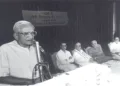
Bhopal-based MLC University of Journalism and Mass Communication and Indian Media Centre (IMC)-a professional body of journalists committed to media ethics-organised well-attended seminars at Delhi and Shimla respectively to focus public attention on the issue that has greatly undermined the credibility of media and the election process. The Hindu and some other media houses took up the matter in right earnest and carried investigative stories on the malpractice.
Political parties, particularly the BJP, too came out strongly blaming unnamed media houses for forming cartels and blackmailing political parties during the elections. Leader of the Opposition, Sushma Swaraj, made the startling disclosure that she resisted pressures from media houses that had demanded around Rs one crore for getting favourable coverage for her Lok Sabha campaign. Not to be left behind, Punjab Chief Minister Parkash Singh Badal too complained that political parties and candidates were obliged to incur very high “media expenses” during elections and demanded regulation of media to curb this malpractice.
In a clever move to obfuscate the enormity of the crime, certain media organisations are making noises about their ‘deep concern’ over the developments. Ironically, some leaders of these organisations are under cloud for converting elections into a money-spinning machine.
Their channels were part of the cartel that virtually blackmailed cash-rich parties to fall in line or face total black out during elections. That their concern for media ethics is skin-deep couldn’t remain a secret for long. The broad consensus at a recent meeting of four media bodies in Delhi to discuss the issue was that the best one can hope for was disclosure. To put it bluntly, the wisdom was that media would take money for coverage but would indicate that it was paid for. Ironically, the current president of Editors Guild of India-an organisation that strongly condemned the paid news syndrome and approached the Election Commission to intervene effectively-was reported to have confessed at the meeting that they would have to do it for they have to show profits as their channels were listed quarter by quarter.
The phenomenon of favourable election-related reports in lieu of money was prevalent long before 2009. Certain mass-circulated dailies of Maharashtra, Gujarat and Punjab had mastered the art of making money through “table news” about electoral prospects of candidates and parties. It caught the imagination of publishers in Assembly elections in Punjab and several other states in the year 2007. It was no longer a lowly stringer demanding a cut, it were the owners of newspapers and news channels that joined the dirty race to mint money. Correspondents were reduced to the status of middlemen to collect money from candidates and parties. They openly demanded money from candidates for publishing ‘news’ written in campaign headquarters of the candidates concerned. Readers were outraged when a Jalandhar-based daily carried reports about bright prospects of two rival candidates contesting from the same constituency-Ludhiana rural-on the front page of one of its issues. The editor and management of the newspaper remained unmoved and carried on with their ‘business’. A lot has been written about how identical reports praising Maharashtra Chief Minister appeared in a number of dailies as ‘news’ in mass-circulated dailies of that state. One doesn’t want to deal with it at length as the matter is now before the courts. Suffice it to say that the disease spread like an epidemic in 2009 elections when only a handful of publishers and owners of channels resisted temptations to indulge in this malpractice. The Indian Express, The Hindu and Prabhat Khabar are amongst the notable exceptions against whom there are no complaints in this regard.
Paid news in election-related matters is self-defeating. It won’t ensure the victory of anyone as the service is also available to the rival candidates. In any case, media credibility being what it is, voters are not taken in by these manufactured reports. Political parties that are equally guilty for “buying” editorial space seem to have realised the futility of paid news and are now blaming the media for blackmailing them. Elections used to be a great fun what with banners, flags and buntings decorated cities and towns and huge processions of supporters walking down the streets with loud-speakers blurting out popular songs and slogans. Restrictions imposed by the Election Commission on all these to check noise pollution and role of money in elections made candidates and parties more dependent on mass media for reaching out to voters. Media exploited the situation to the hilt. Totally unacceptable arguments were thrown around. One such indefensible argument is that since politicians raise huge funds for elections, there is nothing wrong in media demanding a share in it.
The larger issue is the demise of the media ethics. It is a complex problem that can’t be solved by legal means alone. All players in the field-publishers/owners, editors, journalists, media institutions, professional bodies of media persons and concerned citizens -will have to put their heads together to find effective solutions and launch a movement to revive media ethics. Self-regulation is the most desirable route if freedom and independence of the media is to be ensured. Press Council of India is toothless and deals only with print media. The Parliament needs to set up a Media Council of India as an instrument of self-regulation. Utmost care will have to be taken that members of the proposed Council enjoy the confidence of the media and carry conviction with the people. What is at stake is not only the credibility of the media but also that of the entire election process and the democratic set-up.