India is seeking to take its export growth deeper into the country through the Districts as Export Hubs (DEH) Initiative, a district-led strategy designed to identify products and services with international potential and connect local producers with overseas markets.
The initiative aims to make India’s export growth more inclusive by using the distinctive economic strengths of individual districts. Instead of concentrating export activity in established industrial centres and major port cities, the Government is seeking to bring products from smaller towns, rural areas and remote regions into the global marketplace.
The approach builds on the One District One Product (ODOP) model but goes beyond identifying and promoting a particular product. The Districts as Export Hubs framework focuses on creating a wider export ecosystem involving market access, logistics, infrastructure, quality standards, packaging, branding, certification and capacity building.
As of January 2026, the initiative covered more than 770 districts across the country.
Taking district strengths to international markets
India’s export performance has expanded significantly in recent years. According to the Government release, the country’s total exports of goods and services reached an all-time high of US825.25 billion dollars in 2024-25 and were estimated to increase to US863.11 billion dollars in 2025-26.
However, export activity has historically been concentrated around established manufacturing clusters, large industrial centres and cities with access to ports and developed logistics infrastructure.
The Districts as Export Hubs initiative seeks to change that pattern by identifying export opportunities within districts themselves.
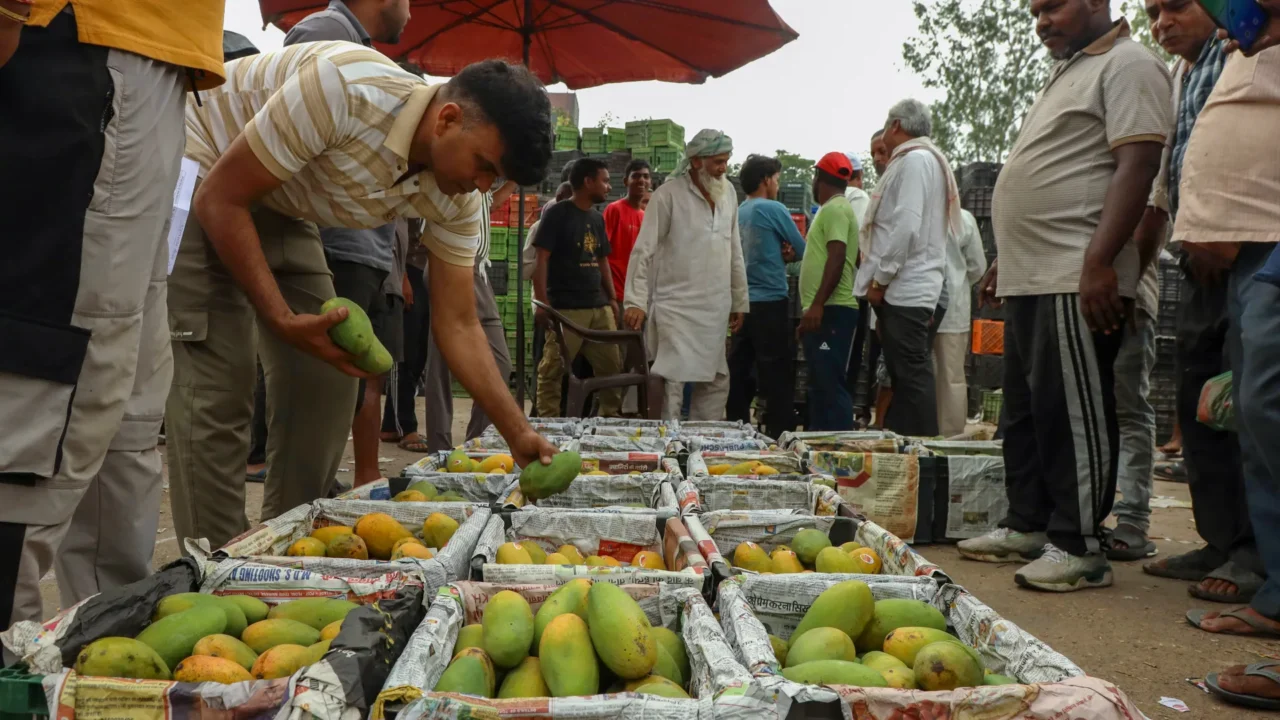
The basic idea is that every district has economic strengths that can potentially be connected with global demand. These strengths may come from traditional crafts, agricultural products, food processing, manufacturing, engineering goods or products that have geographical identity.
Examples cited under the initiative include Bastar’s iron craft, Jalgaon’s bananas and Meghalaya’s Mandarin oranges.
Such products represent the kind of district-level economic activity that the Government believes can be developed further through better market access, improved quality standards, stronger branding and more efficient logistics.
The objective is not simply to increase exports from existing hubs but to create additional export centres across the country.
From One District One Product to district-level export planning
The Districts as Export Hubs framework builds on the experience of ODOP.
The One District One Product approach focused on identifying distinctive products associated with particular districts and promoting their production and visibility. DEH takes this concept further by treating the district itself as a unit of export planning.
Under this approach, the question is not only what a district produces but also what is required to make that product competitive in international markets.
This includes examining production capacity, quality requirements, packaging, certification, transportation, logistics, market demand and access to overseas buyers.
The initiative therefore seeks to develop a complete export ecosystem around district-level products and services.
Importantly, DEH is a convergence framework rather than a separate funding scheme. It aims to use existing Central and State government schemes and bring them together to address the specific challenges faced by individual districts.
This allows the export strategy to be tailored according to local requirements rather than following a uniform model across the country.
District Export Action Plans at the centre
A key component of the initiative is the preparation of District Export Action Plans (DEAPs).
These plans are designed to provide a roadmap for developing exports from individual districts. They identify products and services that have export potential and examine the infrastructure and logistics needed to support their international marketing.
The plans also seek to identify bottlenecks that may prevent local businesses from entering overseas markets.
These could include issues related to transportation, packaging, testing, certification, production capacity, market information or regulatory compliance.
As of March 2026, draft DEAPs had been prepared for 590 districts, of which 249 had been formally adopted by their respective District Export Promotion Committees.
The plans are intended to give districts a more structured approach to export promotion and help coordinate the work of government agencies, businesses and other stakeholders.
Three-tier system connects Centre, States and districts
The Districts as Export Hubs initiative operates through a three-tier institutional framework involving the Centre, State governments and district-level bodies.
At the national level, the Department of Commerce provides overall policy direction.
The Directorate General of Foreign Trade (DGFT) serves as a key implementing institution, facilitating coordination and monitoring progress.
At the State level, State Export Promotion Committees guide implementation and work towards convergence among different departments and agencies.
At the district level, District Export Promotion Committees (DEPCs) identify local export opportunities and work to address barriers faced by exporters.
The DEPCs also coordinate with exporters, industry representatives and other stakeholders.
Their role is particularly important because export challenges can vary significantly from one district to another. A district producing agricultural goods may face different requirements from one specialising in engineering products or traditional handicrafts.
District-level planning allows these differences to be taken into account.
Focus on quality and international standards
Identifying an exportable product is only the first step towards entering an international market.
Products intended for overseas buyers often have to meet specific quality, packaging, testing, labelling and certification requirements.
The DEH initiative therefore includes awareness and capacity-building programmes to help local businesses understand international standards and improve their export readiness.
Testing, packaging, branding and certification are among the areas receiving attention.
This is particularly relevant for micro, small and medium enterprises, which may have strong products but limited experience with international markets.
By helping such businesses understand export procedures and international requirements, the initiative seeks to reduce some of the barriers that prevent smaller enterprises from becoming exporters.
Digital platforms open access to global buyers
Digital platforms are another important part of the strategy.
Partnerships with e-commerce and logistics platforms are intended to provide MSMEs with more cost-effective ways of reaching international customers.
For smaller producers, traditional export channels can involve several intermediaries and require substantial resources. Digital platforms can provide another route to overseas markets by allowing businesses to showcase products and reach customers beyond their immediate geographic area.
The approach is particularly relevant for products such as handicrafts, traditional goods and specialised agricultural or processed-food products that may have niche demand in international markets.
The Government’s aim is to use digital connectivity to reduce some of the geographic limitations faced by smaller producers.
Dak Ghar Niryat Kendras support small exporters
India Post is also playing a role through Dak Ghar Niryat Kendras.
These centres provide postal export facilities, including support related to documentation, packaging and the movement of small consignments.
For small producers and first-time exporters, access to such facilities can make it easier to understand and complete the practical requirements involved in sending products to overseas markets.
The use of the postal network also supports the larger objective of taking export opportunities beyond major commercial centres.
Instead of requiring every small producer to be located near a major port or established export hub, postal export facilities can help connect smaller businesses with international markets.
Building export capacity at the district level
DGFT Regional Authorities and district administrations are conducting capacity-building and awareness programmes under the initiative.
These programmes cover areas such as export procedures, logistics planning, packaging requirements and regulatory compliance.
The objective is to help local enterprises understand the complete export process.
Several institutions are supporting these efforts, including the Export Credit Guarantee Corporation, Export Promotion Council for Handicrafts, Federation of Indian Export Organisations, Ministry of Micro, Small and Medium Enterprises, India Post and Exim Bank.
Their involvement brings together expertise in areas ranging from export finance and risk protection to market access, handicrafts, MSME development and logistics.
Diverse products mapped for export potential
The Districts as Export Hubs initiative covers a wide range of products and sectors.
These include Geographical Indication-tagged products, agricultural clusters, toy clusters and engineering goods, among others.
The diversity reflects the different economic strengths found across India’s districts.
Jalgaon, for instance, has been identified for products including bananas and Bharit brinjal.
Bastar has potential in areas including iron craft, rice, jowar and maize.
Other districts have been mapped for sectors and products such as ceramics, tiles, minerals, agro-processing, glass, bamboo craft and cashew.
The exercise is intended to identify where existing production can be connected with export demand and where improvements may be required to make local products internationally competitive.
Exim Bank partnership for grassroots development
The Government has also partnered with Exim Bank under its Grassroots Initiatives for Development programme.
Six districts have been selected for support under this programme: Anantapur, Raipur, Solan, Tiruppur, Kanpur and Kolhapur.
The objective is to support district-level export development by identifying opportunities and addressing specific challenges that may limit the ability of local businesses to access international markets.
The selection of districts with different economic profiles also reflects the wider objective of creating multiple export hubs rather than relying on a limited number of established centres.
Tiruppur shows the potential of district export hubs
Tiruppur provides one example of how a district can develop into a major export centre.
Known as India’s knitwear capital, Tiruppur recorded exports of Rs 46,000 crore in financial year 2025-26, according to the Government release.
The Tiruppur Exporters Association has set a target of Rs 1 trillion in exports by 2030.
The district’s experience demonstrates the potential of specialised manufacturing clusters to become globally competitive when production capabilities, supply chains, skilled workers and export markets develop together.
The Districts as Export Hubs initiative seeks to replicate this kind of export-oriented growth in other districts, while also helping emerging districts overcome the infrastructure and market-access barriers that established clusters may already have addressed.
Outcome-oriented implementation from June 2026
The Government has adopted a more focused and phased approach to implementing the initiative from June 1, 2026.
The first phase covers districts across 27 States and Union Territories, with support from 24 DGFT Regional Authorities and 11 partner agencies.
The emphasis is on measurable outcomes rather than simply completing administrative exercises.
Among the targeted outcomes are increasing the number of new exporters and raising export values through the convergence of existing Central and State schemes.
The strategy also places emphasis on leveraging GI products and MSME clusters to expand the country’s export base.
This outcome-oriented approach seeks to ensure that district export plans translate into actual commercial opportunities for local producers.
Creating jobs through export-led local growth
One of the broader objectives of the initiative is to link exports with manufacturing and employment.
When a district develops an export-oriented product or sector, increased demand can create opportunities across the local value chain.
These may include production, processing, packaging, transportation, warehousing, logistics and other supporting services.
For rural and smaller-town economies, such expansion can create employment closer to where people live.
The Government’s district-led approach therefore seeks to make exports not only a measure of international trade but also a driver of local economic development.
Bringing smaller districts into India’s export story
The Districts as Export Hubs initiative represents a shift in how India’s export potential is being viewed.
For decades, exports have been strongly associated with major industrial clusters, metropolitan centres and cities located close to ports. The DEH approach seeks to broaden that map.
A district does not necessarily have to be a major industrial centre to have something that the global market values.
It may have a traditional craft, a distinctive agricultural product, a specialised manufacturing cluster, a GI-tagged product or an emerging service capability.
The challenge is to connect that local strength with international demand.
That requires more than production. It requires quality, certification, branding, packaging, logistics, market information, digital access and institutional support.
This is the gap that the Districts as Export Hubs framework is designed to address.
A wider export ecosystem
With more than 770 districts covered, the initiative has created a broad framework for identifying and developing export opportunities across India.
The preparation and adoption of District Export Action Plans, the involvement of State and district committees, partnerships with export institutions and the use of digital and postal platforms are all intended to strengthen the connection between local producers and international markets.
The programme’s success, however, will ultimately depend on how effectively these plans translate into new exporters, higher export values, better market access and stronger local production ecosystems.
By bringing districts into the centre of export planning, the Government is seeking to build a more geographically diverse export economy in which local products can find global markets and local enterprises can become part of international supply chains.
In this model, the district becomes more than a production centre. It becomes an export hub, linking local skills, products and businesses with opportunities beyond India’s borders while supporting manufacturing, entrepreneurship and employment at the grassroots level.