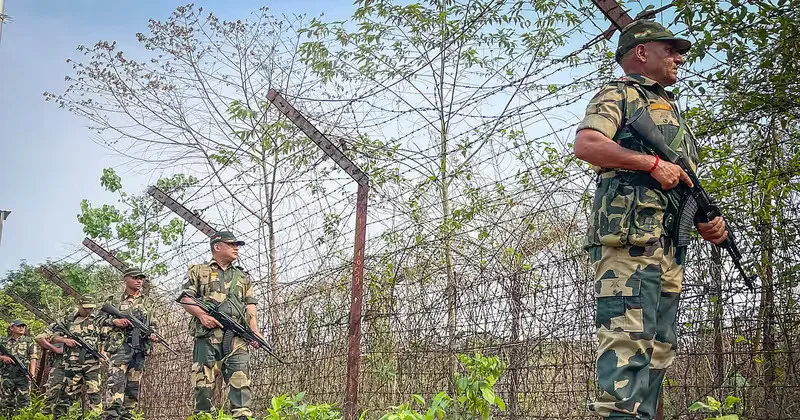
India is set to significantly bolster its intelligence capabilities along the eastern frontier, with the Union Home Ministry planning to establish nearly 40 permanent Subsidiary Intelligence Bureau(SIB) offices across West Bengal’s districts bordering Bangladesh. Requiring nearly 50 acres of land to materialise the national security apparatus, the proposed intelligence units are aimed at strengthening surveillance, counter-infiltration operations and intelligence gathering. The strategic decision comes amid growing security concerns along the 2,217-kilometre porous and largely unfenced India-Bangladesh border.
The move marks a major expansion of India’s domestic intelligence infrastructure in one of the country’s most strategically sensitive border regions. The proposed Intelligence Bureau units in Bangladesh border are expected to provide a permanent operational presence for intelligence personnel, thereby improve capabilities to collect and analyse the critical information relating to illegal infiltration, smuggling networks, organised crime and other cross-border security threats.
Centre seeks 50 acres for permanent intelligence infrastructure
According to reports, the Ministry of Home Affairs (MHA) and the West Bengal Home Department have already held discussions on the implementation of the project and the identification of suitable land area to establish IB units. Under the proposal, each SIB unit is expected to require between one and one-and-a-half acres, taking the total land requirement to approximately 50 acres across multiple border districts.
Once the land is formally transferred by the West Bengal government, the Intelligence Bureau is expected to independently develop the proposed infrastructure. The new establishments will reportedly function as integrated office-cum-residential campuses. This would mark a shift from the rented premises currently used by several SIB units outside Kolkata.
Dedicated facilities are expected to provide intelligence personnel with secure workplaces and residential accommodation, allowing officers to remain closer to sensitive operational areas.
Permanent campuses could also strengthen operational confidentiality. Intelligence units routinely deal with highly sensitive information linked to national security. Thus making secure infrastructure is crucial for protecting communications, records and personnel. Purpose-built facilities equipped with modern communication and surveillance systems could therefore improve both institutional security and operational efficiency.
Focus on mitigating infiltration, smuggling and cross-border networks
The proposed expansion of the intelligence units come amid heightened security concerns along the India-Bangladesh frontier. The border in West Bengal remains particularly sensitive because of its extensive cross-border movement and difficult terrain, which is also porous.
The 2,217-kilometre India-Bangladesh border stretches across several Indian states, with West Bengal accounting for a substantial portion. Nearly 600 kilometres of the entire frontier remain unfenced, posing additional challenges for border management.
Security agencies remain concerned about infiltration, smuggling networks, counterfeit currency circulation, organised criminal activity and the movement of individuals linked to hostile or extremist networks. The evolving security environment in Bangladesh following the political turbulence that began in 2024 has further intensified the risks.
The new SIB units, thus are expected to play a crucial role in strengthening human intelligence capabilities. Their responsibilities could include monitoring suspicious movements, identifying infiltration routes and networks, tracking sleeper cells, developing intelligence on organised smuggling operations and undertaking security activities.
By establishing intelligence units closer to vulnerable border sectors, authorities hope for swift response mechanisms to anti-national activities and ensure that information collected on the ground can be quickly analysed and shared with operational agencies.
The intelligence expansion is also expected to complement the Centre’s efforts to strengthen physical border infrastructure. The West Bengal government recently transferred 142.79 acres of land to the Border Security Force (BSF) for constructing border outposts and facilitating barbed-wire fencing across nine districts. These include Cooch Behar, Jalpaiguri, Darjeeling, North Dinajpur, South Dinajpur, Malda, Murshidabad, Nadia and North 24 Parganas.
The simultaneous strengthening of physical and intelligence infrastructure is expected to improve coordination between the Intelligence Bureau, BSF and state law-enforcement agencies. A stronger intelligence network could enable security forces to receive real-time information about suspicious movements and emerging threats, thereby consolidate swift action network and strengthen national security architecture.