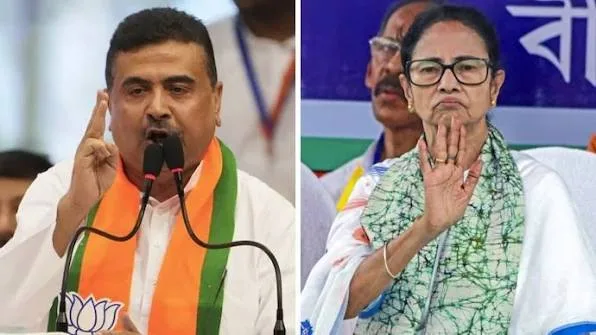
The West Bengal Assembly is set for a high-voltage political showdown on Monday as the BJP government prepares to introduce the Uniform Civil Code (UCC) Bill, one of its key electoral promises. While the legislation is expected to spark a fierce confrontation between the ruling BJP and the opposition, it will also serve as the first major test for the rival factions within the Trinamool Congress (TMC) following the party’s defeat in the Assembly elections.
The debate is likely to expose the growing power struggle between the camps led by former Chief Minister Mamata Banerjee and Leader of Opposition Ritabrata Banerjee, both of whom have announced plans to oppose the proposed law.
BJP Set to Introduce UCC Bill
Less than two months after ending the Trinamool Congress’s 15-year rule in West Bengal, the BJP government is preparing to table the Uniform Civil Code Bill in the state Assembly.
The proposed legislation seeks to establish a common legal framework governing matters such as marriage, divorce, inheritance and adoption, replacing religion-based personal laws with a uniform set of laws applicable to all citizens.
The BJP has long argued that a Uniform Civil Code is necessary to ensure equality before the law and remove legal disparities that exist under different personal law systems. The party has repeatedly included the UCC among its major policy commitments and views the Bill as a landmark reform.
If passed, it would become one of the most significant legislative measures enacted by the state’s first BJP government.
Mamata Camp Gears Up for Opposition
Former Chief Minister Mamata Banerjee has reportedly directed her supporters to strongly oppose the legislation both inside and outside the Assembly.
At a meeting with party legislators on Friday, she is said to have expressed concerns about the proposed law’s impact on India’s diversity and pluralistic social fabric. Leaders aligned with her faction are expected to argue that a measure of such significance requires wider social and political consensus before implementation.
The Mamata camp is likely to position its opposition around constitutional principles, federal concerns and the rights of various communities.
Ritabrata Faction Also Opposes Bill
The rival faction led by Leader of Opposition Ritabrata Banerjee has also raised objections to the government’s move.
While opposing the legislation, the group has focused on the manner in which the Bill is being introduced. Ritabrata Banerjee has argued that a matter as important as the Uniform Civil Code should be preceded by extensive consultation and public discussion.
His camp is expected to use the Assembly debate to project itself as the principal opposition force in the state.
First Big Showdown After TMC Split
The UCC debate comes at a time when the Trinamool Congress is grappling with one of the biggest internal crises in its history.
The split within the party became evident after the Assembly elections when 58 of the party’s 80 MLAs reportedly backed Ritabrata Banerjee’s claim to the post of Leader of the Opposition instead of the candidate supported by the party leadership.
The rebel camp now claims the support of nearly 65 legislators, significantly strengthening its position within the Assembly.
As a result, the discussion is expected to be more than just a clash between the BJP and the opposition. It is also likely to become a battle for dominance within the fractured Trinamool Congress.
Why UCC Matters in West Bengal
The Uniform Civil Code debate carries particular significance in West Bengal due to the state’s diverse demographic composition.
Political parties are closely watching minority-dominated districts such as Murshidabad, Malda and parts of North Dinajpur, where the issue could have important political implications.
Supporters of the UCC argue that a common legal framework would strengthen rights related to marriage, divorce and inheritance, particularly for women. Opponents, however, contend that any such reform must be implemented only after broad consultation and consensus-building among affected communities.
The issue is therefore expected to influence not only legislative proceedings but also future political alignments in the state.
High Stakes for BJP and Opposition
For the BJP government, the introduction of the UCC Bill represents a major opportunity to deliver on a key electoral promise and establish its reform agenda in West Bengal.
For the divided opposition, the debate presents an equally important challenge. Both TMC factions will seek to use the discussion to consolidate support and strengthen their political standing after the party’s electoral defeat.
With political stakes running high, Monday’s Assembly session is expected to be one of the most closely watched debates since the BJP assumed power in the state.