Mahasamund: India’s mineral wealth may have gained a glittering new chapter. In a development that has excited geologists, mining experts and policymakers alike, five diamonds—including two gem-quality stones- have been recovered during scientific exploration in Chhattisgarh’s Mahasamund district. Though modest in size, the discovery is being viewed as a potentially significant breakthrough that could point to the existence of an entirely new diamond-bearing belt in central India.
A WHOLE HOARD OF KOH-I-NOORS!
DIAMOND BELT IN INDIA?
Gem-Quality Diamonds Discovered in Mahasamund, Signalling a Potential New Diamond Belt for India. Five diamonds with a total weight of 1.22 carats have been recovered. Among the recovered stones are two gem-quality whitish… pic.twitter.com/o5rkQv8fbl— Rahul Shivshankar (@RShivshankar) June 23, 2026
The diamonds were recovered from the Baloda-Belmundi Diamond Block in the Saraipali region of Mahasamund district, around 70 kilometres from Raipur. The find has been officially confirmed by NMDC-CMDC Limited, a joint venture between the National Mineral Development Corporation (NMDC) and the Chhattisgarh Mineral Development Corporation (CMDC), which has been carrying out systematic exploration in the area.
For a country that dominates the global diamond cutting and polishing industry but relies heavily on imported rough diamonds, the discovery carries both geological and economic significance.
A Small Find with Big Implications
The recovery consisted of five diamonds weighing a combined 1.22 carats, extracted after processing 200 tonnes of bulk sample material from the exploration block.
The recovered stones include:
Two gem-quality whitish diamonds weighing 0.19 carats and 0.06 carats respectively.
One yellowish non-gem diamond weighing 0.32 carats.
Two brownish non-gem diamonds weighing 0.59 carats and 0.06 carats.
While the total weight may appear modest, mining experts emphasise that the significance lies not in the size of the initial recovery but in the presence of gem-quality diamonds at such an early stage of exploration.
Historically, many commercially successful diamond mines around the world began with similarly small but promising discoveries. The recovery of transparent, high-quality diamonds from preliminary bulk sampling is often regarded as a strong geological indicator of a potentially larger resource hidden beneath the surface.
Scientific Exploration Pays Off
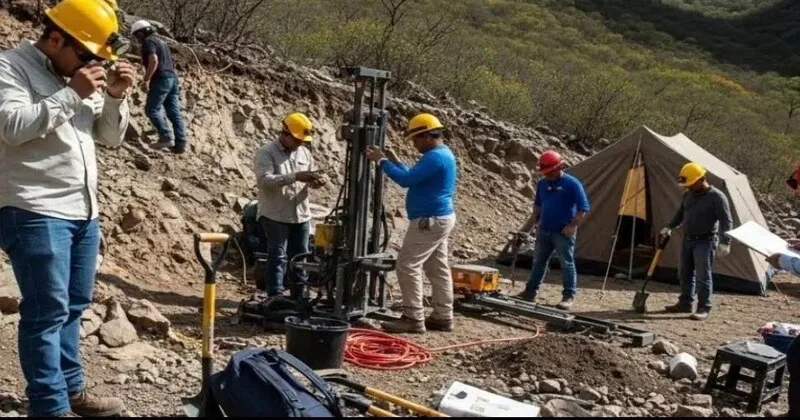
The Mahasamund discovery is the result of a carefully planned exploration programme employing modern geological techniques. According to NMDC-CMDC, the area was identified as a promising diamond-bearing zone after a combination of:
Stream sediment sampling
Geophysical surveys
Geological mapping
Approximately 500 metres of exploratory drilling
These investigations helped pinpoint locations likely to contain kimberlitic or related diamond-bearing formations. Following the surveys, around 200 tonnes of mineral-bearing material were excavated and transported to NMDC’s specialised Diamond Processing Plant in Panna, Madhya Pradesh, India’s most prominent diamond-producing region.
The material underwent scientific processing and examination, ultimately yielding the five diamonds that have now confirmed the presence of diamond mineralisation in the area. The discovery marks the first concrete evidence supporting geological theories that parts of Chhattisgarh may contain economically significant diamond deposits.
Of the five stones recovered, the two whitish diamonds are classified as gem quality, meaning they possess the transparency, colour characteristics and crystal structure suitable for jewellery manufacturing. Gem-quality diamonds command significantly higher market values than industrial-grade diamonds, which are primarily used in cutting tools, drilling equipment and various industrial applications.
The presence of gem-quality stones is particularly important because it suggests favourable geological conditions that may support larger concentrations of commercially valuable diamonds. For exploration companies, the early discovery of jewellery-grade stones is often one of the strongest indicators that additional investment in drilling and evaluation is justified.
India has a long and celebrated diamond history. Legendary stones such as the Koh-i-Noor, Hope Diamond and Great Mogul are believed to have originated from India’s historic diamond fields, particularly those associated with the Golconda region.
Today, however, India’s domestic diamond mining industry remains relatively limited. The country’s primary producing region is Panna in Madhya Pradesh, while most rough diamonds used by India’s massive polishing industry are imported from countries such as Russia, Botswana, Canada and South Africa. The Mahasamund find raises the possibility that Chhattisgarh could host an entirely new diamond-bearing province.
Geologists caution that much more exploration is required before such conclusions can be drawn. Nevertheless, the discovery has strengthened the hypothesis that favourable diamond-bearing geological formations extend beyond known mining regions and into parts of Chhattisgarh. Further drilling, bulk sampling and resource evaluation will be necessary to determine the scale, grade and economic viability of any deposit.
Government Sees a Major Opportunity
Chhattisgarh Chief Minister Vishnu Deo Sai described the discovery as an important milestone in the state’s efforts to scientifically explore and utilise its natural resources. According to the state government, the discovery aligns with broader objectives of promoting mineral-based industries, enhancing local employment and generating sustainable economic growth.
Officials believe the find demonstrates the effectiveness of modern scientific exploration methods and validates continued investment in mineral prospecting across the state. The government has also indicated that future development would focus not only on extraction but also on creating value-added industrial ecosystems that maximise benefits for local communities.
A Strategic Discovery for India
Beyond its local significance, the Mahasamund discovery could contribute to India’s broader mineral security objectives. India processes roughly 90 per cent of the world’s diamonds by volume, making it the global centre for cutting and polishing. Yet the industry remains heavily dependent on imported rough stones.
Any increase in domestic diamond production would strengthen supply security, reduce import dependence and potentially enhance India’s position across the entire diamond value chain.
Whether Mahasamund ultimately becomes a major mining district remains to be seen. However, the recovery of gem-quality diamonds during the earliest stages of exploration has already achieved something important; it has placed Chhattisgarh firmly on India’s diamond map.
The five small stones recovered from Mahasamund may weigh just 1.22 carats in total, but their discovery could carry a weight far greater than their size suggests. If further exploration confirms larger reserves, Chhattisgarh may one day emerge as India’s newest diamond frontier, adding a sparkling new dimension to the country’s mineral economy.