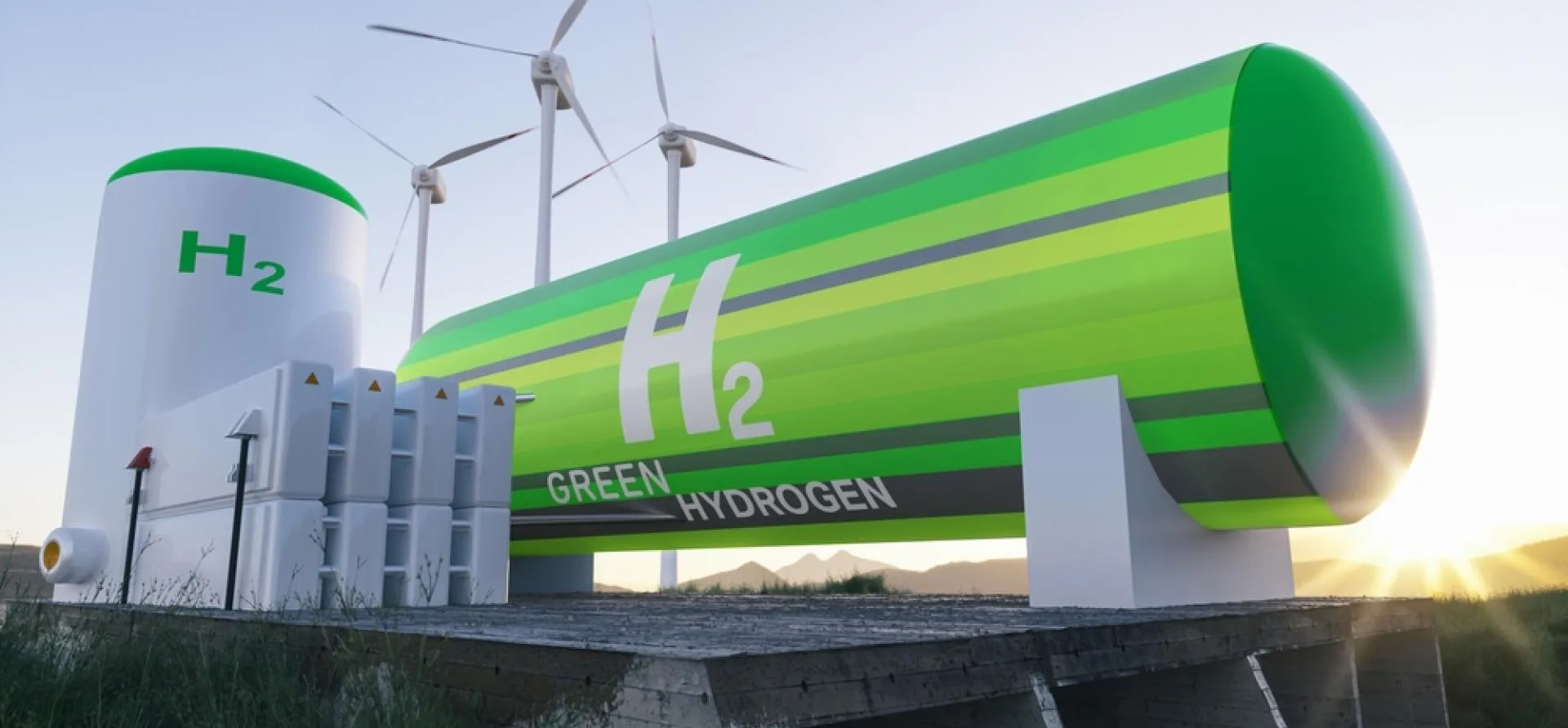
India has strengthened its clean energy transition by updating the National Green Hydrogen Mission. The mission aims at achieving production of 5 million metric tonnes of green hydrogen annually by 2030, for which as much as almost 125 gigawatts of new renewable energy capacity will be required. In addition, more than Rs 8 lakh crore investments are likely to be attracted, and over six lakh jobs would be created. According to official estimates, the transition will help India avoid almost 50 million metric tonnes of greenhouse gas emissions each year, saving the nation more than Rs 1 lakh crore in fossil fuel imports.
Green hydrogen is made through the electrolysis of water that is powered completely by renewable energy. Under India’s approved norm, hydrogen will be considered green only if its production generates less than 2 kilograms of carbon dioxide equivalent for every kilogram of hydrogen. Production based on biomass will also be permitted, provided the above emissions threshold is met.
The National Green Hydrogen Mission was announced in January 2023 with an outlay of Rs. 19,744 crore for the period up to the financial year 2029 to 2030. The biggest allocation in this is Rs. 17,490 crore under the Strategic Interventions for Green Hydrogen Transition scheme. The programme provides incentives for the domestic manufacturing of electrolysers and the production of green hydrogen. More funds have been provided for pilot projects, research and development and ecosystem development. The four pillars of the Mission are policy and regulation, demand creation, innovation and supporting infrastructure.
The government has selected three major ports, namely Deendayal Port in Gujarat, V. O. Chidambaranar Port in Tamil Nadu and Paradip Port in Odisha, as Green Hydrogen Hubs. These will act as hubs for production, storage, consumption, and export. India has also launched a Green Hydrogen Certification Scheme to verify and track the carbon footprint of every kilogram of hydrogen produced in the country.
Pilot projects have already been rolled out in key industrial sectors: In the fertiliser sector, a major auction recently finalised the procurement of green ammonia for public sector fertiliser units. In petroleum refining, efforts are underway to replace fossil-based hydrogen with green hydrogen. Five pilot projects have been launched in the steel sector to evaluate green hydrogen in iron reduction and other process applications.
Several projects are also taking shape in the mobility and transportation sector. Five pilot projects involving 37 hydrogen-powered vehicles and nine refuelling stations were launched across ten routes earlier this year. New green hydrogen and green methanol facilities have been commissioned at V. O. Chidambaranar Port and Deendayal Port in the shipping sector. In November 2024, NTPC has commissioned a green hydrogen mobility project in Leh with five hydrogen buses and a fuelling station. The project is expected to reduce around 350 metric tonnes of carbon emissions every year.
The government has given the following enabling measures to incentivise investment in hydrogen production: the waiver on interstate transmission charges for renewable energy consumed for hydrogen production and assured open access within a fixed timeframe. There are skill development programmes under the mission. Over 5,600 trainees have already been certified in hydrogen-related areas.
India has also expanded its international involvement. For the first time, the country participated in the World Hydrogen Summit in Rotterdam in 2024 with its first India Pavilion. Similar collaborative efforts have been initiated with the European Union, the United Kingdom, Germany, and Singapore. These cover standards, regulations, market mechanisms, and the creation of export-oriented hydrogen hubs.
Green hydrogen thus has the potential to become a key driver of industrial transformation in India. Meeting the targets by 2030 will require rapid scale-up of electrolyser manufacturing, the creation of a nationwide supply chain, and strong safety and certification mechanisms. The next five years will determine how quickly policy ambition can be converted into a large-scale commercial reality and if India will emerge as a major global producer of green hydrogen.