In the history of Indian theatre and cinema, some artists cannot be defined merely by their films, awards, or memorable characters. They transcend their work and become an enduring part of a nation’s cultural memory. Nana Patekar was one such rare artist.
– Dr. Mohan Bhagwat, Sarsanghchalak, RSS
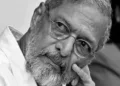
– Dattatreya Hosabale, Sarkaryawah, RSS
Beginning his journey with theatre, Nana Patekar went on to establish a distinctive identity in Indian cinema. Yet, even after achieving immense fame, he never allowed stardom to distance him from the realities of ordinary life. For him, acting was not merely a profession or a means of entertainment; it was a medium through which the truth of life could be expressed.
His passing marks the loss of a remarkable artist whose voice carried intensity, whose eyes conveyed sensitivity, whose dialogues reflected society’s realities, and whose personal life was marked by simplicity and humility. His life reminds us that true greatness lies not merely in fame, but in staying connected to one’s roots.
A Journey That Began with Theatre
Nana Patekar’s artistic journey began on the stage. Theatre became the foundation of his acting philosophy and shaped his understanding of character, dialogue, discipline and human emotions. Theatre teaches an actor to communicate directly with an audience. There is little room for artificiality. Voice, expression, body language, and emotional depth become the performer’s primary tools. Nana Patekar carried these theatrical values throughout his career. Even on camera, his performance carried an unmistakable theatrical intensity. He did not merely portray characters; he inhabited them. His facial expressions, eyes, voice modulation, and distinctive dialogue delivery often made the audience feel they were witnessing real life rather than a performance. That was perhaps the greatest strength of his art.
A Distinctive Place in Indian Cinema
Nana Patekar created an enduring identity in both Hindi and Marathi cinema. His remarkable body of work includes films such as Parinda, Krantiveer, Agni Sakshi, Khamoshi: The Musical, Prahaar, Yashwant, Ab Tak Chhappan, Apaharan, Raajneeti, Welcome and Natsamrat. His characters were remarkably diverse.
His Dialogue Delivery Was a School in Itself
Indian cinema has produced many great actors, each with a distinctive dialogue delivery style. But Nana Patekar’s style was uniquely his own.
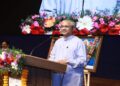
— Narendra Modi, Prime Minister
His voice carried a particular intensity. He didn’t just speak words; he gave them emotion, rhythm, and meaning. His voice could carry anger, but also compassion. There could be satire, but also pain. There could be confrontation, but also concern for society. Even an ordinary line could become memorable when he spoke it. He demonstrated that a great actor does not merely memorise a dialogue; a great actor understands and lives the emotion behind it.
The defining quality of Nana Patekar’s art was realism. He never seemed interested in making his characters unnecessarily glamorous. His performances remained close to ordinary human experiences—struggle, poverty, injustice, social inequality, institutional failure, relationships and the inner conflicts of human beings. Perhaps that is why audiences connected so deeply with his characters.
Prahaar and the Spirit of National Service
Another important dimension of Nana Patekar’s artistic personality was his sensitivity towards the nation and society. In Prahaar, he portrayed military life, discipline, sacrifice and a sense of duty with remarkable intensity.
His portrayal of patriotism was never merely about slogans. It was reflected through discipline, responsibility and commitment.That quality made his characters memorable. His work reminded audiences that love for the nation is not expressed only through words; it is also expressed through duty, discipline and responsibility towards society.
His Greatest Legacy
An artist’s greatest wealth is not material possessions. It is the work that remains after the artist is gone. Nana Patekar leaves behind a remarkable body of work. He leaves behind dialogues that audiences continue to remember. He leaves behind characters that remain alive in public memory.
He leaves behind a bridge between theatre and cinema that future generations will continue to study.
A Tribute to an Era
Nana Patekar was an actor—but he was much more than an actor. He was a devotee of theatre. He was a master of dialogue. He was an artist of human sensitivity. He was a citizen conscious of social responsibility. He was an embodiment of simplicity and fearlessness. And he was one of the distinctive voices of Indian acting whose place cannot simply be replaced.
His life teaches us that the true measure of an artist is not the applause received during his lifetime, but the place he continues to occupy in people’s hearts after he is gone.
Nana Patekar may have departed from the physical world, but his art, his voice, his dialogues, his films, and his unforgettable characters will live on in India’s cultural memory.
He began his journey on stage, reached the heights of Indian cinema, and ultimately secured a permanent place in millions’ hearts.