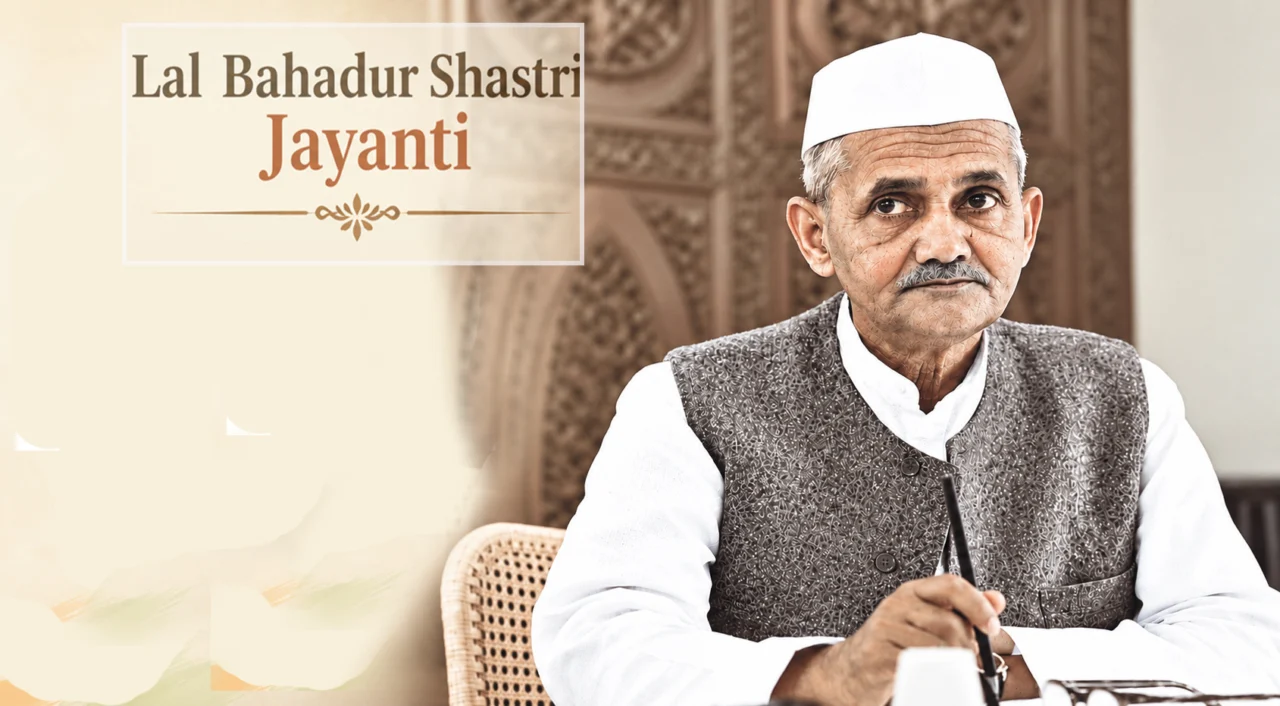
It was a sacred festival day in the autumn of 1965. As the Indian monsoon receded, the country prepared to enter the traditional cycle of spiritual and religious observance—the holy invocation of Navratri and Ramlila. Yet independent India faced an unprecedented and terrifying dual crisis. On the North Western border, the nation was locked in a bloody military conflict following Pakistani aggression. Domestically, it was gripped by a severe drought and widespread food scarcity. India’s reliance on low-grade wheat supplied under the United States’ Public Law 480 (PL-480) agreement daily wounded the national self-respect.
Amid this spiritual backdrop and acute national emergency, India’s second Prime Minister, Lal Bahadur Shastri (1964–1966), took an extraordinary and historic decision that remains etched in the national consciousness as Shastri Vrat (The Shastri Vow).
Rigorous Test at Home
A student of Kashi Vidyapith, deeply nurtured in ancient Sanatan spiritual values and accustomed to a saintly lifestyle, Lal Bahadur Shastri recognised that the fundamental strength of Indian society lay in its millennial tradition of self-restraint, austerity, and fasting. However, as a responsible Prime Minister, before appealing to his countrymen to skip a meal once a week, he put the proposal to a rigorous test at home. Calling his wife, Lalita Shastri, he instructed that no dinner should be cooked the following evening and that his own children should experience going hungry for a meal to test whether they could endure the fast. Only when he saw his children pass this test of sacrifice without complaint did Shastri take to All India Radio with an impassioned national appeal: he urged the entire nation to abstain from food for one meal every week so that saved wheat could be redirected to border-patrolling jawans and hungry citizens.
Instilling Patriotism: ‘Jai Jawan, Jai Kisan’
Shastri transformed traditional religious austerity into a powerful movement for national self-reliance and dignity. Responding to his call, millions of households, restaurants, and eateries across the nation suspended food service on Monday evenings to observe Shastri Vrat. His legendary slogan proclaimed from Delhi’s Ramlila Maidan—Jai Jawan, Jai Kisan (Victory to the Soldier, Victory to the Farmer)—was a profound nationalist and cultural philosophy that elevated the border guard and the cultivator to the highest pedestal of national honour.
Castigated by Anti-National Commies
Regrettably, Shastri’s deep Indian cultural consciousness, politics of spiritual restraint, and nationalist agricultural reforms were viewed as a grave ideological panic by India’s Communist parties and Naxalite factions. By bypassing imported Marxist frameworks of class struggle and connecting directly with farmers, workers, and soldiers through India’s ancient spiritual and moral values, Shastri shook the political foundations of Indian communism. Communist theorists routinely mocked Shastri Vrat as “bourgeois confusion,” “religious superstition,” and a “cover for subservience to American imperialism.” Yet, as recorded in the Encyclopaedia Britannica, the Mughalsarai-born leader was an unblemished public figure from humble beginnings who refused to bow to external Communist ideology.
When Lal Bahadur Shastri assumed office as Prime Minister in June 1964, the Indian Communist movement was undergoing a historic and momentous schism. In the aftermath of the 1962 Sino-Indian War, internal policy rifts within the Communist Party reached a breaking point. In April 1964, the Communist Party of India (CPI) formally split, creating the Communist Party of India (Marxist), or CPI(M).
Despite their ideological divide, both Communist wings competed vigorously to attack the Shastri administration. The pro-Soviet CPI accused Shastri of being “insufficiently socialist,” while the pro-Beijing CPI(M) attempted to label him an “American imperialist agent.” International scholar Mohan Ram, in his prominent monograph Indian Communism: Split Within a Split (Vikas Publications, 1969), detailed how this internecine rivalry doubled the Left’s hostility towards Shastri. In a race to prove their respective radical credentials, both parties systematically targeted Shastri’s parliamentary leadership and democratic governance.
From a parliamentary perspective, the scale of Communist obstructionism against the Shastri Government was astonishing. Historical press reports and official Lok Sabha proceedings show that during his brief tenure from 1964 to 1966, Shastri faced three separate No-Confidence Motions. Even during acute national emergencies—such as the 1965 war and severe food shortages—these motions were weaponised to undermine Shastri’s political authority.
In February 2021, PM Narendra Modi recalled Shastri’s historic struggle in Parliament, noting how Communist parties & the then-Planning Commission actively opposed Shastri’s agricultural reforms. He highlighted how Left publicly alleged that Shastri was selling out Indian agriculture at the behest of Washington
During the No-Confidence Motion moved by N. C. Chatterjee in September 1964, Communist parliamentarians employed language rarely witnessed in India’s legislative history. On September 15, 1964, The New York Times published a special report titled “Indian Red Calls Shastri Administration Chaotic,” detailing how CPI leader Professor Hiren Mukerjee (Hirendranath Mukherjee) launched a scathing personal attack on the Prime Minister inside the Lok Sabha. Mukerjee disparaged Shastri as possessing a ‘split personality’, alleging that Shastri paid lip service to Nehru’s policies while dismantling socialism from within.
Battling Food Crisis
The single largest internal challenge facing Shastri’s administration was widespread drought and an acute food deficit. In post-Independence India, underinvestment in agriculture during the 1950s forced the country to rely heavily on wheat imports under the US PL-480 agreement. International media and historical records disparagingly referred to India as a “ship-to-mouth” economy. To liberate the nation from this humiliation and achieve food self-sufficiency, Shastri initiated the Green Revolution—a coordinated framework combining High-Yielding Variety (HYV) seeds, chemical fertilizers, modern irrigation, and minimum support prices.
However, Communist parties fiercely opposed these life-saving agricultural reforms, denouncing them as a “surrender to American imperialism.”
PM Modi Recalled Shastriji’s Struggle
In February 2021, Prime Minister Narendra Modi recalled Shastri’s historic struggle in Parliament, noting how Communist parties and the then-Planning Commission actively opposed Shastri’s agricultural reforms. PM Modi highlighted how the Left publicly alleged that Shastri was selling out Indian agriculture at the behest of Washington.
Articles published in OpIndia and The Statesman (August 21, 2021) document the monumental efforts of Agriculture Minister C. Subramaniam, scientist M. S. Swaminathan, and civil servant B. Sivaraman, while highlighting how Communist and ultra-Left groups organised agitations in West Bengal and Kerala to block the introduction of HYV seeds. Renowned agricultural historian M. S. Randhawa, in his four-volume work A History of Agriculture in India (ICAR, 1980–1986), demonstrated with empirical evidence that Communist-controlled peasant unions in Kerala and West Bengal delayed the adoption of modern agricultural technology, thereby worsening food shortages and prolonging public distress.
During this period, Communist media organs deployed character assassination campaigns, centering their attacks on the quality of PL-480 wheat. Articles on the historical portal Enroute Indian History note that Leftist periodicals propagated false claims that Shastri was feeding Indians wheat used as “swine feed in America.” Leftist agitators aggressively used this narrative in rallies to allege that Shastri had reduced India to a nation of beggars—ignoring the reality that Shastri and his family were personally skipping meals weekly to reduce foreign dependency.
Left-leaning media outlets—such as Russi Karanjia’s Blitz, CPI’s official weekly New Age, and CPI(M)’s organ People’s Democracy—regularly published derogatory cartoons and articles targeting Shastri. Prominent Communist theorist E. M. S. Namboodiripad authored pamphlets in 1965 labelling Shastri’s agricultural policy as “Green Imperialism.”
Indo-Pakistani War & Communist Hypocrisy
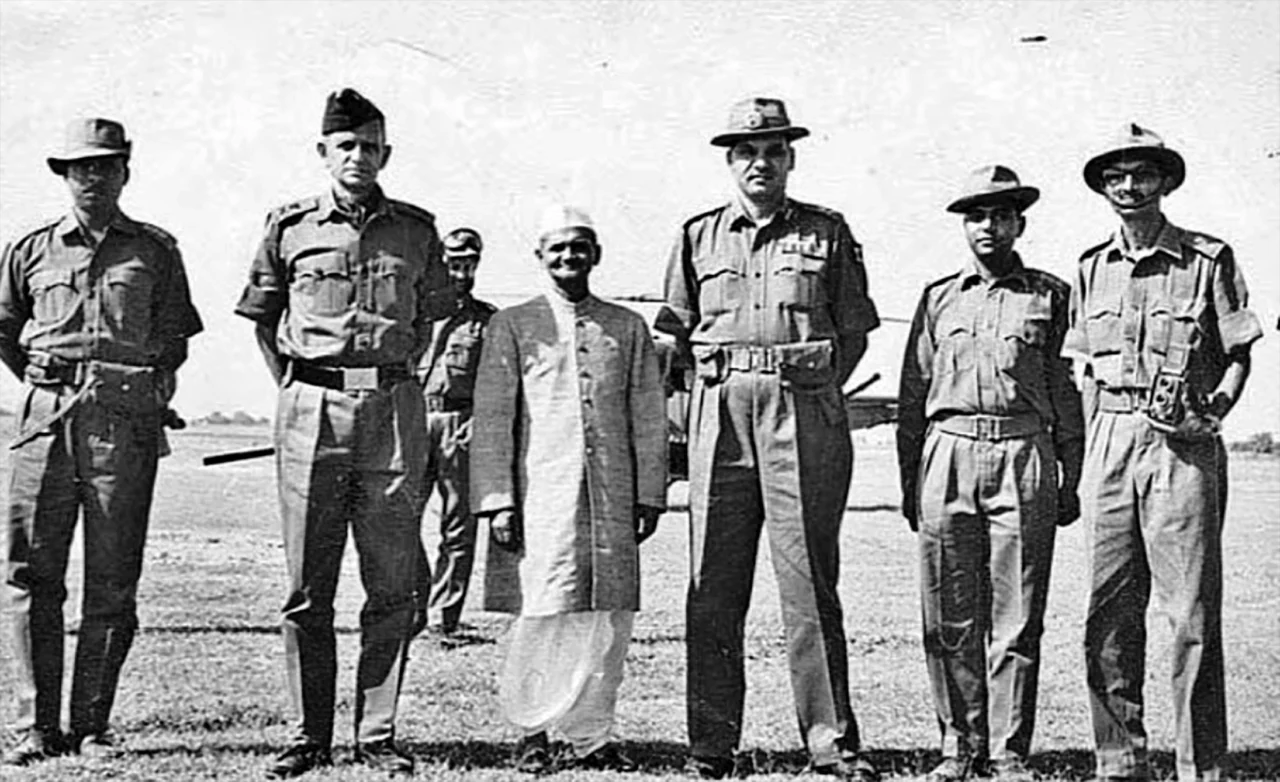
When war broke out following Pakistani armed infiltration in August–September 1965, PM Shastri steered India towards a decisive victory. His slogan Jai Jawan, Jai Kisan rallied the entire population behind the military effort. Yet this national cohesion presented an ideological dilemma for Communist parties whose foundational doctrine relied on Marxist class warfare. When Shastri demonstrated that a nationalist, democratic government could unite the soldier and the peasant without class division, the political rhetoric of the Left was exposed.
During the war, the stance of the newly formed CPI(M) raised significant concern. Shadowed by the bitterness of the 1962 China war and the Sino-Soviet rift, an influential section of the CPI(M) hesitated to offer unambiguous support to India’s military campaign. Writings compiled in E. M. S. Namboodiripad’s Selected Writings (National Book Agency, Kolkata, 1984) reflected a distinct absence of patriotic solidarity during the national emergency.
Similarly, while CPI(M) leader Jyoti Basu avoided direct public criticism of the Armed Forces, he repeatedly attacked the Shastri administration’s wartime diplomacy and international mediation efforts. The Communist-led All India Trade Union Congress (AITUC) called strikes in key industrial sectors during critical moments of the war, disrupting essential supply lines. In the Rajya Sabha, CPI MP Bhupesh Gupta’s harsh critique of Shastri’s war conduct drew sharp reprimands from across the house.
Was Tashkent Agreement a Death Warrant?
On January 10, 1966, India and Pakistan signed the historic Tashkent Declaration in the Soviet Union, brokered by Soviet premier Alexei Kosygin. Just hours after signing the accord, in the early morning of January 11, Lal Bahadur Shastri died under sudden and mysterious circumstances in Tashkent. More than half a century later, his death remains one of the most enigmatic chapters in modern Indian history.
An investigative article in Indian Vagabond noted that Shastri was under severe emotional strain immediately after signing the agreement, knowing that news of returning the strategic Haji Pir Pass had provoked grief and anger among the Indian public. However, when examining international and domestic undercurrents surrounding his death, questions regarding the Leftist and international Communist nexus frequently resurface. During Lal Bahadur Shastri’s tenure, the organisational and ideological groundwork for the Naxalite movement was laid. Although the movement formally erupted in May 1967 with the peasant uprising in Naxalbari village, Darjeeling, its theoretical and operational preparation took place between 1964 and 1966. Research published in Encyclopaedia Britannica and the International Journal of Law Management & Humanities (IJLMH, 2019) indicates that, influenced by the Communist Party of China and Maoist doctrine, an ultra-Left faction broke away from parliamentary politics to pursue armed revolution. Before 1967, leaders such as Charu Majumdar, Kanu Sanyal, Jangal Santhal, and Suniti Kumar Ghosh actively organised agrarian cadres in the Siliguri region.
Naxalite theorist Charu Majumdar, in the first document of his Historic Eight Documents (dated January 28, 1965) titled “Our Primary Task,” launched a blistering attack on Shastri’s policies. Majumdar asserted that Shastri’s Jai Jawan, Jai Kisan slogan was not meant for peasant welfare, but was rather a “reactionary bourgeois-landlord facade” designed to pacify the peasantry and suppress revolutionary consciousness.
In States where Communist influence was substantial—particularly in Kerala and West Bengal—opposition to the Shastri administration extended beyond rhetoric into administrative non-cooperation. Following the 1964 CPI split, the Left sought to consolidate power during the 1965 Kerala mid-term elections. Ministry of Home Affairs archives reveal that State authorities maintained strict surveillance on anti-national activities by Communist cadres. In Kerala, under E. M. S. Namboodiripad, CPI(M) cadres repeatedly obstructed central food distribution mechanisms and agrarian initiatives.
In West Bengal, CPI(M)’s organ Ganashakti and Samar Sen’s periodical Frontier published regular critiques of Shastri’s economic and foreign policies. Using trade unions and Kisan Sabhas to engineer industrial and agricultural stalemates was a core Left political strategy during this era. The Left’s most enduring hostility toward Lal Bahadur Shastri emerged posthumously in Indian historiography. For decades following independence, a dominant school of Left-leaning and Marxist historians systematically marginalised Shastri’s contributions in academic literature.
Writing in the Sage journal Studies in Indian Politics (2020), Dr. Rakesh Ankit noted with concern how academic institutions—such as the Centre Historical Studies at Jawaharlal Nehru University (JNU)—reduced Shastri’s Prime Ministership to a brief historical footnote. Unfortunately, Marxist historians such as Romila Thapar, Bipan Chandra, and Irfan Habib wrote extensive accounts of Jawaharlal Nehru’s 17-year tenure and Indira Gandhi’s long rule, while devoting little analysis to Shastri’s dynamic 19-month premiership. In the 21st century, however, a re-evaluation of this historical period has taken root. Vivek Agnihotri’s film The Tashkent Files (2019) and Anuj Dhar’s book Your Prime Minister is Dead (2018) brought public scrutiny back to Shastri’s mysterious demise. While Left-leaning intellectuals critiqued these works, contemporary researchers and the general public have increasingly recognised Shastri’s integrity, sacrifice, and statesmanship.
Today, historical perspective confirms that the Communist campaign branding Lal Bahadur Shastri an ‘American agent’ has been discarded into the dustbin of history. The Green Revolution that the Left resisted saved millions from starvation and transformed India into a food-surplus nation. Lal Bahadur Shastri-slight in physical stature, but a titan in moral strength-remains immortalised as one of independent India’s most venerated statesmen.