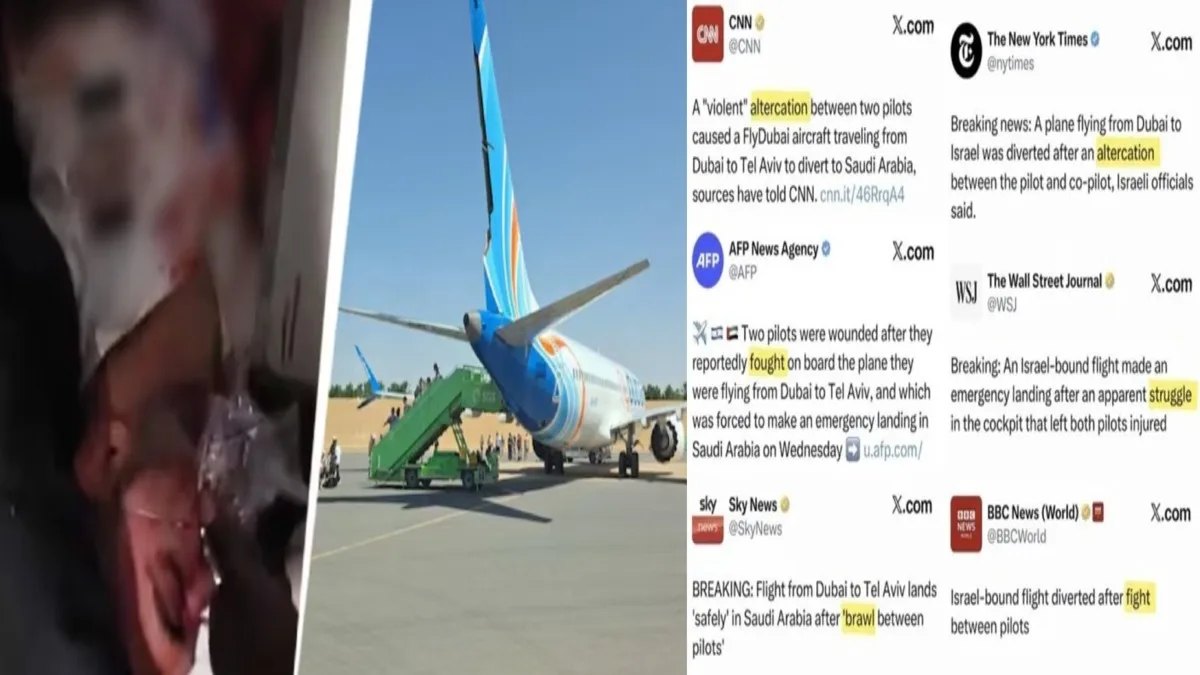
NEW DELHI: The FlyDubai FZ1073 incident raises a difficult question for the media: when does caution become euphemism, and does the standard of caution remain the same when the alleged attacker is a Muslim?
What happened aboard FlyDubai Flight FZ1073 on September 30 was not an ordinary cockpit disagreement.
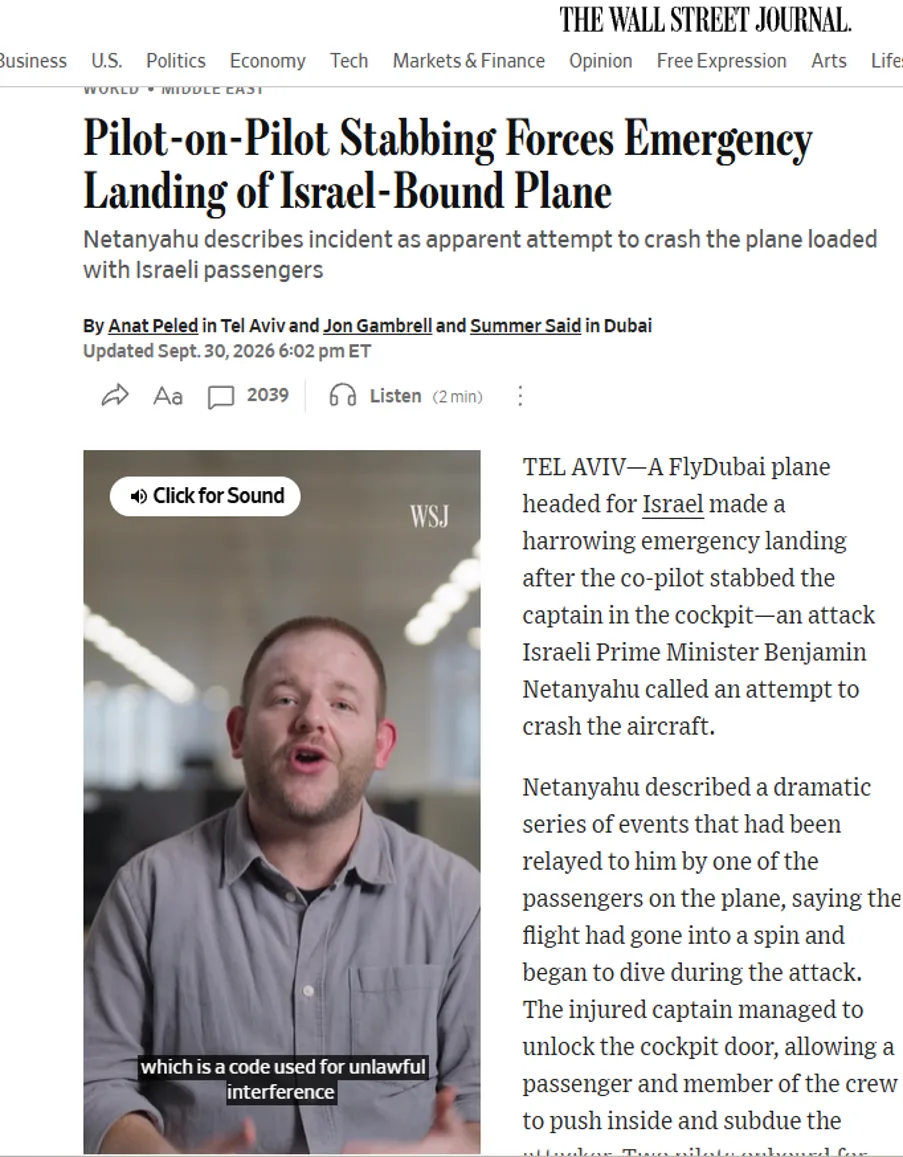
The Boeing 737 MAX 8 was flying from Dubai to Tel Aviv with 174 people aboard when a violent confrontation erupted in the cockpit. The aircraft subsequently plunged thousands of feet, transmitted an emergency code and briefly transmitted the international 7500 code associated with unlawful interference or hijacking. It was diverted to Tabuk, Saudi Arabia.
According to the later accounts from Israeli officials, passengers and crew, the Omani-origin Muslim co-pilot stabbed the Indian-origin Captain Smit Machchhar and apparently attempted to take control of the aircraft. The severely wounded captain managed to open the cockpit door, allowing passengers and crew to enter and overpower the attacker. Additional crew members then took control and landed the aircraft safely.
That detail about the cockpit door matters enormously.
The wounded pilot got the door open while the aircraft was in crisis.
The plane had plunged roughly 14,000–17,000 feet in a matter of minutes, depending on the tracking interval reported by different sources. Reuters reported that Machchhar, despite being wounded, managed to unlock the cockpit door, enabling passengers and crew to intervene.
And yet, look at the vocabulary with which some of the world’s most influential news organisations initially presented the story.
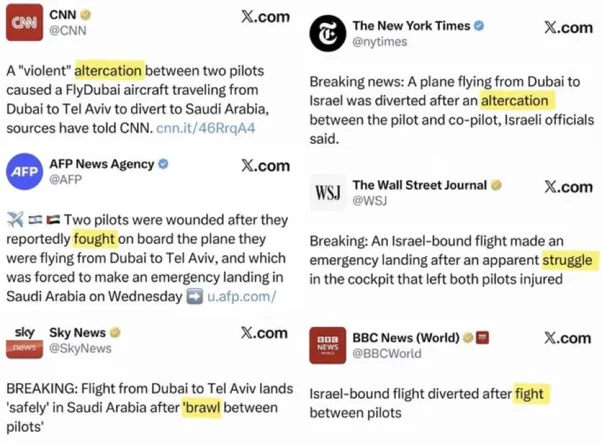
Breaking news: A plane flying from Dubai to Israel was diverted after an altercation between the pilot and co-pilot, Israeli officials said. https://t.co/VVuUXKUrPY
— The New York Times (@nytimes) September 30, 2026
The New York Times: “altercation between the pilot and co-pilot.”
BBC: “fight between pilots.”
Sky News: “brawl between pilots.”
AFP: “fought on board the plane.”
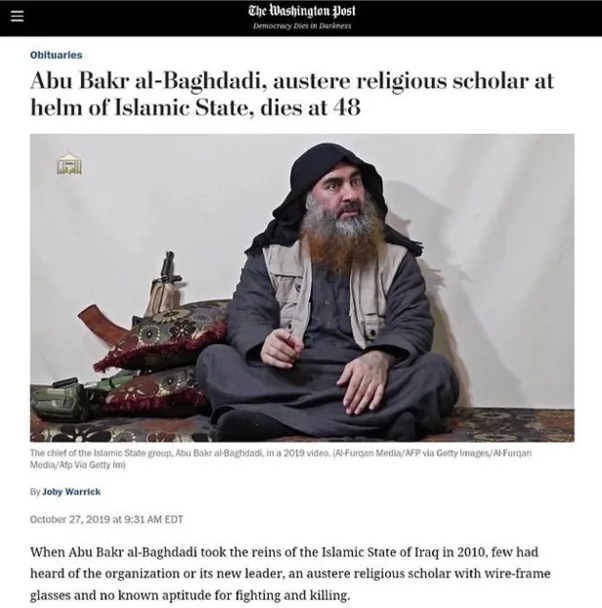
A user on social media platform X (formerly Twitter) has pointed out that – Calling the attempted hijacking of a plane with Israeli passengers an “altercation” is the equivalent of the Washington Post calling Abu Bakr al-Bagdadi an “austere religious scholar”.
The Indian daily The Times Of India chose to keep it dramatic and ambiguous.
Three papers, three versions.
One reports Truth.
The other two shun Truth. pic.twitter.com/Ymcq1kV213— Kanchan Gupta 🇮🇳 (@KanchanGupta) October 1, 2026
“Indian Pilot at Centre of FlyDubai Drama,” The Times Of India splashed on the top. And in a blurb puts the line: Indian pilot Machchhae joined Flydubai in 2022 after flying SpiceJet for close to a decade.
That gave a Déjà vu moment to those who recall certain sections of India calling fallen Pakistan-trained terrorist Burhan Wani as a poor headmaster’s son despite the numerous of murders of Indians that he executed and hundreds of young Kashmiri boys he misled to training as terrorists.
Burhan ‘headmaster’s son’ Wani 2.0: despite being exposed as terrorist and Jihad supporters, Barkha Dutt stands by her Jamia ‘sheroes’https://t.co/jTHaOWj1xy
— OpIndia.com (@OpIndia_com) December 21, 2019
Not so shocking that the global acknowledgement of the Indian origin pilot’s heroics have irked Arfa Khanum Sherwani who had attended the fallen Iranian Premier Khamenei’s funeral in a hijab and cried like she had suffered a personal loss.
The ‘world-famous’ Israeli propaganda machine is on fire and Indian audiences seem only too eager to consume whatever it serves up, no questions asked.
Guess why?— Arfa Khanum Sherwani (@khanumarfa) October 1, 2026
Senior journalist Shiv Aroor has rightly pointed out that the way the hijacker pilot’s identity is being hidden is phenomenal.
Nice how the terrorist co-pilot’s name and identity are being protected.
— Shiv Aroor (@ShivAroor) October 1, 2026
Milli Chronicle founder Zahack Tanvir points out how when the attacker is clearly Muslim and the saviour a Hindu, the Leftists are suddenly exhibiting radio silence.
Tanvir writes: “Cat’s got their tongues. The left-wing cartel is dead silent over the bravery of Indian pilot Smit Machchar. Had the situation been reversed (may God forbid), they would not only have blamed the entire Indian pilot community, but also the BJP and Modi government for the crash… Indeed, what kind of hateful people do we live among?”
Mrinal Pande , the veteran octogenarian Indian journalist known for her Hinduphobic posts that celebrate everything about Islam – had posted a rather sarcastic and hateful tweet about how the botched hijacking involved the coming together of too many happy co-incidents and factors that delight the Hindu Right Wing.
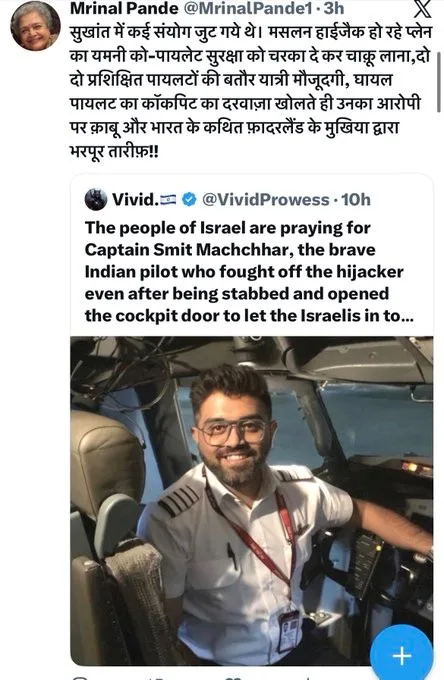
जनहित में श्री स्मित मच्छर को बधाई देकर हम इस अद्भुत कथा का समापन करते हैं ।
सभा विसर्जित होत है सुनहु वीर जिजमान,
अपने अपने प्रकोष्ठ में जाय करो विश्राम ॥ https://t.co/V6ObxeAQP4— Mrinal Pande (@MrinalPande1) October 1, 2026
Rana Ayyub, the controversial so-called journalist who is a favourite of the western media that likes to project India as a poor undemocratic Islamophobic nation, has chosen to again take a Hinduphobic stance for no apparent reason:
She writes: “The Indian right wing’s love affair with Israel and Netanyahu is ultimately rooted in one thing: its visceral hatred of Muslims. Their admiration for Modi and Netanyahu comes from the same impulse- leaders who will subjugate Muslims, and “show them their place” in the world.”
The Indian right wing’s love affair with Israel and Netanyahu is ultimately rooted in one thing: its visceral hatred of Muslims. Their admiration for Modi and Netanyahu comes from the same impulse- leaders who will subjugate Muslims, and “show them their place” in the world.
— Rana Ayyub (@RanaAyyub) October 1, 2026
Those formulations are visible in the screenshots circulating from the initial coverage, and the underlying reports are independently traceable. Sky News, for example, initially described the event as a “brawl between pilots”; BBC’s initial report described a “physical fight”; CNN repeatedly used “violent altercation”.
Now consider the physical facts that were emerging.
One pilot had reportedly been stabbed.
The aircraft had undergone a catastrophic-looking descent.
A hijack/interference code had been transmitted.
Passengers had entered the cockpit.
The alleged attacker had been restrained.
The injured captain had helped open the cockpit door.
The aircraft had to divert to another country.
Israeli fighter aircraft had reportedly been scrambled amid fears of a hijacking.
And the Israeli prime minister was saying that one pilot appeared to have tried to crash the aircraft.
The sharper criticism is:
Why was the first instinct to describe the event through the language of a mutual quarrel when the emerging evidence was pointing towards an attack?
And was the same degree of linguistic caution being applied consistently?
The UAE itself is now investigating whether the incident was terrorism.
No, we are not saying that all “Muslims are terrorists”, but the media’s determination to avoid an uncomfortable conclusion sometimes becomes an equally uncomfortable euphemism.