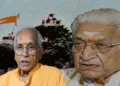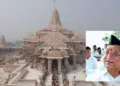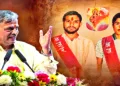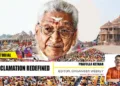
BHUBANESWAR: Former Union Minister and Sambalpur MP Dharmendra Pradhan described former Vishva Hindu Parishad (VHP) international president Ashok Singhal as a “leading Senapati of Hindu Samaj.” He highlighted Singhal’s crucial contributions to the Ram Janmabhoomi movement and his extensive efforts to organise and mobilise Hindu society.
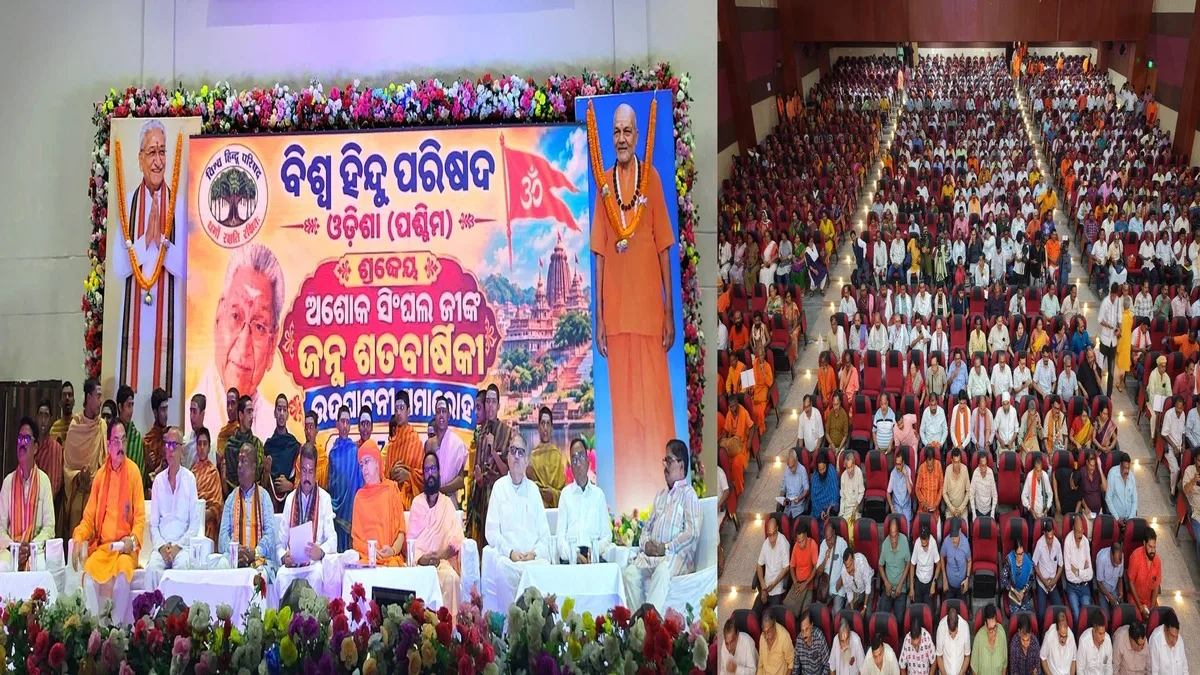
Pradhan was addressing the inaugural ceremony of Ashok Singhal’s birth centenary celebrations, organised by Vishwa Hindu Parishad, Odisha (West), at the Gangadhar Meher auditorium in Sambalpur. Paying tribute to Singhal, Pradhan stated that his life was dedicated to social organisation, national interests, and the mobilization of people around the Ram Janmabhoomi movement.
Singhal’s Role in the Ram Janmabhoomi Movement
Pradhan recalled various developments that preceded and shaped the Ram Janmabhoomi movement, including the Meenakshipuram conversion episode. He noted that these events contributed to widespread public mobilization across the country.
According to Pradhan, Singhal emerged as one of the prominent leaders who worked to create public awareness and build organizational support for the movement. He emphasized Singhal’s significant role in mobilizing people and establishing an organizational framework for the campaign to construct a Ram temple at the birthplace of Prabhu Ram.
“If Ashok Singhal Ji had not been there, whether the dream of a grand Ram temple at the sacred birthplace of Prabhu Ram could have been realized or not would remain a subject for historical assessment,” Pradhan said.
Describing Singhal as a “Sannyasi Senapati,” Pradhan added that he devoted his life to social mobilization and causes he considered connected with the interests of society and the nation.
Contribution Went Beyond Temple Construction
Pradhan asserted that Singhal’s contributions, in his assessment, extended beyond the construction of a temple. He noted that Singhal worked towards bringing people together, strengthening social organization, and fostering a sense of confidence and self-respect.
Recalling the political situation in Uttar Pradesh during the Ram Janmabhoomi movement, Pradhan referred to the then-prevailing assertion that “not even a bird could fly” into the disputed area. He mentioned that Singhal personally faced resistance and injuries during the movement, and such experiences became a source of inspiration for young people associated with the campaign.
Pradhan also highlighted Singhal’s commitment to social causes, reflected in his interactions with political leaders and governments. According to Pradhan, Singhal consistently prioritized issues concerning society and national interest above considerations of personal status or position.
“His unparalleled contribution to transforming the Shri Ram Temple construction movement into a mass movement and to uniting, organizing, and instilling a sense of self-respect in Indian society will always be remembered,” Pradhan said.
Concern for the Ganga
Recalling an incident from the Atal Bihari Vajpayee government’s tenure, Pradhan stated that Singhal had expressed concern over hydroelectric projects in Uttarakhand due to potential disruptions to the Ganga’s uninterrupted flow.
Pradhan noted that Singhal personally approached the then Union Power Minister to present his concerns on the issue. This episode, he said, reflected Singhal’s commitment to addressing matters he deemed important for society and the nation, regardless of his own position or stature.
According to Pradhan, Singhal’s public life extended beyond the immediate organizational activities of the VHP, marked by his engagement with a broader range of issues.
A Link Between Sants and Society
Pradhan emphasized that Singhal was more than just a senior VHP office-bearer or an RSS pracharak; he actively worked to unite sants, sadhus, sannyasis, and various religious institutions.
Singhal, he added, played a crucial role in fostering greater coordination among different segments of the Hindu religious community and in establishing platforms for social mobilization.
Pradhan also highlighted that contemporary society faces numerous challenges and divisions, suggesting that remembering the lives and contributions of figures like Singhal could inspire social organization.
He concluded that building an “organized and awakened society” in line with Singhal’s ideals would serve as an appropriate tribute to his legacy.
Ajay Parik Recalls Singhal’s Organizational Vision
VHP Central Secretary and Akhil Bharatiya Seva Pramukh, Ajay Parik, also addressed the gathering, reflecting on Singhal’s life, organizational activities, and public engagement.
Parik stated that Singhal dedicated his life to organizing Hindu society and promoting what he termed an awakening of Hindu consciousness and self-confidence. He described Singhal as leading a simple personal life while steadfastly committing to social and national causes.
According to Parik, Singhal played a significant organizational role during various phases of the Ram Janmabhoomi movement, helping to mobilize people in support of the demand for a temple at the site.
Wider Social Initiatives
Parik further explained that Singhal’s organizational vision was not confined to the Ram Janmabhoomi movement. Singhal was also concerned with organic farming, cow-based agriculture, Vedic education, and the expansion of Ekal Vidyalayas.
He also underscored Singhal’s interest in strengthening organizations such as Bajrang Dal and Durga Vahini. Parik noted that Singhal maintained close relationships with the saint community, and religious leaders often responded to his appeals on societal and national issues.
Dignitaries Attend Centenary Programme
The birth centenary program was attended by Odisha government minister Ravi Narayan Naik, Swami Tejomayananda Saraswati, Sadhu Baba Prabhakar Das, and several other dignitaries.
The speakers paid tribute to Singhal, recalling his organizational role, public mobilization efforts, and association with the VHP. The program marked the beginning of centenary observances commemorating Singhal’s life, organizational activities, and public contributions.