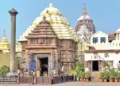
BHUBANESWAR: The Shree Jagannath Mandir Managing Committee has approved a proposal to create a new set of gold ornaments for Mahaprabhu Jagannath, Mahaprabhu Balabhadra, and Devi Subhadra. These ornaments will be used for the annual Suna Besha ritual. The decision was made during a meeting of the mandir’s apex management body, chaired by Gajapati Maharaja Dibyasingha Deb, in Puri on September 26th.
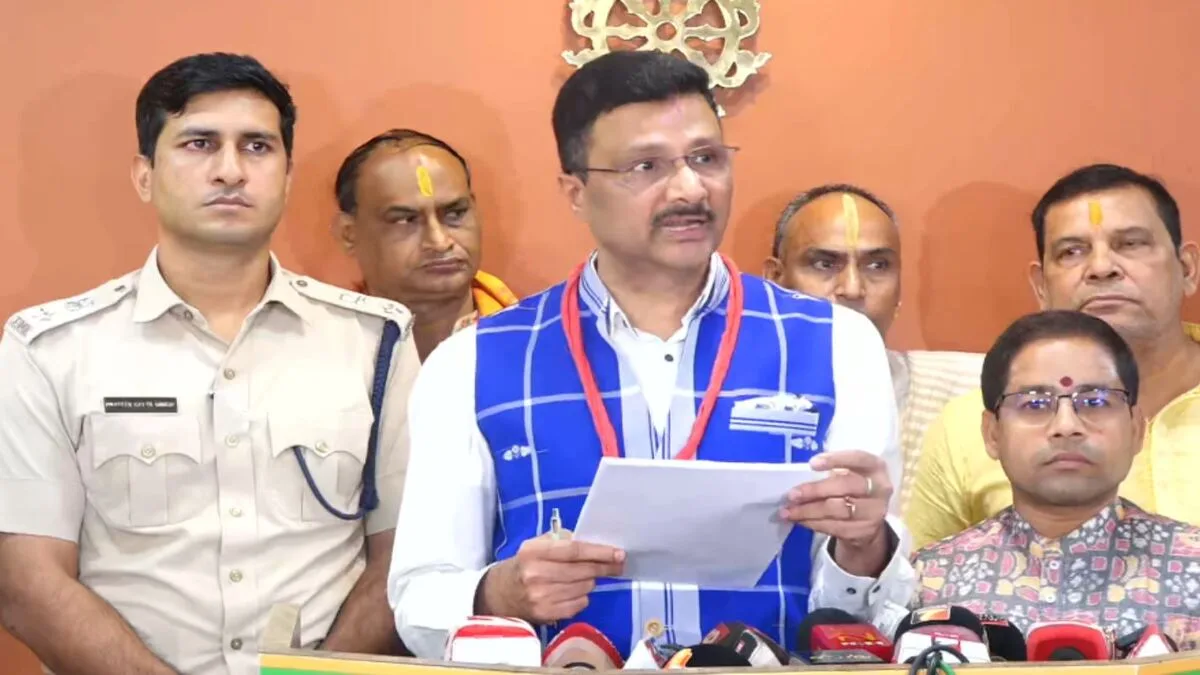
Speaking to media persons after the meeting, Shree Jagannath Temple Administration (SJTA) Chief Administrator Dr Arabinda Kumar Padhee said the new set of ornaments would be prepared using the temple administration’s own resources. Devotees and organisations willing to contribute may also make donations for the purpose.
Padhee said the mandir administration already possesses detailed digital documentation of the existing Suna Besha ornaments, which would facilitate the preparation of the new set while preserving their traditional designs and religious significance.
Digital documentation of ornaments to serve as reference
During the ongoing inventory of the Ratna Bhandar, the mandir administration had undertaken videography and 3D documentation of the ornaments, including those used during the Suna Besha ritual. Detailed information regarding the design and weight of the existing ornaments is also available with the SJTA.
The new ornaments will be prepared strictly on the basis of these records. A technical committee will be constituted to supervise the entire process and ensure transparency. The committee will also identify experienced and skilled jewellers for preparing the ornaments.
The Suna Besha ritual is observed on five occasions during a calendar year. The deities are adorned with golden ornaments four times inside the mandir and once on the chariots. The occasions include Bahuda Ekadashi, Pousha Purnima, Dashahara, Kartik Purnima and Dola Purnima.
According to mandir sources, the tradition of Suna Besha was introduced by Gajapati King Kapilendra Deb in 1460.
Gundicha Mandir to reopen on September 30
The management committee also decided to reopen the historic Gundicha mandir for devotees from September 30. The mandir will remain open for public visitation every day from 6 am to 5 pm. The temple administration has completed arrangements relating to security, ticket counters, drinking water and free facilities for keeping footwear and mobile phones.
The committee discussed a proposal to allow free entry for the first three days after reopening. Thereafter, a nominal entry fee of Rs 10 will be charged from devotees. Senior citizens, children and persons with disabilities will continue to be provided free entry. Special arrangements will also be made for persons with disabilities. A ramp has been installed to facilitate their access, while assistants will be deployed to help them during darshan.
Special darshan facility at Uttara Dwara
A separate darshan facility for persons with disabilities and senior citizens is also proposed near the Uttara Dwara of Srimandir. Dedicated time slots will be introduced, allowing eligible devotees to avail themselves of the facility at designated times. The arrangement will include ramps and assistance to make access easier for persons with disabilities.
The committee also discussed facilities for local residents of Puri. Residents will be able to enter Srimandir by producing Aadhaar cards or other valid identity documents. A separate slot-booking and time-allocation system is proposed for local residents, with the number of persons permitted to enter each day to be determined. A proposal has also been received from servitors to facilitate entry through the Uttara Dwara for local residents visiting the temple to collect Mahaprasad. A final decision will be taken after detailed deliberations.
IIT-Bhubaneswar model for queue darshan under review
The mandir administration is also examining a model developed by IIT-Bhubaneswar for the proposed queue-based darshan system at Srimandir’s Natamandap. The model will first be examined and tested before the committee takes a decision on its implementation. The proposed system is aimed at streamlining the movement of devotees and improving the overall darshan experience.
Jagannath Culture Centre and Raghunandan Library
The committee directed the Odisha Bridge and Construction Corporation (OBCC) to expedite work on the Shree Jagannath Culture Centre and the Raghunandan Library.
Construction of the proposed Adarsha Gurukul for the children of servitors was also reviewed. According to Padhee, construction work has commenced, with around 850 metres of the proposed 1,300-metre boundary wall already completed. The proposed campus will include the school building, hostel and playground. OBCC will execute the project, with the Bhumi Pujan scheduled for November. OBCC has also been asked to commence construction of the Raghunandan Library at the earliest.
Land management rules and facilitation cell
The meeting discussed implementation of the Shree Jagannath Temple Land Management Rules, 2026, recently notified by the state government. An online web portal is being developed to facilitate the process. The temple administration has proposed establishing a dedicated facilitation cell to assist people and create awareness about the new rules.
A proposal has also been received to establish such a facility at the Puri Sub-Registrar’s Office. The objective is to make the settlement of temple land-related matters more transparent and technology-driven.
The committee will take a decision on the proposed facilitation arrangements shortly.
Servitor welfare and other issues reviewed
The meeting also reviewed several welfare initiatives for servitors, including the Servitor Housing Scheme, Servitor Adarsha Gurukul and Servitor Welfare Scheme. The audit report for 2025-26 and measures for improving the overall management of Srimandir were also discussed. The committee further considered the issue of land under occupation by a Hindustan Petroleum petrol pump at Jatni. As the premium for the land has reportedly not been paid, the committee decided to take steps for recovery of the appropriate amount.
The meeting also discussed the activities of the Shree Jagannath Tattwa Prachar Committee under the leadership of Gajapati Maharaja Dibyasingha Deb. A sub-committee will examine matters concerning individuals or organisations whose activities are considered contrary to Jagannath culture. If required, the committee may also visit New Delhi to hold discussions with officials involved in policy formulation at the Government of India level.
The decisions taken at the meeting cover a wide range of issues, from preservation of the traditional Suna Besha ornaments and improved facilities for devotees to mandir land management, servitor welfare, cultural initiatives and preparations for future festivals. Dr Padhee said the mandir administration would proceed with the approved measures while maintaining transparency and ensuring that the traditional practices and religious significance associated with Srimandir are preserved.