
“From the national standpoint, we shall have to consider our culture because that is our very nature. Independence is intimately related to one’s own culture. If culture does not form the basis of independence, then the political movement for independence would degenerate into a scramble by selfish and power-seeking persons. Independence can be meaningful only if it becomes an instrument for the expression of our culture. Such expression will not only contribute to our progress, but the effort required will also give us the experience of joy” – Pt. Deendayal Upadhyaya, Day 2 lecture on Integral Humanism, delivered in Mumbai on April 23, 1965
On September 27, World Tourism Day is celebrated across the globe to commemorate the adoption of the World Tourism Statutes in 1970 by the UN Tourism General Assembly. This is when the new season of festivities and travel begins in the Southern Hemisphere, while the high season ends in the Northern Hemisphere. The theme of World Tourism Day 2026, to be officially celebrated with global events hosted by UN Tourism in El Salvador, is “Digital Agenda and Artificial Intelligence to Redesign Tourism.” Travelling and exploring the world is a natural human tendency. Tourism as a sector is an important pillar of the economy, accounting for nearly 10 per cent of the world’s total Gross Domestic Product. At the same time, the tourism sector has raised multiple concerns related to infrastructure development, sustainability, local cultural traditions and social equity. Bharat, with its tradition of pilgrimage, provides a unique perspective in addressing these concerns.
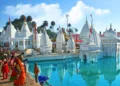
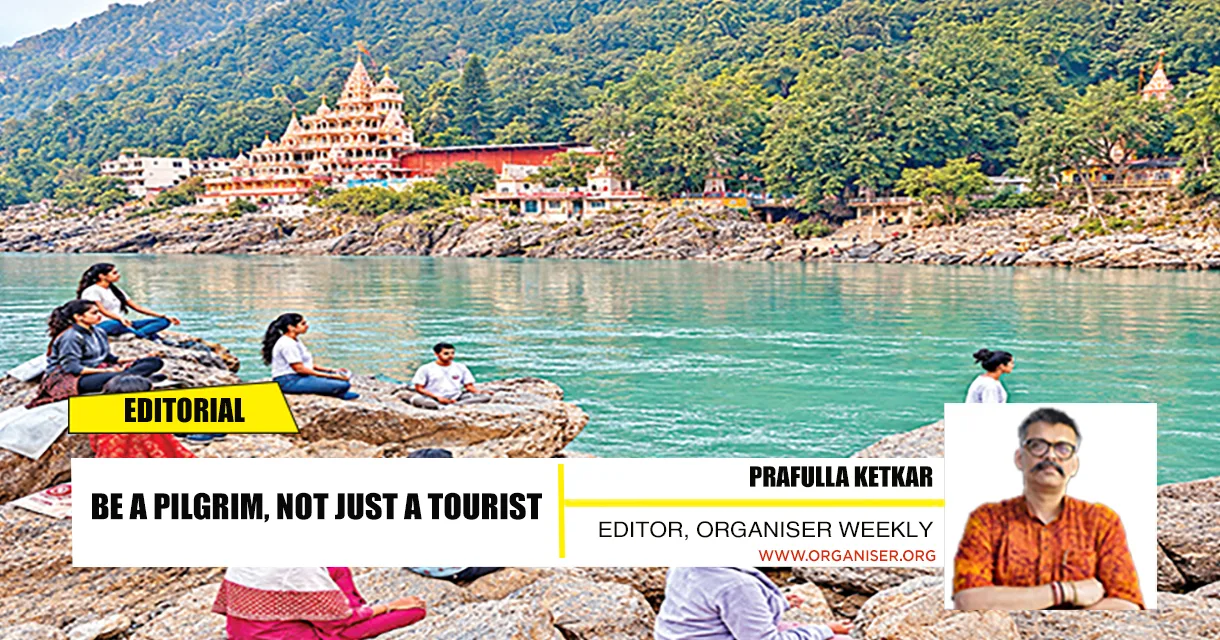
According to research by the National Council for Applied Economic Research, 430 million tourist trips are undertaken in Bharat. With the tradition of informal pilgrimages and Yatras, undertaken barefoot by devotees, most of them are not included in formal economic calculations using Western parameters. Yet the same research points out that among package tours, more than 50 per cent of trips are for religious purposes, while leisure tour packages stand at 28 per cent. Bharat is the practitioner of Spiritual Democracy. Every individual can choose a different path in search of spiritual bliss, yet when it comes to sacred pilgrimage sites, where collective devotion is sought, they are common to all. Naturally, ancient mandirs, sacred rivers, and multi-faith pilgrimage sites drive millions of journeys annually, which is beyond the comprehension for Western economic calculations. The beauty of these pilgrimages lies in how they naturally connect people, nature, and the supreme power. They are sustainable in spirit and take us beyond the material dimensions of tourism.
Youngsters, defined and divided by big-tech companies into categories to customise their consumer needs, defy the stereotypes imposed by capitalist manipulators. The self-proclaimed cockroaches are not the only youth who represent Bharat. Those who are proud of their civilisational roots, take a dip during Kumbh, undertake the difficult penance of Kawad Yatra or Narmada parikrama, and proudly flaunt their visit to Kedarnath, Ayodhya, Kashi, Tirupati or Rameshwaram are also youth. Contrary to popular belief, they outnumber those shaped by ideas of resistance and revolt and funded by the contradictory ideology of capitalism. Bharat has sustained many upheavals and overcome issues like generation gaps due to this inherent cultural thread nurtured through pilgrimage. Of course, the youth use technology to explore the world; they enjoy making reels and sharing them on their social media pages. Their idea of pilgrimage has changed with changing modes of transportation and increased connectivity, but that is true for everyone across generations. When it comes to the spirit behind undertaking pilgrimage to connect with the self, nature, and supreme consciousness, it remains the same.
As this year’s World Tourism Day theme suggests, digital and technological penetration will impact the flourishing sector through global connectivity. The ways destinations are chosen or hyped, the industry operates, and experiences are designed will all be shaped by data-driven technology. Indigenous and remote places with lower internet penetration will be at a major disadvantage in this process. Smaller businesses and destinations will face new challenges due to the digital divide. How to harness new technology to ensure human, sustainable, and inclusive tourism will be the industry’s critical question.
Here, the call given by Prime Minister Narendra Modi since his 2022 Independence Day speech becomes critical. He urged people of Bharat to visit at least 15 tourist destinations within the country. Bharat has much to offer the world of tourism, and if domestic tourism increases, international footfalls will also surge, boosting the industry, was the point that he made. Yet, it is not just an economic proposition. As RSS Sarsanghchalak Dr Mohan Bhagwat has been emphasising, six core aspects of our daily family life—language (Bhasha), attire (Bhusha), worship/prayer (Bhajan), food (Bhojan), travel (Bhraman), and home/building (Bhavan)—should be rooted in indigenous or traditional (Swadeshi) values. The Swadeshi spirit of tourism will connect us with the culture and strengthen our national consciousness. The spirit of pilgrimage will be sustained. The inherent unity of Bharat can be realised while celebrating the diversity. The children of the sacred motherland will not litter garbage or plastic if the spirit is beyond tourism. Fortunately, many youngsters are showing the way to explore Bharat without becoming materialist tourists and are reconnecting with new ways of pilgrimage. If Bharat sustains and presents this model of the pilgrimage sector to the world in the changed context, then eventually everyone will be a pilgrim, not just a tourist, and Mother Earth, like Bharat Mata, will also be considered a sacred place, not a resource.