SC says prohibition alone cannot stop alcoholism
October 10, 2026
  • Read Ecopy
  • Circulation
  • Advertise
  • Careers
  • About Us
  • Contact Us
Android AppiPhone AppArattai
Organiser
  • ‌
  • Bharat
    • Assam
    • Bihar
    • Chhattisgarh
    • Jharkhand
    • Maharashtra
    • View All States
  • World
    • Asia
    • Europe
    • North America
    • South America
    • Africa
    • Australia
  • Editorial
  • International
  • Opinion
  • RSS @ 100
  • More
    • World Hindu Congress 2026
    • Op Sindoor
    • Analysis
    • Sports
    • Defence
    • Politics
    • Business
    • Economy
    • Culture
    • Special Report
    • Sci & Tech
    • Entertainment
    • G20
    • Azadi Ka Amrit Mahotsav
    • Vocal4Local
    • Web Stories
    • Education
    • Employment
    • Books
    • Interviews
    • Travel
    • Law
    • Health
    • Obituary
  • Subscribe
    • Subscribe Print Edition
    • Subscribe Ecopy
    • Read Ecopy
  • ‌
  • Bharat
    • Assam
    • Bihar
    • Chhattisgarh
    • Jharkhand
    • Maharashtra
    • View All States
  • World
    • Asia
    • Europe
    • North America
    • South America
    • Africa
    • Australia
  • Editorial
  • International
  • Opinion
  • RSS @ 100
  • More
    • World Hindu Congress 2026
    • Op Sindoor
    • Analysis
    • Sports
    • Defence
    • Politics
    • Business
    • Economy
    • Culture
    • Special Report
    • Sci & Tech
    • Entertainment
    • G20
    • Azadi Ka Amrit Mahotsav
    • Vocal4Local
    • Web Stories
    • Education
    • Employment
    • Books
    • Interviews
    • Travel
    • Law
    • Health
    • Obituary
  • Subscribe
    • Subscribe Print Edition
    • Subscribe Ecopy
    • Read Ecopy
Organiser
  • Home
  • Bharat
  • World
  • Operation Sindoor
  • Editorial
  • Analysis
  • Opinion
  • Culture
  • Defence
  • International Edition
  • RSS @ 100
  • Magazine
  • Read Ecopy
Home Bharat

Dry Gujarat and repeated Hooch tragedies: SC says prohibition alone cannot stop alcoholism

The Supreme Court has questioned whether complete prohibition can prevent alcohol consumption and deaths from illicit liquor, citing repeated hooch tragedies in Gujarat. The court noted that Gujarat has remained a dry state since 1960 but has witnessed at least 10 major hooch tragedies that together claimed more than 600 lives

WEBDESKWEBDESK
Sep 20, 2026, 11:00 am IST
inBharat, Law, Gujarat
Follow on Google News
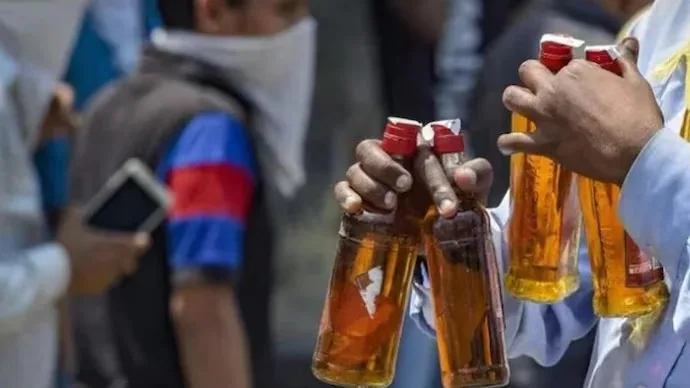
A representative image

A representative image

Facebook
Twitter
WhatsAppTelegramEmail

The observations came in a judgment delivered on September 18 by a bench of Justice JB Pardiwala and Justice K Vinod Chandran while dealing with Maharashtra’s restrictions on methanol.

The court struck down Rules 18A and 18B of the Maharashtra Poisons Rules, 1972, which regulated the purchase and possession of methanol and required certain additives to be mixed with methanol before it could be sold to non-drug manufacturers.

While examining the issue, the bench discussed the wider question of prohibition and its effectiveness in preventing alcohol-related harm.

Gujarat’s Hooch tragedies cited

The court referred to Gujarat as an example of the challenges faced under a strict prohibition regime.

According to the judgment, Gujarat has had at least 10 major mass hooch tragedies since its formation, with more than 600 people killed. The court noted that the state has maintained prohibition since 1960, yet methanol-laced illicit liquor has continued to cause serious public health crises.

The bench also referred to recent hooch tragedies in Bhavnagar, Gujarat, and Sagar, Madhya Pradesh, where around 13 and 15 people respectively died.

SC points to five ‘Evils’ linked to prohibition

While questioning the effectiveness of alcohol prohibition, the Supreme Court pointed to five issues it associated with a complete liquor ban: loss of government revenue, the cost of enforcing prohibition, corruption in the police, illegal distillation and a resulting drug menace. The bench of Justices JB Pardiwala and K Vinod Chandran made these observations while examining Maharashtra’s methanol regulations.

The court said complete alcohol bans can drive the liquor trade underground and increase the availability of unregulated and potentially lethal liquor.

Court says illicit trade can move underground

The Supreme Court observed that a complete ban on alcohol can push the liquor trade underground and increase the circulation of unregulated and potentially lethal liquor.

The court said the experience of Gujarat showed that prohibition by itself does not eliminate the demand for alcohol or prevent illicit liquor-related deaths.

The judgment also discussed several challenges associated with prohibition, including the loss of government revenue, enforcement costs, corruption, illegal distillation and the possibility of related drug activity.

Also Read: Abhijit Dipke ‘Resigns’ as MP CM, but when did he become Chief Minister & in what capacity did he use state symbols?

Maharashtra methanol rules struck down

The case before the Supreme Court concerned rules introduced to regulate methanol following a major hooch tragedy in Mumbai in 1991.

That incident involved spurious liquor containing methanol and resulted in the deaths of 93 people. The subsequent regulatory framework required methanol sellers to verify buyers and, in specified cases, add colourants and bitterants before sale.

The court held that the restrictions in Rules 18A and 18B were disproportionate and did not effectively address the main sources of methanol diversion, including theft, illegal diversion and misuse.

The judgment noted that simply making methanol unpleasant or identifiable would not by itself prevent its diversion into illegal liquor production.

Supreme Court suggests stronger monitoring

Instead of relying only on restrictions, the court suggested stronger measures to control the supply chain of methanol and illicit liquor.

It called for greater monitoring of transportation and storage, including stricter surveillance at interstate borders to prevent illegal movement of liquor.

The court also highlighted the need to monitor industrial units dealing with chemical solvents because such substances can potentially be diverted to illicit liquor manufacturers.

The judgment further suggested that methanol should be transported in separate tankers or containers to reduce the possibility of theft, substitution or diversion.

Court calls for action against illegal liquor network

The Supreme Court’s observations put the focus on both the supply and demand sides of the illicit liquor trade.

The court said authorities need to identify and disrupt the channels through which methanol and other chemicals reach illegal liquor manufacturers.


Topics: 600 hooch deathsmethanol deathsIllicit liquorSupreme Court prohibitionGujarat prohibitionGujarat hooch deaths
Share
Tweet
SendShareSend
✮ Subscribe Organiser YouTube Channel. ✮
✮ Join Organiser's WhatsApp channel for Nationalist views beyond the news. ✮
Previous News

Bengal Bypolls: Rejinagar independent candidate Saiful Islam arrested in 2021 clash case

Next News

CMRL-Exalogic: Keralam AG says case may be registered against former CM Pinarayi Vijayan, Veena and Riyas

Related News

Families performing last rites of those died in the hooch tragedy (Image Source: X)

Tamil Nadu: DMK rejects CBI probe as hooch tragedy death toll hits 56; Protesting BJP members arrested

Tamil Nadu BJP Chief K Annamali (Image Source: X)

TN Illicit Liquor Case: Death toll mounts to 50, BJP chief Annamalai calls for CBI probe

Load More

Latest News

Delhi Riots Case: Police seeks cancellation of Sharjeel Imam’s bail; Cites interaction with media, condition violation

Passenger blasts CJP’s Dipke for causing public inconvenience

‘Who is he? Shut down courts if…’: Passenger blasts CJP’s Dipke and ‘Cockroaches’ for causing public inconvenience

Lucknow’s Seva Jyoti Yatra Marks 25 Years of PM Modi’s Public Life

From Village to Global: Lucknow’s Seva Jyoti Yatra marks 25 years of PM Modi’s public life

Illegal Bangladeshi migrants detained at Kamakhya station in Assam

Assam: 57 illegal Bangladeshi migrants arrested at Kamakhya station; Infiltrators possessed forged Aadhaar & Voter ID

The ‘Kasab Playbook’? leaked CJP chats urge protesters to wear tilak & kalawa, plot to spark violence in Hindu name?

Representative Image

Chhattisgarh | Kanker Explosives Conspiracy Case: Two Maoists Jan Militia members sentenced to 10 years imprisonment

Karnataka govt’s Anjanadri Mandir takeover set aside by High Court; Vidyadasa Baba’s puja rights upheld

Bommai Kolu celebrates Hindu devotion and storytelling through traditional dolls handcrafted by generations of artisans

From Wood and Clay to Worship: The Hindu artisans keeping the centuries-old Bommai Kolu tradition alive

India issued a sharp warning to Pakistan & asserted that it will not bow to nuclear blackmail

India slams Pakistan at UN: ‘Will not bow to nuclear blackmail’; Warns against using nukes as instruments of statecraft

V.D. Satheeshan (Left) Adoor Prakash (RIght)

Keralam Congress rift deepens as CM Satheeshan rejects UDF convener Adoor Prakash’s allegations of unilateral decisions

Load More
  • Privacy
  • Terms
  • Cookie Policy
  • Refund and Cancellation
  • Delivery and Shipping

© Bharat Prakashan (Delhi) Limited.
Tech-enabled by Ananthapuri Technologies

  • Home
  • Search Organiser
  • Bharat
    • Assam
    • Bihar
    • Chhattisgarh
    • Jharkhand
    • Maharashtra
    • View All States
  • World
    • Asia
    • Africa
    • North America
    • South America
    • Europe
    • Australia
  • Editorial
  • Operation Sindoor
  • Opinion
  • Analysis
  • Defence
  • Culture
  • Sports
  • Business
  • RSS @ 100
  • Entertainment
  • More ..
    • Sci & Tech
    • Vocal4Local
    • Special Report
    • Education
    • Employment
    • Books
    • Interviews
    • Travel
    • Health
    • Politics
    • Law
    • Economy
    • Obituary
  • Subscribe Magazine
  • Read Ecopy
  • Advertise
  • Circulation
  • Careers
  • About Us
  • Contact Us
  • Policies & Terms
    • Privacy Policy
    • Cookie Policy
    • Refund and Cancellation
    • Terms of Use

© Bharat Prakashan (Delhi) Limited.
Tech-enabled by Ananthapuri Technologies