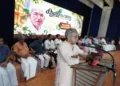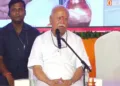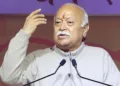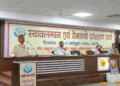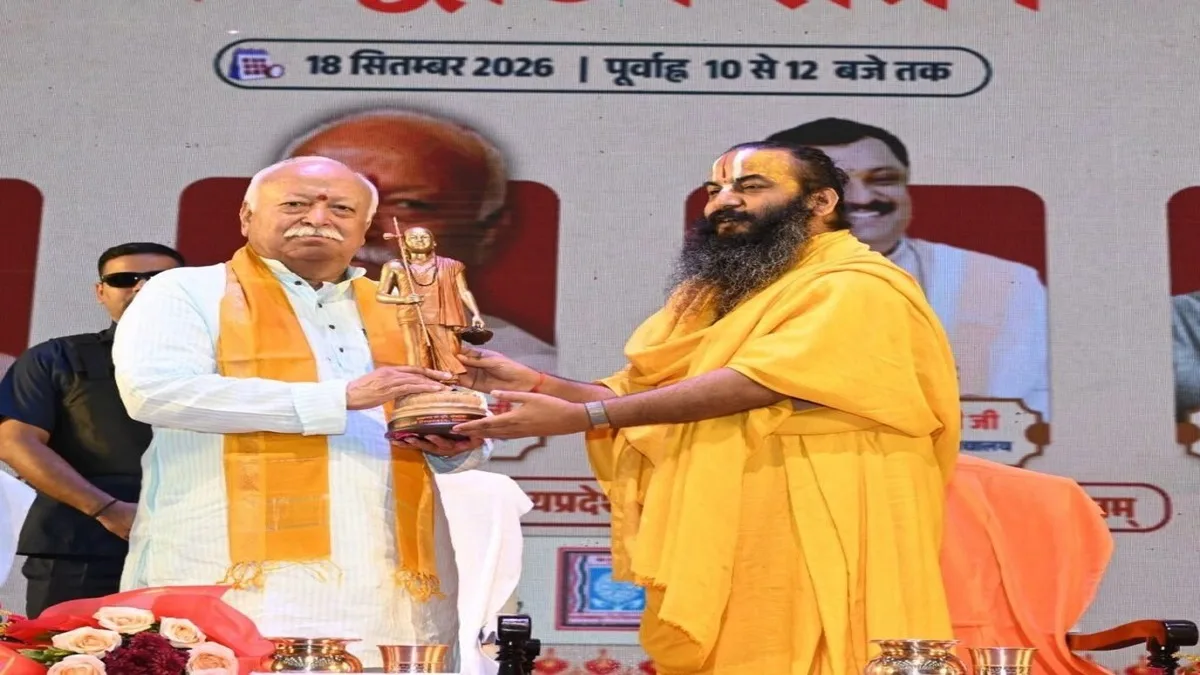
UJJAIN: Dharma is the element that guides a person’s conduct and decisions from the beginning to the end of life. Happiness and sorrow keep changing, but Dharma remains eternal and determines an individual’s duties, conduct and responsibilities, said RSS Sarsanghchalak Dr Mohan Bhagwat while addressing the sixth edition of Yuva Dharma Sansad 2026 Avantika, a national initiative of Sevagya Sansthanam, commenced at Geeta Bhavan in Ujjain.
He also formally inaugurated the three-day event. Dr Mohan Bhagwat rejected the notion that Dharma is something limited to old age or religious rituals. He said the understanding of Dharma should begin from youth itself. Dr Bhagwat also explained the distinction between Dharma and religion, saying that it would not be appropriate to understand Dharma merely in the sense of religion.
Linking the word Dharma to the Sanskrit root ‘dhri’, meaning “to hold or sustain”, he said Dharma is the discipline that unites individuals and society, prevents them from disintegrating and leads them towards continuous progress. Dharma, he said, does not mean withdrawing from life or renouncing everything. Rather, it provides a perspective that seeks to balance material life with spiritual growth and social responsibility. ‘Religion’ comes from the word ‘religio’, which means to bind. Dharma does not bind; it liberates”, he further said.
He observed that although human beings have limited physical capabilities by nature, their intellect has enabled them to play an important role in creation. This capability also brings with it a responsibility towards the wider creation. Dr Bhagwat called upon the youth to combine hard work and economic progress with social responsibility. He said people should fulfil their own needs while remaining mindful of the welfare and well-being of others. He identified truth, compassion, purity and austerity as important foundations of human Dharma.
He said, Dharma cannot be confined to grand principles and lectures. Not littering after eating, following traffic rules, avoiding causing inconvenience to others, fulfilling one’s duties and acting responsibly towards society are also expressions of Dharma. He said that the true nature of Dharma becomes visible not merely through reading books or speaking about it, but when it is reflected in everyday behaviour.
Dr Bhagwat urged young people to connect individual success with wider social success.
A person’s victory, he said, becomes meaningful only when the victory of others is also included in it. He encouraged the youth to move forward with a spirit of knowledge, charity and protection of the vulnerable. At the same time, he emphasised that remaining firm in one’s own form of worship and tradition while respecting other forms of worship is an important aspect of the Indian way of life.
Youth must connect self-development with Bharat-Bodh
In his welcome address, Acharya Mithileshanandinisharan Ji Maharaj called upon the youth to focus on self-development and develop a deeper understanding of Bharat. He said true victory does not lie in defeating those below oneself, but in proving oneself worthy of those who are higher. Bharatiya youth, he said, should not remain limited to merely being young but should recognise Bharat while working on their own development.
He urged young people to examine their questions through the lens of their own inner consciousness and life values rather than allowing them to be shaped solely by the market, politics or external circumstances.
Prof Srinivas Varkhedi called upon the youth to connect with Bharat’s knowledge tradition and self-awareness. He said young people should develop a consciousness that takes them from “India to Bharat” and become rooted in self-awareness. Building confidence, knowledge and a Bharatiya perspective among the younger generation, he said, would be an important achievement for society and the nation.
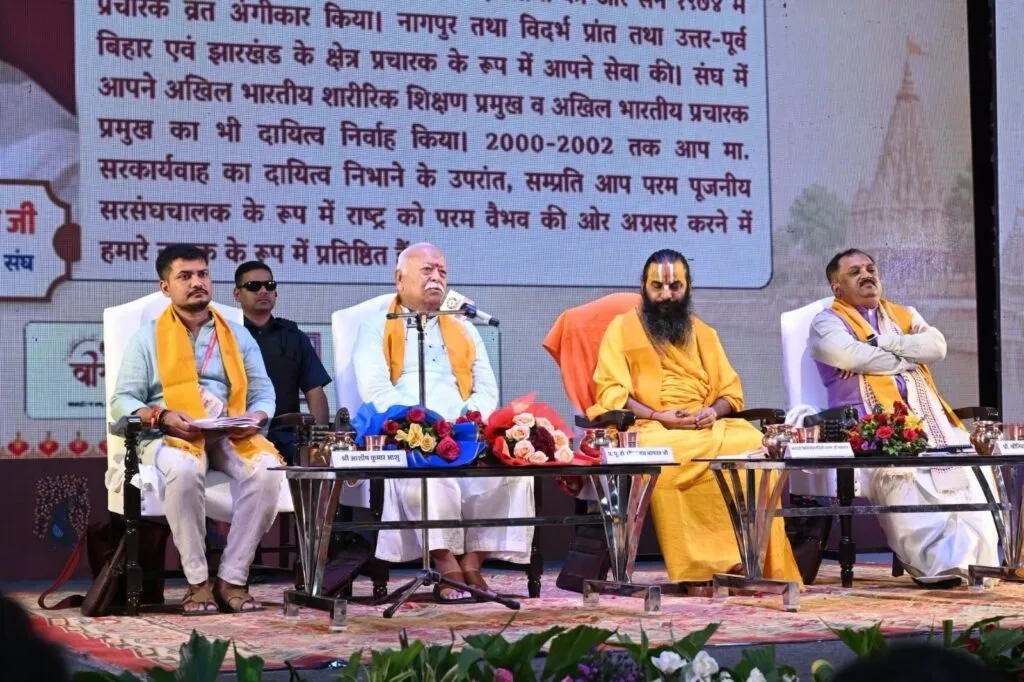
The inaugural programme was attended by Sevagya Sansthanam patron Acharya Mithileshanandinisharan Ji Maharaj, Central Sanskrit University Vice-Chancellor Prof Srinivas Varkhedi, Sevagya Sansthanam National President Ashish Kumar Ashu and other dignitaries. Around 1,600 young participants from 25 States, along with more than 300 academicians, teachers, researchers, scholars and Dharmacharyas, are participating in discussions on Dharma, culture, education, technology, social responsibility and nation-building.
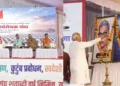
The programme began with the ceremonial lighting of the lamp, followed by floral tributes to Swami Vivekananda and Bharat Mata and the singing of the national song.
Sixth-edition of Yuva Dharma Sansad
The Yuva Dharma Sansad organised by Sevagya Sansthanam is being held for the sixth time. Earlier editions were organised in Kashi, Ayodhya, Mathura, Haridwar and Kanchipuram. The initiative aims to provide young people with a national platform to deliberate on questions concerning the Indian knowledge tradition, culture, Dharma, social responsibility and nation-building.
During the three-day programme, participants are discussing contemporary subjects through various sessions, including the existential understanding of Dharma and character-based responsibility, Bharatiya culture, education, artificial intelligence and technology, the conflict between information and ideas, social responsibility, human values and the role of youth in nation-building.