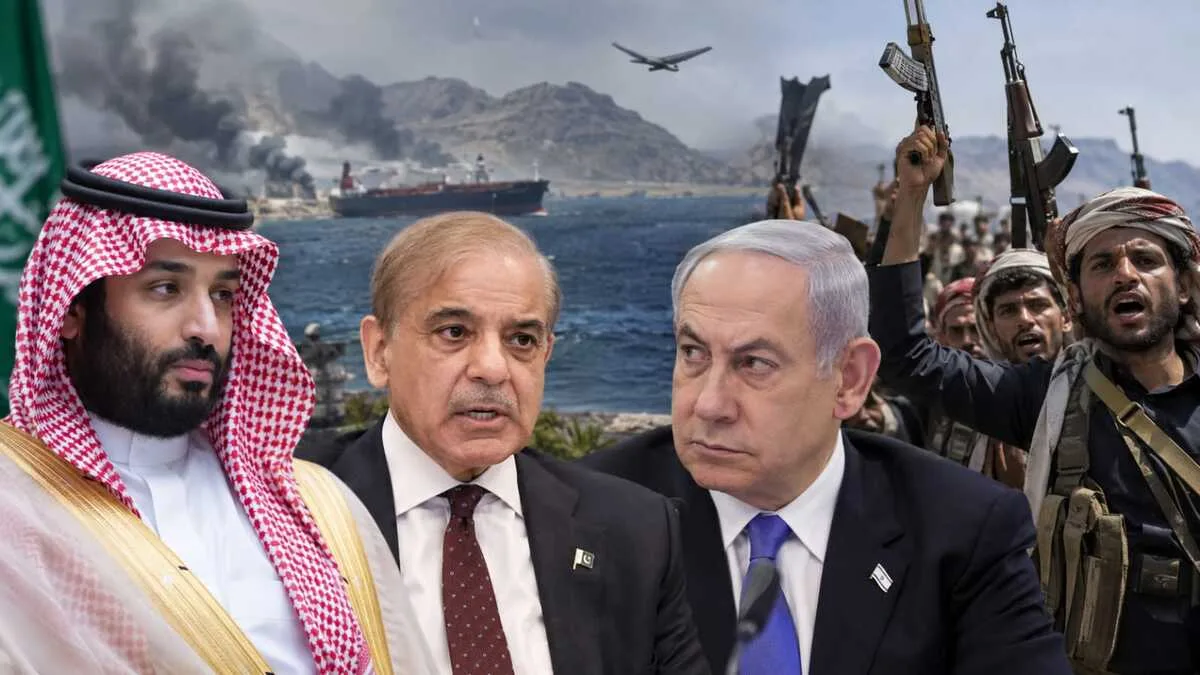
Saudi Arabia is turning to Israel for intelligence assistance as a major offensive by Yemen’s Shia Houthi militant group threatens its security, energy infrastructure and vital maritime trade routes, marking a significant shift in West Asian politics. The reported contact comes as Riyadh faces growing pressure from Yemen’s Shia militant groups, the Houthis, and struggles to secure direct military support from some of its traditional partners.
Yemen’s Shia Houthi militant groups launched a major attack on September 14-15 against several Saudi cities and military bases, employing ballistic missiles and drones. The latest escalation follows weeks of sporadic Houthi attacks on Saudi energy infrastructure and comes after a wider offensive in Yemen that reportedly eliminated resistance from the Saudi-backed coalition.
The developments have placed the Bab al-Mandeb Strait at the centre of the crisis. Following the Houthi takeover of parts of Yemen’s Red Sea coast and the Bab al-Mandeb islands, the Iran-backed Shia militant group, the Houthis, has threatened Saudi maritime access and maintained a blockade on Saudi shipping that has been in place since July. The Houthis have said ships from other countries, including the United States, would continue to be permitted to transit the strategically important waterway.
Saudi-Israeli intelligence contact
The Bab al-Mandeb, known as the “Gate of Tears”, has been particularly important to Saudi Arabia because it provides an alternative maritime route for oil exports, reducing reliance on routes exposed to a potential Iranian blockade of the Strait of Hormuz. With the Red Sea route disrupted and Saudi Arabia’s extensive internal pipeline network also coming under attack, Riyadh’s alternative oil transportation infrastructure has come under severe pressure.
Against this backdrop, Saudi Arabia has reportedly sought intelligence assistance from Israel. According to The Jerusalem Post, Saudi and Israeli contacts, mediated by US Central Command, focused on ways to address the threat posed by Yemen’s Shia Houthi militant group and stabilise the situation through intelligence support.
Israel Hayom separately reported that Saudi Crown Prince Mohammed bin Salman had appealed to other Gulf states and Egypt for assistance against the Houthis. The report said he had indirectly approached Israel through US Central Command, seeking intelligence concerning threats around the Bab al-Mandeb Strait.
The reported Saudi-Israeli contact is particularly significant because Saudi Arabia does not recognise Israel and the two countries do not maintain diplomatic relations. Nevertheless, the willingness to seek Israeli intelligence, even indirectly, highlights the seriousness of the security crisis confronting Riyadh.
Israel has its own experience confronting the Iran-backed Shia militant group, the Houthis. After the outbreak of the Gaza war in 2023, the Yemen-based group began targeting ships linked to Israel and its allies in the Red Sea. Israeli assistance to Saudi Arabia, according to the reports, would be confined to intelligence rather than direct military intervention.
Pakistan refuses troops for Yemen fight
At the same time, Pakistan has refused to send troops or weapons to fight Yemen’s Shia Houthi militant groups in Yemen. Pakistan, Saudi Arabia and Turkey are partners in the Mecca Pact, a Sunni security partnership sometimes described as a “Islamic NATO”. The refusal by Pakistan, therefore, represents a major complication for Saudi Arabia as it seeks military backing against the Houthi offensive.
Islamabad has made clear that Pakistani forces could be deployed to defend Saudi territory, but not sent into Yemen to fight the Houthis. The distinction is crucial as Riyadh confronts a growing threat without securing the direct military intervention it may have sought from a key Mecca Pact partner.
The United States and Britain have likewise declined to directly attack the Houthis in Yemen, while offering intelligence support and military advisers. Saudi Arabia is consequently confronting a widening security challenge in which its traditional partners are limiting the extent of their military involvement.
The reported approach to Israel, combined with Pakistan’s refusal to deploy troops to Yemen, underlines the extraordinary strategic pressures facing Saudi Arabia. The crisis around the Bab al-Mandeb is no longer merely a Yemen conflict. It is increasingly affecting Saudi security, energy exports and the wider balance of power across West Asia.