Like Arjuna of the Mahabharata, PM Modi, without wasting time responding to criticism from Dravidian forces, uses every opportunity to promote the Tamil language, culture, and the universal classic Thirukkural by having it translated into foreign languages.
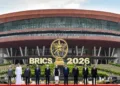
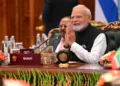
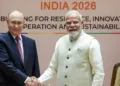
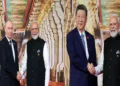
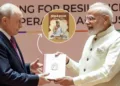
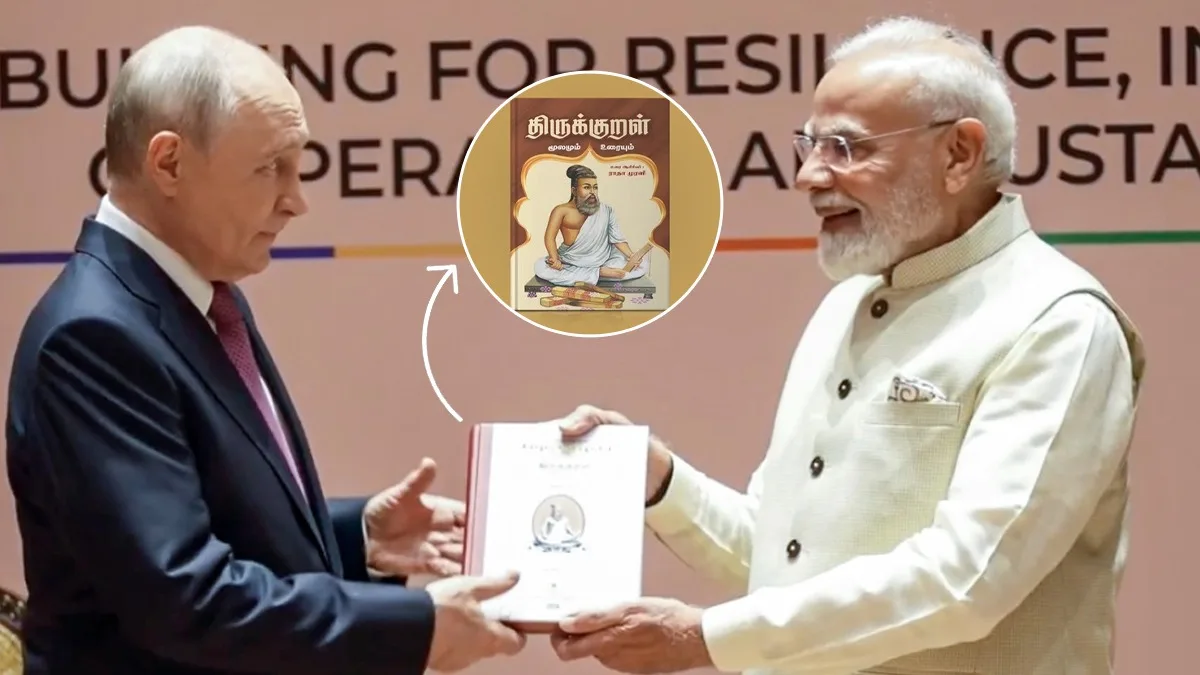
A couple of days ago, at the 18th BRICS Summit in New Delhi, PM Modi gifted a Russian translation of the sacred Thirukkural of the saint-poet Thiruvalluvar to Russian President Vladimir Putin.
PM Modi said, “I presented a Russian translation of the sacred Thirukkural by the divine scholar Thiruvalluvar to Russian President Putin. The Thirukkural proclaims the immeasurable wisdom of Thiruvalluvar that transcends national borders and languages. I hope this book helps strengthen our people-to-people connections.”
For many, it may have appeared to be just a gift to a foreign dignitary—perhaps a routine gesture or a parting gift to a visiting VIP. But there is a reason behind it, much like Newton’s Third Law.
Presented President Putin with a Russian translation of the Thirukkural, which carries the eternal wisdom of the great Thiruvalluvar across languages and borders. pic.twitter.com/rvk3rRDnvg
— Narendra Modi (@narendramodi) September 11, 2026
Thirukkural: A Universal Classic
Thirukkural is a foundational masterpiece of Tamil literature. It offers a universal guide to ethics, morality, secular humanism, governance, diplomacy, marital life, education, devotion, spirituality, individual discipline, and much more.
Written by the saint-poet-philosopher Thiruvalluvar, the work consists of 1,330 short, two-line couplets, traditionally structured around seven words per line. These are arranged into 133 chapters, each containing 10 couplets.
It is widely regarded as Ulaga Podhu Marai—the universal scripture or common ethical text—because its teachings transcend religion, race, caste, and national boundaries.
Thiruvalluvar wrote about virtue (Aram), wealth (Porul), and love (Inbam). To elevate human life and social well-being, he outlined virtues such as spirituality, charity, and love. The work is widely recognised for its universality and secular character. According to some historians, it dates to the first century. It does not promote a particular deity, religion, or caste and has therefore often been described as a “Universal Veda” or the “Common Creed of Humanity.”
The couplets go beyond questions of the afterlife and complex rituals, offering practical insights into everyday human relationships, family life, and the management of wealth. Thirukkural was first published in English in 1840 and has since been translated into more than 60 languages.
PM Modi Gifts Russian Translation to Putin
Prime Minister Modi gifted a Russian translation of Thirukkural, translated by Naira Mkrtchyan and published by the Central Institute of Classical Tamil, to Russian President Vladimir Putin during the BRICS Summit in New Delhi.
The gift carried special significance because of the text’s longstanding, though lesser-known, connection with Russia, where Indian philosophy has influenced writers and intellectuals for centuries. The Russian edition, published in 2026, includes the original Tamil verses, their transliteration, and a Russian translation by Naira Mkrtchyan.
PM Modi said the text serves as “a cultural bridge to share Bharat’s civilisational wisdom with Russian readers and deepen people-to-people connections between the two nations.”
Interestingly, Leo Tolstoy, one of Russia’s most famous writers, is believed to have encountered the work through an early translation in the 19th century. Tolstoy’s engagement with Thirukkural has also been linked to his correspondence with Mahatma Gandhi in the early 20th century.
E. S. Ariel, who translated the seminal Tamil text into French in the 19th century, famously described Thirukkural as “a book without a name by an author without a name.”
George Uglow Pope (1820–1908), an Anglican Christian missionary and Tamil scholar who was among the early scholars to study Thiruvalluvar systematically, honoured him with the title “The Bard of Universal Man.”
During his Tashkent visit in August 2026, Modi also suggested translating the sacred couplets of Thirukkural into Uzbek to introduce its practical and universal philosophy to Central Asian audiences.
Modi-ji presenting Russian translation of Thirukkural to President Putin shows his genuine love and respect for Tamil and our classic literature. Thank you 🙏 https://t.co/DmL4a6hnYw
— Sridhar Vembu (@svembu) September 11, 2026
Praise for Modi’s Tamil Cultural Diplomacy
Tamil Nadu Governor Rajendra Vishwanath Arlekar described the presentation of the Russian translation of Thirukkural to Putin as a moment of immense pride for Tamil Nadu and India.
K. Kailashnathan, Lieutenant Governor of Puducherry, also thanked PM Modi for presenting the Russian translation, describing Thirukkural as an “eternal beacon of ethics and good governance” and highlighting its reach across foreign and Indian languages.
Zoho Group promoter Sridhar Vembu wrote on X that Modi’s presentation of the Russian translation of Thirukkural to Putin demonstrated his “genuine love and respect for Tamil and our Classic literature.”
Even DMK spokesperson Sas Hafeez Ullah acknowledged the national significance of the text, saying that Thirukkural is “not only the pride of Tamil Nadu” but “the pride of India.”
Thuglak editor S. Gurumurthy also praised PM Modi’s Tamil cultural diplomacy, highlighting how showcasing texts such as Thirukkural and landmarks such as the Ramanathaswamy Temple in Rameswaram on international platforms connects India’s ancient civilisational heritage with modern global engagement.
Thirukkural and the Indian Army
Thirukkural is not merely a literary classic. It is also among the ancient Indian works being studied for insights into statecraft, strategy, diplomacy, and warfare.
The Indian Army has studied Thirukkural alongside Kautilya’s Arthashastra and Kamandaka’s Nitisara. The work has been translated into dozens of languages, with hundreds of individual versions worldwide.
During the Kashi Tamil Sangamam, PM Modi released special editions of Thirukkural translated into 13 languages to help popularise Tamil literature on a wider scale.
He also suggested translating the work into Uzbek during his Tashkent visit, with the aim of introducing its practical and universal philosophy to Central Asian audiences.
Modi’s Longstanding Engagement with Tamil
PM Modi’s engagement with Tamil language and literature has extended well beyond the recent BRICS Summit.
In his 2019 address to the United Nations General Assembly, he invoked the Tamil poet Kaniyan Pungundranar. Modi quoted the famous line “Yaadhum Oore Yaavarum Kelir,” explaining its message as: “We belong to all places, and to everyone.”
In July 2020, while addressing troops during his surprise visit to Ladakh, PM Modi quoted a couplet of saint-poet Thiruvalluvar on the qualities of valour, honour, dignified conduct, and credibility, linking them to the character of the armed forces.
In his Independence Day address in 2019, while speaking about the Jal Jeevan Mission, Modi quoted the famous Thirukkural couplet “Neer indri Amayadhu” to underline the importance of water.
During his visit to Thailand the same year, he cited another Thirukkural couplet on the importance of using wealth to help others. He also released the Thai version of Thirukkural during that visit.
In July last year, PM Modi, along with Papua New Guinea Prime Minister James Marape, released the Tamil classic Thirukkural in the Tok Pisin language to bring Indian thought and culture closer to the people of the southwestern Pacific nation.
Tamil Heritage on the Global Stage
The showcasing of the magnificent Ramanathaswamy Temple at Rameswaram as part of India’s BRICS 2026 engagements was also welcomed by Tamil Nadu Governor Rajendra Vishwanath Arlekar.
He described the temple as a testament to Tamil Nadu’s architectural brilliance, artistic excellence, and rich civilisational heritage, noting its iconic corridors and 1,212 intricately sculpted pillars.
The Governor praised PM Modi for showcasing Tamil heritage to the world alongside India’s achievements in innovation, development, and global cooperation.
There had been criticism from some right-wing quarters earlier over the DMK government’s representation of Thiruvalluvar in white robes without traditional spiritual markings and a sacred thread. However, the presentation of the Russian edition of Thirukkural to Putin has been cited by supporters as evidence that the Prime Minister’s approach to Tamil culture extends beyond such political controversies.
Prime Minister Modi, described by his supporters as a karma veer, has not allowed accusations that he is anti-Tamil or against Tamil Nadu’s interests to distract him. Instead, he has continued to pursue his stated objective of taking Tamil language, literature, culture, and India’s civilisational heritage to the global stage.
" The presentation of the Russian translation of the timeless Thirukkural by the Hon’ble Prime Minister, Thiru. Narendra Modi, to H.E. Mr. Vladimir Putin, President of the Russian Federation, during BRICS India 2026, is a moment of immense pride for Tamil Nadu and India.
Composed… pic.twitter.com/KOl7WAL8t8— LOK BHAVAN, TAMIL NADU (@lokbhavan_tn) September 12, 2026