UDAIPUR: A lecture on ‘Hum, Bharat Ke Log’ was organised under the Hastimal Lecture Series by Pathey Kan Sansthan, Vishwa Samvad Kendra and Rabindranath Tagore Medical College, Udaipur.
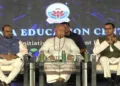
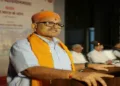
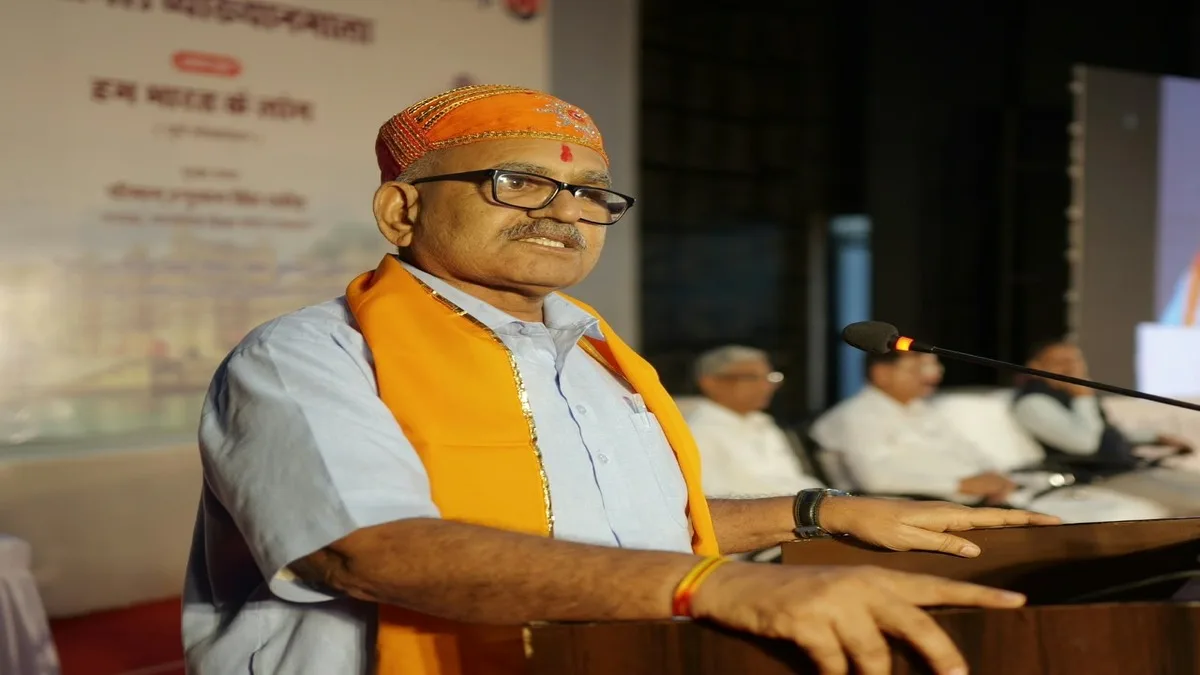
The programme was organised in connection with the lecture series of Hastimal. Hanuman Singh Rathore, Chairman of the Board of Secondary Education, was the keynote speaker. The programme was presided over by Prof Nandkishore Pandey, President of Pathey Kan Sansthan and Vice-Chancellor of Haridev Joshi University of Journalism and Mass Communication.
Dr Rahul Jain, Principal and Controller of Rabindranath Tagore Medical College, Udaipur, and Kamal Prakash Rohila, President of Vishwa Samvad Kendra, Udaipur, were also present on the dais.
Delivering the lecture on ‘Hum, Bharat Ke Log’, Rathore reflected on Bharat’s national identity, the Indian intellectual tradition and the journey from ‘I’ to ‘We’.
He said the question ‘Who are we?’ has become increasingly important before the world today. The crisis surrounding national identity requires serious reflection. In the Bharatiya context too, it is necessary to understand how the individual can move from ‘I’ to ‘We’ and what forms the foundation of this collective consciousness.
Speaking about Bharat’s philosophy, Rathore said it provides a vision of seeing a divine element in everything that exists in the world. The journey from ‘I’ to ‘We’ begins with a life of sacrifice and sensitivity towards the collective.
Bharatiya thought is not confined to the individual. It provides a vision of the family, society and the entire world as one interconnected unit. The feeling of Kutumb in Indian society is a manifestation of this thought.
He said sacrifice and a sense of belonging create a family, and this feeling expands into the ideal of ‘Vasudhaiva Kutumbakam’, inspiring people to regard the entire world as one family.
Rathore said Bharatiya tradition reflects sensitivity not only towards human beings but towards all living creatures. Respect for living beings and examples of compassion towards animals and birds within families and communities demonstrate the sense of belonging towards the entire creation embedded in the Indian way of life.
The Vedas and Upanishads have presented this broad outlook before society, he said.
He said a person who thinks and lives only for himself turns away from his responsibilities towards society and humanity. Referring to ideologies that seek to divide the world into different classes and groups, he said Bharatiya thought, in contrast, puts forward the ideal of the welfare of the entire world.
He said ideals such as ‘Sarve Bhavantu Sukhinah’, ‘Praniyon Mein Sadbhavana Ho’ and ‘Vishwa Ka Kalyan Ho’ reflect the universality of Bharatiya life philosophy.
A person who is concerned only about his own group or interests cannot develop the feeling of ‘We’. This feeling can emerge only when an individual begins thinking about the welfare of the entire society and the world, he said.
Highlighting Bharat’s historical role, Rathore said Bharat did not influence the world through weapons, but through knowledge, education, culture, the Vedas and its character.
Bharatiya’s civilisation connected people through character and conduct. This tradition, he said, is the contribution of Bharat’s sages and teachers, who showed the way to live with a sense of family and human values.
He said tendencies seeking to divide society on the basis of caste, class and different groups are visible today. Attempts are being made to create divisions in society based on narrow thinking.
He called for remaining alert to such tendencies and strengthening the feeling of ‘We’ on the foundations of Bharatiya philosophy and social harmony.
Referring to the debates of the Constituent Assembly, Rathore said citizens should study the discussions held during the framing of the Constitution.
There was extensive deliberation in the Constituent Assembly on the identity of independent Bharat, language and issues related to the nation. Referring to discussions concerning the national anthem and national song, he said the feeling of regarding the nation as a mother and developing a sense of belonging towards it takes citizens from ‘I’ to ‘We’.
He said Bharat must not be understood merely as a political or geographical entity, but as a living cultural consciousness.
Based on Bharatiya philosophy, society and culture, there is a need to reflect on how the feeling of ‘We’ can be developed by rising above individual interests and placing society and the nation at the centre, he said.
Pathey Kan Sansthan Secretary Mahendra Singhal presented the introduction to the programme and briefed the gathering about the journey and activities of the organisation.
He said that this year, Pathey Kan magazine surpassed its previous membership record by reaching 1.85 lakh members. Through the magazine, the organisation has expanded its work of public awareness to villages across the country.
He said the institution continues to work on literature, social awareness and issues related to national interest.
A Maharshi Dadhichi Dehdaan Samman ceremony was also organised, during which family members of individuals who had donated their bodies were honoured.
In his presidential address, Prof Nandkishore Pandey provided information related to the curriculum.
The programme began with the national song Vande Mataram and concluded with the national anthem. Guests paid floral tributes before the portrait of Bharat Mata.
Artists from the Nritya-Srishti Group presented a captivating classical dance performance as an offering of devotion. The audience also visited an exhibition on the Constitution and a literature exhibition.
Who Was Hastimal Hiran?
Hastimal Hiran was born in Amet, Rajsamand. He became associated with the Sangh’s work during his student life and dedicated his life to nation-building.
While working as a Pracharak in Udaipur, he held various responsibilities in the Sangh. From 2004 to 2015, he served as the Akhil Bharatiya Sampark Pramukh. Study, organisation, warmth and service were among the defining features of his life.