SURAT: Māori kaumātua, elders, academics, scientists, researchers and community leaders from Aotearoa New Zealand are being invited to participate in a global gathering in India that will examine how ancestral knowledge can offer meaningful responses to some of the world’s most pressing contemporary challenges.
The 9th Triennial International Conference and Gathering of Elders, organised by the International Centre for Cultural Studies (ICCS), will be held from January 29 to February 2, 2027, at the Sardar Vallabhbhai National Institute of Technology (SVNIT) in Surat, Gujarat. The five-day event will be held under the theme “Ancestral Wisdom in Contemporary Challenges.”
The gathering is expected to bring together elders, traditional knowledge holders, academics, scientists, cultural practitioners, spiritual leaders and community representatives representing ancient and indigenous traditions from across the world.
From ancestral knowledge to contemporary solutions
The conference will explore how knowledge preserved and transmitted across generations can contribute to addressing challenges ranging from climate change and environmental sustainability to family and community wellbeing, ageing, social isolation, cultural identity, technological transformation and intergenerational disconnection.
Māori participation is being particularly encouraged in recognition of the depth and continuing relevance of mātauranga Māori, encompassing traditional knowledge and perspectives surrounding whakapapa, whānau, whenua, tikanga, wairuatanga, hauora, environmental stewardship and responsibilities towards future generations.
Sandeep Kavishwar, Organising Secretary of ICCS, said modern technology and institutions alone may not be sufficient to address every challenge confronting humanity.
“The world is facing challenges that cannot always be solved by technology and modern institutions alone,” Kavishwar said, stressing the value of generations of knowledge concerning relationships, community, wellbeing and the natural environment.
He said the gathering would provide Māori knowledge holders an opportunity to share their perspectives with participants from other ancient cultures while also learning from their experiences.
Bridging traditional knowledge and modern science
A key focus of the 2027 gathering will be dialogue between traditional knowledge and contemporary science. Māori academics, scientists and researchers are therefore being encouraged to participate alongside elders and cultural knowledge holders.
The organisers see the interaction as an opportunity to move beyond treating ancestral knowledge merely as a subject of cultural preservation and instead examine its potential contribution to contemporary research, policymaking and community life.
The conference will feature opportunities for participants to present cultural traditions and research, participate in interdisciplinary discussions, share cultural practices and performances, interact with elders from different traditions and establish international collaborations.
Strong Māori connection with ICCS gatherings
Māori participation in ICCS events has a precedent. In 2012, a 22-member Māori delegation comprising kaumātua, academics, businesspeople and artists from New Zealand travelled to India for an international ICCS gathering.
The delegation presented aspects of Māori culture, language and performing arts and participated in business and institutional meetings in Mumbai and New Delhi. Organisers said the experience demonstrated the potential of international cultural exchanges to build stronger relationships and understanding between indigenous communities.
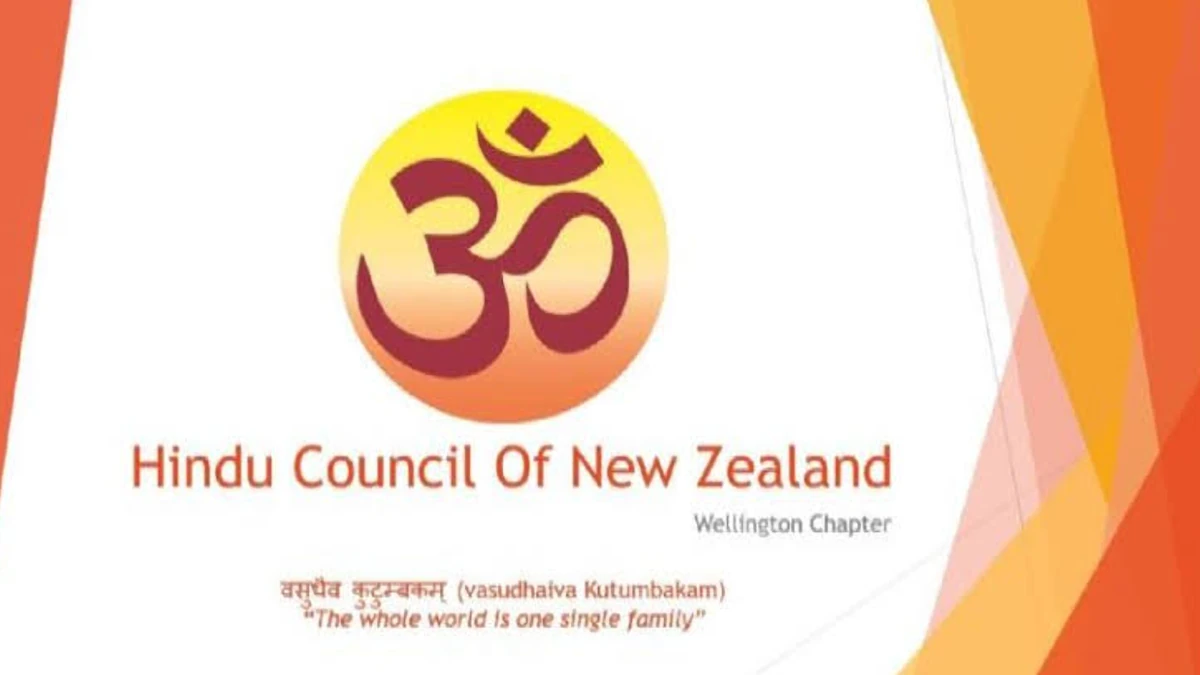
Prof Magesan, President of the Hindu Council of New Zealand and coordinator of the Māori delegation to India in 2012, said the upcoming gathering presents another opportunity for Māori knowledge and perspectives to enter a wider international conversation.
“Māori have a unique opportunity to share with the world the wisdom of our tūpuna while also learning from the experiences of other ancient cultures,” he said, emphasising that the purpose is not simply to preserve the past but to explore how ancestral wisdom can contribute to building a better future.