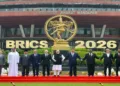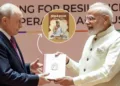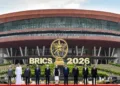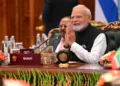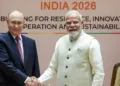

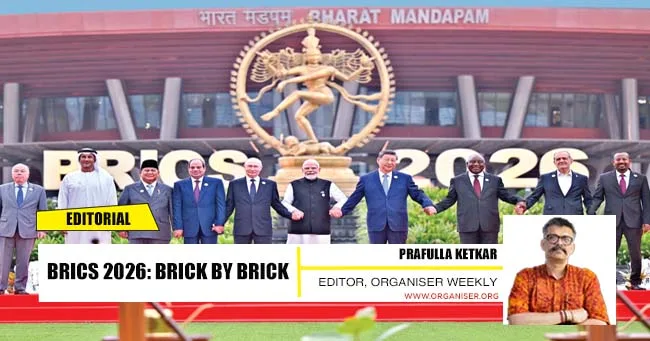
“Today, BRICS too stands at a ‘coming of age’ moment. Over the past twenty years, BRICS has established a distinct identity for itself on the global stage. We respect each other’s perspectives and move forward through consensus. We strive to move ahead with an approach that is not against anyone but instead seeks to take everyone along. It is now time for us to translate our unity and consensus within BRICS into concrete outcomes on the global stage” – PM Narendra Modi, opening remarks during the 18th BRICS Summit Session: Inclusive Global Governance and Strengthening Multilateralism, September 12, 2026
The idea that germinated in Bharat way back in 1998, with a former Russian Foreign Minister’s proposal to evolve a multipolar group, has ‘come of age’ with the 18th Summit held in New Delhi. There are multiple interpretations and perspectives to look at BRICS, and one’s analysis of the outcome of the Summit, in terms of the New Delhi Declaration, would also depend on the perception one has about the forum. How should we view this global platform and the Summit that focused on ‘Building for Resilience, Innovation, Cooperation and Sustainability’?
When the idea was originally mooted in 1990s, as a Russia, India, China (RIC) trilateral forum, the main concern was international trade with specific reference to foreign direct investment. Another platform, IBSA (India, Brazil, and South Africa), was conceived to revive
South-South cooperation across continents and address similar financial issues. In 2006, both forums found common ground, and BRIC came into existence in New York with a resolve to hold a summit-level dialogue. By the time the inaugural Summit took place in Yekaterinburg, Russia, on June 16, 2009, the 2008 financial crisis was looming large, impacting global markets, and economic reforms with a transparent and inclusive approach became an important agenda item for the BRIC. In 2010, South Africa also joined the process, and the BRIC became BRICS, with a major African country joining. Since then, despite ups and downs, internal tensions, and differences between member countries, BRICS has emerged as a global force that draws international attention. Without any rigid objectives and agenda, BRICS has evolved with a slow and steady approach, which is the strength of the forum and not a weakness, as many analysts believe.
The numbers themselves tell the story of the forum’s importance. BRICS represents almost 50 per cent of the world’s population, around 40 per cent of global GDP, and 36 per cent of global trade. Although the ongoing West Asia conflict affected member countries’ economies to varying degrees, BRICS nations’ total merchandise trade recovered strongly in the first quarter of 2026, reaching approximately USD 5.8 trillion, a 15.4 per cent increase over the same period in 2025. From Bharat’s point of view, this is even more critical, as its trade with BRICS members has surged from around $102 billion in 2015 to nearly $400 billion today. The grouping brings together some of the world’s fastest-growing economies, serving major markets, energy suppliers, and investors. The New Development Bank, or the BRICS Bank, has emerged as a major source of loans for development activities in the member countries. The other countries, Egypt, Ethiopia, Indonesia, Iran, Saudi Arabia, and the United Arab Emirates, joining the initiative in 2024 and 2025, have given a new impetus to the process. Over time, BRICS+ has become a useful platform for consultation and cooperation on contemporary issues, ranging from global governance to regional peace and security. Institutional reforms and cheaper cross-border payments have become important agenda items for BRICS over the years. Amid uncertainty, it offers an opportunity for deeper economic and political partnerships across Asia, Africa, and Latin America. For countries like Bharat, South Africa, Indonesia and Brazil, BRICS provide leverage for strategic autonomy by engaging with multiple power centres.
Most BRICS countries are also members of alternative groupings like the G-20, and Bharat and Indonesia also have observer status in the G-7. Therefore, seeing BRICS as a counterweight to the US and European bloc of the developed countries is neither appropriate nor desirable. The post-World War II world order is facing a major crisis of efficacy. The absence of reforms in the United Nations system is forcing countries like the US to exit many organisations in the UN system. On the economy and trade front, as well as on peace and security, the present-day international order cannot provide credible solutions. The old order is crumbling, and a new order is yet to emerge. Hence, there is no option but to work on alternate plurilateral platforms. BRICS is one such initiative.
The tone and tenor of the New Delhi Declaration has to be understood in this context. Bharat and China have border tensions, and the trade deficit vis-à-vis China is an important concern for Bharat and other member countries. Yet, they continue the dialogue process and have agreed to work towards a more inclusive and sustainable governance agenda. From cultural and people-to-people cooperation to regional and international security concerns and issues of global governance, finding some consensus is a step forward in the dialogue process. Countering terrorism, including the Pahalgam attack in Jammu-Kashmir, is an important flag point from Bharat’s point of view. Support for multilateralism, while calling for reforms to ensure an inclusive approach to changing global realities, is the crux of the declaration.
Despite initial hiccups and a series of ups and downs, BRICS has emerged as a strong initiative among key global players that seek to build ‘resilience and innovation for cooperation and sustainability’. BRICS’s brick-by-brick approach can pave the way for an alternative governance mechanism for a more stable, peaceful and prosperous world order. Instead of seeing it as a competitive platform to challenge the dollar-centric economy and expecting instant results for the multilateral world order, BRICS should be seen as a multipolar platform of emerging and growing economies seeking solutions to regional and global governance challenges.