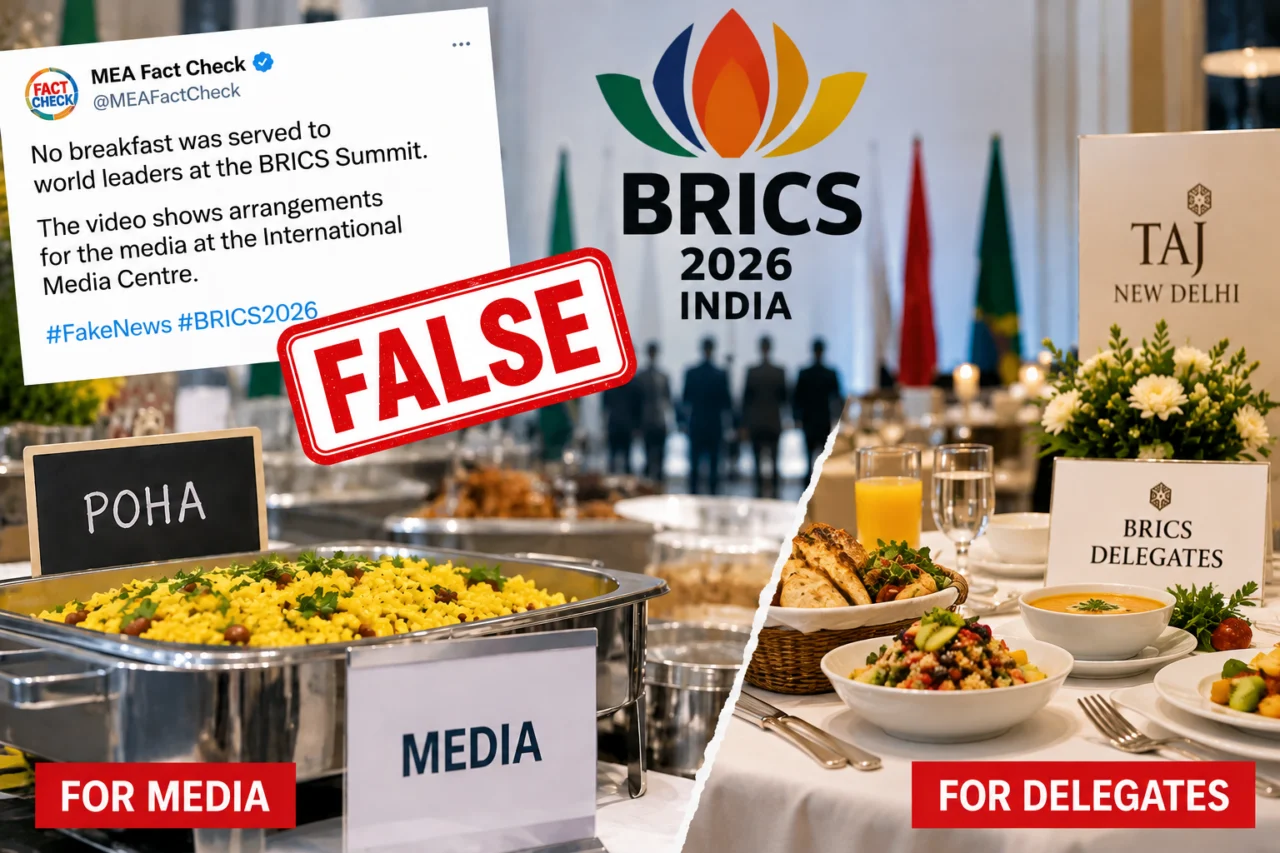
NEW DELHI: A video showing a vegetarian breakfast spread at Bharat Mandapam went viral with claims that BRICS leaders were served poha during the summit. The Ministry of External Affairs clarified that the food was meant for journalists, not world leaders.
World leaders did not have breakfast at the summit venue. Delegates stayed at luxury hotels, where they were served elaborate menus including kebabs, nalli nihari and other dishes.
What sparked the ‘poha’ controversy?
A video of a simple vegetarian food spread at Bharat Mandapam went viral during the 18th BRICS Summit. Social media users claimed that world leaders visiting India were served poha and other simple Indian breakfast items.
The claim, however, was misleading.
All-veg spread for lunch at the BRICS International Media Centre, Bharat Mandapam, New Delhi. pic.twitter.com/JUQMRmjKZG
— Nayanima Basu (@NayanimaBasu) September 12, 2026
The official MEA Fact Check handle clarified that no breakfast was served to world leaders at the summit venue. The food shown in the viral video was kept for the national and international media covering the summit.
The spread was arranged at the International Media Centre. Similar vegetarian food arrangements were also made for the media during the 2023 G20 Summit.
What was actually served to the media?
The media food spread was curated by ITC Hotels and had a strong vegetarian and millet-focused menu.
It included:
1. Assorted Indian breads and subz motia pulao
2. Penne al pomodoro e panna and vegetable hakka noodles
3. Kung pao vegetables and baked vegetable au gratin
4. Pearl millet, haricot beans and charred pepper in citrus-parsley dressing
5. Makai lehsuni palak, rajma rasela, dal panchmel and paneer lababdar
A later video by The Hindu also confirmed that the vegetarian spread was meant for national and international media covering the summit.
Fake News!
No breakfast was served to world leaders at the Summit Venue today. The visual is from the International Media Centre at Bharat Mandapam. pic.twitter.com/Wkk8DILjo8
— MEA FactCheck (@MEAFactCheck) September 12, 2026
What did the BRICS delegates eat?
The food served to delegates was quite different from the viral poha spread.
At The LaLiT New Delhi, which hosted delegations including South Africa, Burundi and the UAE, the hotel prepared a menu combining Indian regional flavours with international dishes.
The menu included galouti kebabs and tandoor breads, along with millet dishes. It also featured braised eggplant with miso paste and kidney beans in Japanese-style Amber sauce.
At the Taj Mahal, New Delhi, the hotel presented a menu called “Tradition to Table”. The recipes were said to be inspired by the chefs’ own mothers.
The menu included nalli nihari with khamiri roti, gucchi pulao, Delhi-6 chicken korma, steamed Chilean sea bass in banana leaf, and lamb chops with black pepper and chilli.
How did social media react?
The viral food video led to different reactions online.
Some users praised the vegetarian spread, saying it showed the variety of Indian vegetarian food and that it was not limited to “raw veggies and fruits”.
Others criticised the media menu, calling it carb-heavy and saying local caterers could have prepared better food.
Some social media users also brought up reports of non-vegetarian dishes such as nalli nihari and galawati kebabs. However, these dishes were part of menus served to delegates at hotels and were not part of the media spread shown in the viral video.
One user also used the controversy to raise questions about India’s child malnutrition figures, citing stunting and wasting numbers. Those figures were not independently verified in the discussion and are therefore treated only as a social media claim, not a confirmed statistic.
India showing other BRICS countries one of the reasons for it having the second highest child wasting in the world, around 14 percent children being undernourished, 33 percent children under 5 are stunted, and the highest number of anemic children in the world.
— Dr. Ruchika Sharma (@tishasaroyan) September 12, 2026
Fact: The claim that BRICS world leaders were served the poha-based vegetarian spread shown in the viral video is false. The food was served to media personnel, while delegates were hosted at luxury hotels with separate menus.