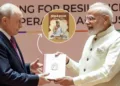
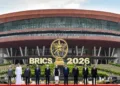
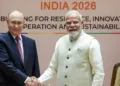
The upcoming 18th BRICS Summit in New Delhi on 12-13th September 2026 has much more to it than an economic or diplomatic summit. India’s chairship of the BRICS is coinciding with the BRICS chairmanship at a time of sweeping changes in the international system. The post-Cold War world which was dominated by the West is now becoming more of a world where economic, political and strategic power is becoming more diffused. However, the global governance structures have not developed in the same manner. This results in a basic paradox of international relations in the present world, there is an increasing pluralism of power, and many institutions of global governance are firmly rooted in an previous distribution of power.
s
The United Nations Security Council, international financial institutions and a few other institutions of multilateral governance still have reflections of twentieth century in them, and not the twenty-first century geopolitical and economic realities. In this context, BRICS has gained significance which goes beyond its economic moorings. With an ever-expanding membership and a growing involvement in a wide array of matters from development financing to trade, technology, climate change, health and global governance, it is an increasingly important platform for the Global South. Thus, New Delhi Summit is not just an occasion for India to host an international forum, it is an occasion to shape the normative trajectory of an emerging global order.
Significance of BRICS 2026 for the contemporary global order
The first importance of the New Delhi Summit is what BRICS is in the new paradigm of international relations. BRICS cannot just be interpreted as a bloc that could be an alternative to the west because It’s a too limited interpretation. In depth it is an attempt to make countries empowered which have been less influence on the creation of global rules. The 2025 Rio de Janeiro BRICS Summit had “more inclusive and sustainable global governance” as an explicit focus for their discussion. This shows that BRICS is more becoming a platform where the emerging and developing countries can articulate their interests rather an economic platform.
This change is significant in the era of the challenges that the world faces, where the unilateral approach can no longer be used. Threats such as climate change, pandemics, artificial intelligence, cyber security, food and energy insecurity, international terrorism and financial instability and global supply chain disruptions are transnational. They need institutions that can be a source of collective responses but to be a good multilateralist you need to be legitimate. The legitimacy in turn, does not only require rules to exist, but also that states believe the rules are well-crafted. Thus, the need for global institutions to change, continues, is more fundamental to the issue of representative legitimacy.
India has always been and will continue to be a proponent of reformist multilateralism and not the abandoning of multilateral institutions. It is a significant differentiation. The goal should not be to start anew and create new entities that would supplant the United Nations, the World Trade Organization or existing entities. Instead, emerging powers need to strive to make these institutions more representative, democratic and development oriented. This is already a part of India’s BRICS chairship.
For the trade area, India has underscored the importance of a rules-based multilateral trading system at the centre of which lies the WTO and has urged for more attention to be paid to the interests and policy space of the developing countries. However, BRICS 2026 is not just about the economic power of the BRICS nations. It lies in the potential for a more effective involvement of the Global South in the rules of global governance, as a normative platform.
India’s opportunity: From hosting a summit to shaping an agenda
The second, and more pressing, question is what does India stand to gain out of hosting the summit? Diplomatic visibility is not a creation of influence, it is hosting. The true power is in changing the convening power of the chair to the agenda setting power of the chair. It has set its priorities in trade, labour, education, technology and digital public infrastructures and more. Resilience, innovation, cooperation and sustainability offer a general blueprint through which India can link economics and more general issues of global governance.
Thus, India should employ the New Delhi Summit to further three interwoven goals. First, it should be able to amplify the voice of Global South in the existing international institutions. Focusing the work on reform of the UN Security Council is key. The Indian stance shouldn’t be just for a permanent seat to India. Instead, India should offer Security Council reform as a larger initiative towards the reform of the international decision-making process to ensure its representativeness in the face of the current political and demographic realities.
Second, India should develop multilateralism with the focus on development. In the greater part of the developing world, questions of poverty, food security and energy access, employment, health and technological inequality are inextricable from international politics. Global governance that fails to tackle development without tackling security cannot be complete. Third, India should leverage BRICS to advance the areas of practical cooperation instead of it being one of the mostly declaratory forums. The new BRICS framework on digital cooperation, connectivity, financial mechanisms, technology and resilient supply chains is a good example of the opportunities for this practical multilateralism.
Digital public infrastructure, cyber security, digital skills, innovation and people-centric technological development, for instance, have been the areas of focus during India’s recent involvement with BRICS on information and communication technology. The challenge is to get BRICS to move from a talking point of being dissatisfied with the structures to a forum that can contribute towards other solutions and institutional innovations. The diplomatic tradition and strategic autonomy of India come into the picture here. India’s unique role is that it has critical ties with the Western powers as well as significant ties with BRICS and other Global South groups. It doesn’t have to be to build an anti-West coalition. Instead, India can adopt what can be called multi-aligned institutional diplomacy that is, work on bilateral, trilateral and multilateral agenda with various groups without compromising strategic autonomy.
India’s civilisational contribution to normative global governance
Perhaps the most unique opportunity that India has in the third dimension. India’s role in global governance does not have to be limited to material capabilities, economics weight or a diplomatic leverage. It can also be used to tap its long tradition of civilisation and enunciate the principles of normativism applicable in the modern international arena. There is no romanticising of the past nor implying that ancient ideas can be easily planted in the modern international system. Instead, the civilisational heritage of India can offer intellectual inputs to think on universal issues. In the spirit of “Vasudhaiva Kutumbakam” (Universal Oneness), the world as one family, that is one such normative concept. When correctly interpreted, it does not mean uniformity between the States. It indicates an ethical sense of interrelatedness and common human concerns. Such a principle can gain a new significance in an international system that is faced with a growing number of problems that are transnational in nature.
In the same way, the philosophical concept of “Lokasangraha” (the welfare and stability of the larger social order) of the Indian scripture, Bhagavad Gita, emphasizes action in the direction of the welfare and stability of the larger social order. In today’s parlance, it can give voice to a vision of international leadership that is accompanied by a sense of responsibility. The aspiration for welfare of all “Sarva Bhavuntu Sukhinah” can also be a value basis for a development-oriented paradigm of global governance.
These ideas may not be put forward as instruments of cultural assertion. It is precisely due to their translatability into universal values, human welfare, responsibility, sustainability, inclusion and peaceful coexistence that they value. In this regard, India can strive to link its civilisational legacy to the present values of international community, such as: “Vasudhaiva Kutumbakam” with inclusive multilateralism; “Lokasangraha” with responsible leadership; and “Sarva Bhavuntu Sukhinah” with people centred development. This may give a unique ‘intellectual chairmanship’ to India in the chairmanship of BRICS. This is especially pertinent about the current debate on the future of international order. The international community is facing a more complex dilemma than the Western-dominated order and the alternative, China-centred order.
There is growing need for a true plural order where different civilisations, political systems and development experiences can engage in the development of common rules. India can contribute to this pluralism without engaging in any sort of civilisational exceptionalism. That it would have as its best-case scenario: civilisational diversity and universal norms are not necessarily contradictory. A truly inclusive international order can acknowledge diverse experiences, uphold common pledges for peace, human dignity, development and cooperation.
The 2026 BRICS Summit should thus be seen as a chance for India to step up from being a part of the global governance to a more influential norm shaping in the governance. The yardstick to evaluate the success of India’s chairship should not be just limited to number of meetings organised, declarations made or bilateral engagements undertaken. Turning a convening power into institutional ideas, economic weight into development partnerships and civilisational heritage into universally relevant ideas would be the keys to its deeper success. The current world system is not static, it’s not set. This is in the process of being renegotiated, via institutions, coalitions and new norms.
This renegotiation is happening in one of the arenas, BRICS. Therefore, India has a historic chance in New Delhi to not to fight for the change of one dominant order for the other, but to push an order that is more representative, more inclusive, more development and more responsive to the interlinked challenges of humankind. Its civilisational message can help to buttress this desire. The world is not an array of rival states, but an interdependent human community. With the institutional needs of multilateralism in the twenty first century, if India were to bring this philosophical heritage together, then BRICS 2026 might well be more than yet another diplomatic summit. It may turn into a key moment in the ongoing pursuit of a better, more legitimate and humane world order.