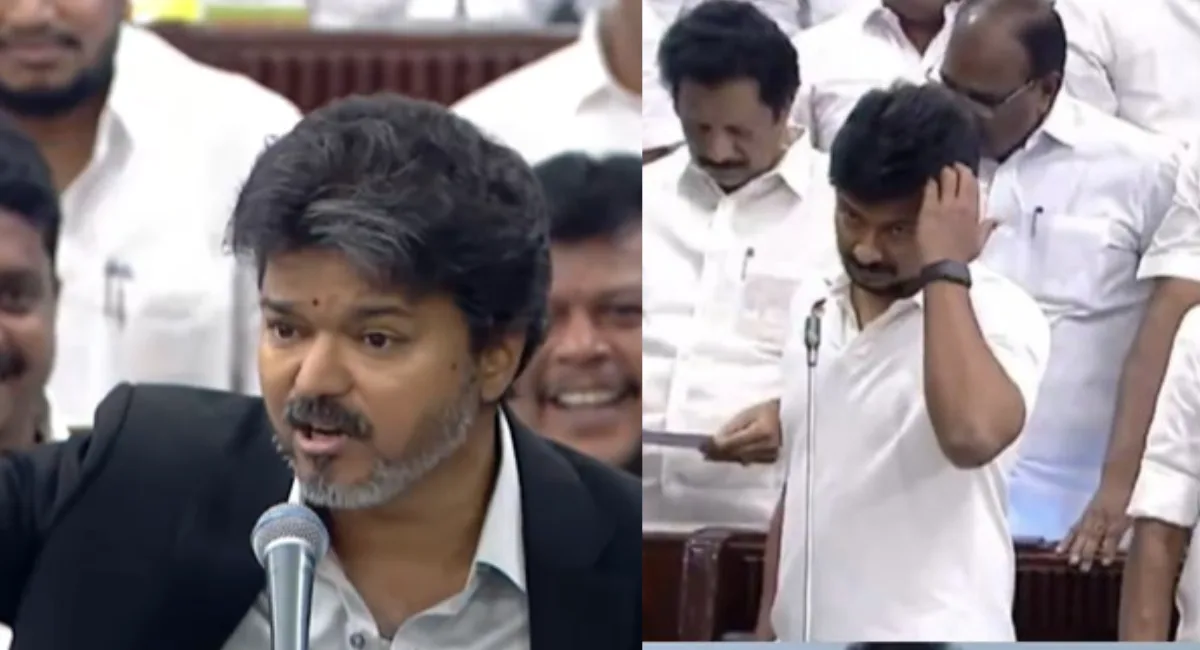
Tamil Nadu Chief Minister C Vijay Joseph launched a scathing attack on the DMK in the Assembly on Monday, September 7, delivering on his promise to take on the party over corruption. However, rather than announcing concrete action against corrupt DMK politicians, Vijay largely cited findings from the 1977 Sarkaria Commission report and an Enforcement Directorate (ED) dossier to score political points.
Vijay had on Thursday, September 3, indicated that he would raise the issue in the Assembly on Monday, saying, in essence, “When I speak on Monday (September 7), please make sure the DMK doesn’t leave the Assembly.”
True to his word, Vijay took on the DMK when the Assembly met on Monday. The DMK stayed back in the House, while its protests and the din created by its members did not evoke a positive response from the Speaker. With the proceedings being live telecast, lakhs of people are learnt to have watched the confrontation with interest.
முந்தைய திமுக ஆட்சிக்காலத்தில் சத்தியநாராயணா பிரதர்ஸ் நிறுவனத்திற்கு டெண்டர் வழங்குவதற்காக தமது முதலமைச்சர் பதவியை, அதிகாரத்தை தவறாகப் பயன்படுத்தினார் அப்போதைய முதலமைச்சர் மு.கருணாநிதி என்று சர்க்காரியா கமிஷன் விசாரணை அறிக்கையில் கூறப்பட்டுள்ளது என்பதை சட்டமன்றத்தில்… pic.twitter.com/nT080oxWLt
— TVK IT Wing Official (@TVKHQITWingOffl) September 7, 2026
Vijay referred to allegations made by the Enforcement Directorate in its dossier concerning the collection of money in the name of party funds.
He claimed that commissions ranging from 7.5 per cent to 10 per cent were collected in certain transactions. He further alleged that former minister V Senthil Balaji had misused his official position.
The Chief Minister claimed that officials and individuals linked to the former minister were also involved in the transactions. He named DMK president M K Stalin and party leader Udhayanidhi Stalin while referring to the agency’s allegations. He also spoke about party funds allegedly collected by the Karur gang.
"Party Fund வாங்கியதில் முக்கிய நபர்கள் மு.க.ஸ்டாலின், உதயநிதி ஸ்டாலின்தான் என அமலாக்கத் துறை கூறியுள்ளது" – முதல்வர் விஜய்#CMVijay | #TNAssembly | #DMK | #TVK | #UdhayanidhiStalin | #MKStalin pic.twitter.com/TfpuffI3G1
— PttvOnlinenews (@PttvNewsX) September 7, 2026
Vijay also referred to three files that he had earlier said were on his table awaiting action.
“When I told them that three files are on my table waiting for my action. DMK wanted me to speak out openly. Today I am going to speak one of them. It is only a sample, more to come in due course,” Vijay said.
"Tableல இருக்க 3 Filesஐ பாக்குறதுக்கு முன்னாடி ஒரு Sample பாக்கலாமா" – முதல்வர் விஜய்#CMVijay | #TNAssembly | #DMK | #TVK | #UdhayanidhiStalin pic.twitter.com/Avt8v5evLR
— PttvOnlinenews (@PttvNewsX) September 7, 2026
The Chief Minister then brought up the name of fugitive Ratheesh, questioning who he was close to in the Tamil Nadu government and why he was hiding in Dubai after the TVK came to power.
Ratheesh was often seen around Udhayanidhi and was reportedly handling transfers, finalising tenders and other matters. The ED had mentioned him and film producer Akash Baskaran after its raids at the TASMAC corporate office in May 2025 as part of its PMLA case.
The ED informed the Madras High Court that incriminating data retrieved from the seized mobile phone of former TASMAC Managing Director S Visakan, IAS, directly pointed to the involvement of Akash Baskaran and his business associate Vikram Ravindran.
Vijay said the records relating to the allegations were extensive and would take nearly two days to read in full. He therefore presented only a summary of the material before the Assembly.
He challenged the DMK to respond to the allegations rather than repeatedly asking for evidence, arguing that the relevant material was already available through public records and documents.
The attack then drew a direct response from Leader of the Opposition Udhayanidhi Stalin, who questioned why Vijay would need three days merely to take a print of the ED report and read it in the Assembly.
Udhayanidhi termed it a diversionary tactic and said Vijay had spoken without preparation. He compared the performance to a typical cinema shooting — “roll camera, action mode” — and called Vijay a “dummy CM” who had delivered “cringe dialogues”.
அமலாக்கத்துறை குற்றச்சாட்டுகளை பிரிண்ட் அவுட் எடுத்து வந்து படிக்க 3 நாட்கள் எதற்கு?
பதிலற்ற பதிலுரை – பழிபோடும் பேச்சு – diversion tactics – மொத்தத்தில் எந்த preparation-ம் இல்லாமல், Roll Camera, Action mode-ல் Cringe டயலாக் பேசி இருக்கிறார் dummy CM.
எதிர்க்கட்சியின் பதிலைக்…
— Udhay (@Udhaystalin) September 7, 2026
“Without running and hiding, he should prepared to list to the opposition. Prepare well next time, try to do better?” Udhayanidhi said.
அமலாக்கத்துறை குற்றச்சாட்டுகளை பிரிண்ட் அவுட் எடுத்து வந்து படிக்க 3 நாட்கள் எதற்கு?
பதிலற்ற பதிலுரை – பழிபோடும் பேச்சு – diversion tactics – மொத்தத்தில் எந்த preparation-ம் இல்லாமல், Roll Camera, Action mode-ல் Cringe டயலாக் பேசி இருக்கிறார் dummy CM.
எதிர்க்கட்சியின் பதிலைக்…
— Udhay (@Udhaystalin) September 7, 2026
Speaking to media persons, Udhayanidhi further said, “He has not replied to our queries. Just memorised something and recited. I thought he would come prepared today as he had promised on Thursday. But nothing and he left.”
நாங்கள் கேட்ட கேள்விக்கு எந்த பதிலும் இல்லை மனப்பாடம் பண்ணிட்டு வந்து சட்டசபையில ஒப்பிச்சுட்டு போயிருக்காரு
மாண்புமிகு எதிர்க்கட்சி தலைவர் திரு. @Udhaystalin அவர்கள் pic.twitter.com/W0dMxfihEL
— DMK (@arivalayam) September 7, 2026
Vijay, meanwhile, expanded his attack by citing the 1977 Sarkaria Commission report and allegations of irregularities in the Veeranam pipeline project.
He said, “Commissions were allegedly sought in connection with the awarding of contracts and the office of the chief minister was allegedly used to favour a particular company.”
The references to the Sarkaria Commission report and the Veeranam project formed another layer of Vijay’s broader attack on the DMK’s record in government. He reminded the House that the material he was referring to was already available in public and official records and did not require the Opposition to seek separate documentation from him.
The Chief Minister also assured that the law would take action against anyone making obscene or defamatory comments about women, as heated exchanges took place in the House.
Replying to the debate in the Assembly on demands for grants for the Police Department, Vijay said political parties were free to criticise one another but warned that derogatory or obscene remarks against women would not be tolerated.
The political confrontation then moved towards the issue of MISA and the Emergency. In an indirect reference to a DMK leader, Vijay said he had witnessed the Emergency, adding that he would not be cowed down by such threats.
“You always say that you have faced MISA, but we know the history behind the MISA,” Vijay said.
Political commentator Kishore K Swamy backed Vijay’s remarks, saying, “CM Vijay had rightly said. It was case related to eve teasing issue and nothing to do with MISA act.”
சரியாக சொன்ன முதல்வர் அது மிசா காலத்தில் போடப்பட்ட கசமுசா கேஸ் , ஈவ் டீசிங் மேட்டர் pic.twitter.com/Py7XiaOTu5
— kishore k swamy 🇮🇳 (@sansbarrier) September 7, 2026
Before ending his speech, Vijay said he had entered politics neither for office nor for power but with the intention of serving the people.
The speech subsequently triggered reactions beyond the Assembly, with social media users weighing in on the confrontation between Vijay and the DMK.
One of the netizens, Rajesh, said, “As I said earlier, whenever Vijay starts speaking the truth, the DMK’s image will suffer further damage. Keep provoking him, and it will only backfire—today’s speech is evidence of that. A request to all opposition parties: choose your side and stand with the people. This is your opportunity to speak live before them and prove what you represent. Speak with discipline. Maintain decorum. You will reap what you sow.”
As I said earlier, whenever Vijay starts speaking the truth, the DMK’s image will suffer further damage. Keep provoking him, and it will only backfire—today’s speech is evidence of that.
A request to all opposition parties: choose your side and stand with the people. This is… pic.twitter.com/NqNoZVfskh
— Rajesh (@rajeshamlw) September 7, 2026
Another netizen questioned the use of an ED dossier on the floor of the Assembly, arguing that legislative proceedings should not become a parallel court.
“Legislative Floors cannot become Kangaroo Courts. Waving an ED dossier on the floor of an Assembly to build a political narrative isn’t mature politics, it’s cheap political theater and this may eventually need to go before a Court,” the user said.
The post further argued that a dossier represented the probe agency’s theory and had not gone through judicial scrutiny, cross-examination or evidence evaluation in a court of law. It also said the Assembly should debate policy and legislation rather than conduct parallel trials.
Legislative Floors cannot become Kangaroo Courts.
Waving an ED dossier on the floor of an Assembly to build a political narrative isn't mature politics, it's cheap political theater and this may eventually need to go before a Court.
A dossier is a mere accusation, not a…
— Sriram (@SriramMadras) September 7, 2026
The DMK then stepped up its criticism through organising secretary RS Bharathi, who alleged that Vijay had turned the Assembly into a stage.
“He acted in the Assembly like he has acted in the film to satisfy his audience, nothing more than that,” Bharathi said.
Taking aim at Vijay’s reference to the Sarkaria Commission report, Bharathi said the actor-politician was invoking an issue that dated back decades.
The exchanges marked a sharp political confrontation in the Tamil Nadu Assembly on September 7, with CM Vijay Joseph using the House to put the DMK’s past controversies, ED dossier and corruption allegations under the spotlight, while Udhayanidhi Stalin and other DMK leaders accused him of political theatrics and a lack of preparation.