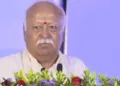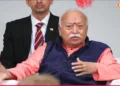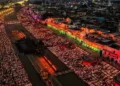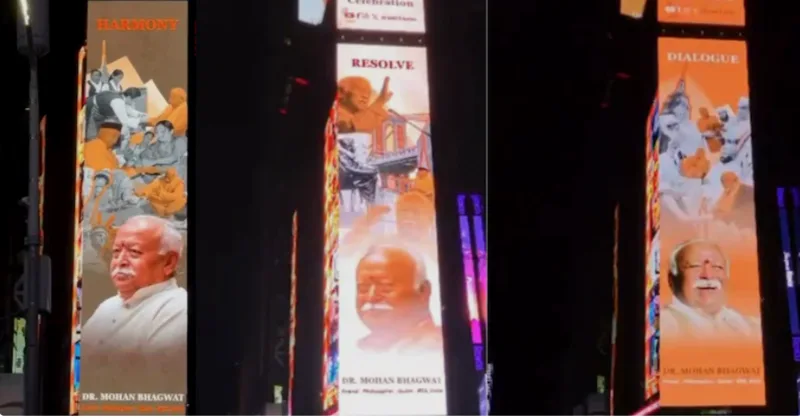
NEW YORK — The visual spectacle of Manhattan’s Times Square saw a distinct addition on August 28 evening as large digital billboards featured Rashtriya Swayamsevak Sangh (RSS) Sarsanghchalak Dr. Mohan Bhagwat ahead of his high-profile diaspora address. Posed against the bustling backdrop of the city, the projections prominently showcased the RSS chief alongside key thematic pillars—”Resolve, Harmony and Dialogue”—capturing the attention of onlookers and drawing members of the Indian-American community who gathered to take photographs.
Dr. Bhagwat arrived in the United States on Tuesday as part of a three-nation global outreach tour covering the US, Canada, and the United Kingdom, coinciding with the RSS’s centenary year.
Promoting ‘Vasudhaiva Kutumbakam’
Organized by the American Hindus for Engagement and Dialogue (AHEAD) forum, the main event at the Infosys Theatre at Madison Square Garden—titled ‘Universal Oneness Celebration’—is expected to draw thousands of attendees. According to event organizers, the gathering aims to explore universal unity and the ancient Hindu philosophy of Vasudhaiva Kutumbakam (the world is one family) through cultural performances, artistic presentations, and keynote addresses.
Before his scheduled address, Dr. Bhagwat engaged in various community activities across New York. He visited the historic ISKCON Bhakti Centre at 26 Second Avenue—the site where founder A.C. Bhaktivedanta Swami Prabhupada established the movement in 1966. During his visit, Dr. Bhagwat offered floral tributes, interacted with business executives and community leaders, and participated in a food distribution drive serving the local homeless population.
Controversy and Political Pushback
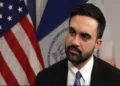
The high-profile visit has also attracted political friction and opposition from civil rights organisations. New York City Mayor Zohran Mamdani publicly voiced disapproval of the gathering, characterizing the movement’s ideology as based on an “exclusionary vision”.
In response to planned demonstrations outside the venue by groups such as Hindus for Human Rights and affiliated interfaith coalitions, community advocacy organizations like the Hindu American Foundation (HAF) issued safety advisories. The HAF urged participants to avoid altercations while calling on city administration to fulfill its duty in protecting civil rights and maintaining public order. Meanwhile, India’s Ministry of External Affairs rejected assertions and calls for restrictions from bodies such as the United States Commission on International Religious Freedom (USCIRF), dismissing them as biased and lacking credibility.