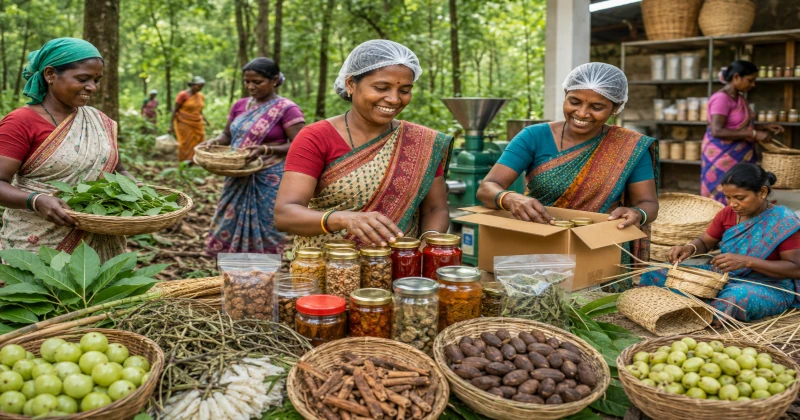
With 4,172 Van Dhan Vikas Kendras sanctioned and 12.48 lakh Janjati members brought into the fold, the Pradhan Mantri Janjatiya Vikas Mission is seeking to turn minor forest produce into a source of enterprise, income and community ownership
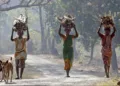
For millions of Janjati families living in and around India’s forests, the forest is far more than a landscape of trees and wildlife. It is a workplace, a source of food and, most importantly, a source of livelihood.
Honey, mahua flowers, tamarind, tendu leaves, bamboo, lac, medicinal herbs and several other forms of Minor Forest Produce (MFP) have traditionally contributed significantly to the household incomes of forest-dependent communities. For many Janjati families, MFP accounts for around 20 to 40 per cent of their annual income.
Yet, for decades, the people who collected these products often received only a fraction of their eventual market value. The reason was simple, the person who gathered the produce was rarely the person who controlled its sale.
Pradhan Mantri Janjatiya Vikas Mission
Unlocking India's Tribal Forest Economy
🔸 Many of India's 10.4 crore #ScheduledTribes derive 20–40% of their annual income from Minor Forest Produce (MFP)
🔸 Historically, tribals sold this produce to middlemen at distress prices,… pic.twitter.com/E0Z7BLoLID
— PIB India (@PIB_India) August 20, 2026
Forest gatherers frequently depended on intermediaries and local traders, often selling their produce at low or distress prices. The government’s Pradhan Mantri Janjatiya Vikas Mission (PMJVM) seeks to change that equation by taking Janjati communities beyond collection and sale of raw produce and towards processing, branding, marketing and entrepreneurship. At the centre of this effort is the Van Dhan Vikas Kendra (VDVK) model.
From collecting forest produce to building enterprises
The fundamental idea behind PMJVM is to ensure that Janjati communities capture a greater share of the value generated from the resources they collect.
Instead of selling raw honey, for instance, Janjati gatherers can process, package and market it. Instead of selling turmeric or ginger as raw agricultural produce, communities can turn them into branded powders. Bamboo and other forest products can similarly be processed into marketable goods. This is where VDVKs become important.
The Mission brings Janjati gatherers together through self-help groups and community institutions. A typical VDVK brings together around 15 self-help groups, with approximately 300 members, creating a collective platform for processing, training and marketing.
The model is designed to transform forest gatherers into value-adding entrepreneurs. The scale is already substantial.
As of July 31, 2026, 4,172 VDVKs have been sanctioned, of which 2,911 are functional, while 12.48 lakh Janjati members have been linked to the initiative. The functional VDVKs have reported sales of around Rs 168 crore.
The numbers point towards a larger shift: the Janjati economy is increasingly being connected with organised markets rather than remaining confined to local traders and traditional intermediaries.
The MSP safety net
One of the major challenges faced by forest gatherers has historically been price uncertainty. A Janjati family may spend hours or days collecting forest produce, only to find that the local market offers a price that barely compensates for the labour involved. The Minimum Support Price (MSP) mechanism for MFP seeks to provide a safety net.
The government has notified MSP for 87 minor forest produce items under the programme. The Janjati Cooperative Marketing Development Federation of India (TRIFED), through state-level implementing agencies, facilitates procurement at predetermined prices.
The objective is straightforward: a forest gatherer should not be forced to sell valuable produce at throwaway prices simply because there is no alternative buyer.
Since 2013-14, state governments have procured 2,67,954 metric tonnes of MFP worth Rs 693.98 crore under the scheme. This procurement mechanism is particularly significant in remote Janjati areas, where access to competitive markets can be limited.
The Forest Rights framework
The push to strengthen the Janjati forest economy also rests on a broader legal framework. The Scheduled Tribes and Other Traditional Forest Dwellers (Recognition of Forest Rights) Act, 2006, commonly known as the Forest Rights Act, recognises the traditional livelihood relationship between forest-dwelling communities and forest produce.
The Act defines minor forest produce broadly to include non-timber forest products of plant origin, including bamboo, cane, tussar cocoons, honey, wax, lac, tendu leaves, medicinal plants, roots and tubers.
The Panchayats (Extension to Scheduled Areas) Act, 1996, meanwhile, provides Janjati Gram Panchayats in Scheduled Areas with ownership rights over minor forest produce. PMJVM builds an economic ecosystem around this foundation helping communities not only collect forest produce but also process and sell it.
What happens inside a Van Dhan Vikas Kendra?
The VDVK model is not simply about setting up another procurement centre. It combines training, infrastructure, technology, finance and market access.
Janjati members receive training in scientific harvesting techniques and value addition. Centres can be equipped with processing machinery such as cutting and sieving tools, decorticators, dryers and packaging equipment, depending on the locally available produce.
Working capital can be facilitated through financial institutions, banks and the National Scheduled Tribes Finance and Development Corporation. Storage and transportation facilities can also be accessed on a rental basis. The objective is to create a complete chain from the forest to the consumer.
Instead of a Janjati gatherer handing over raw produce to a middleman and walking away with a small payment, the VDVK model attempts to give communities a stake in what happens to the product afterwards.
Taking Janjati products from local haats to digital markets
For generations, the haat has been the heart of commerce in many Janjati regions. These local markets remain important procurement points for MFP, but PMJVM seeks to connect them with larger markets.
There are more than 5,000 haats in Janjati areas, and efforts are being made to modernise them with facilities such as permanent structures, storage, drinking water, shade and weighing equipment.
At the same time, VDVKs can access wider markets through exhibitions, festivals, artisan fairs and e-commerce platforms. TRIFED provides market intelligence, including information on prevailing rates and potential digital avenues for selling products.
The programme also focuses on branding, advertising, geographical indications, research and development and the creation or upgrading of IT and e-commerce platforms. This is crucial because producing a high-quality Janjati product is only half the battle. The other half is finding a buyer willing to pay its real value.
When Janjati women become business owners
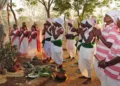
Perhaps one of the most significant aspects of the VDVK model is its potential impact on Janjati women. In many communities, women are deeply involved in collecting, processing and selling forest produce. PMJVM seeks to convert that participation into ownership and enterprise.
A striking example comes from Arunachal Pradesh. The Nyigamane, Ho Yorbe, Medumhagdum VDVK in Leparada district was established in October 2021 with around 300 women SHG members and farmers.
The centre processes locally available forest and agricultural produce into a range of products, including:
- King chilli pickle
- Bamboo shoot pickle
- Turmeric powder
- Ginger powder
- Pineapple jam
- Pineapple squash
- Orange squash
The products are rooted in the region’s natural resources and local food traditions, but are converted into commercially viable goods. Since 2022-23, the VDVK has recorded sales of around Rs 11 lakh. More importantly, the women are not merely participating as labourers.
They jointly own the enterprise. That distinction could prove significant in the long run. When women have a stake in the business, the income generated from the forest can become a source of household financial security and greater economic independence.
Adding value where the forest meets the market
The larger economic logic behind PMJVM is simple: value addition should happen closer to the community that produces the raw material.
Consider the difference between selling raw turmeric and selling packaged turmeric powder. The forest gatherer or farmer earns from the raw product in the first model. In the second, the community can potentially earn from processing, packaging, branding and marketing as well.
The same principle applies to honey, bamboo, medicinal plants, tamarind, mahua and dozens of other products. This is where the programme attempts to break the traditional dependence on intermediaries. The forest continues to provide the resource, but the community begins to control more stages of the economic chain.
A different model of Janjati development
PMJVM is therefore not merely a welfare intervention. Its broader ambition is to create a community-owned forest economy. The model combines traditional knowledge and forest resources with modern processing, branding, finance and digital marketing.
That combination could become increasingly important as consumers show greater interest in natural, locally produced and sustainably sourced goods. Janjati products often have something that mass-produced alternatives cannot easily replicate: a connection to a particular landscape, community and tradition.
Mahua from a particular forest region, bamboo products from the Northeast, indigenous spices, wild honey or traditional herbal products can carry both economic and cultural value. The challenge is ensuring that the communities responsible for producing them receive a fair share of that value.
From forest resources to a Viksit Bharat
India’s Janjati economy has often been discussed through the language of poverty, remoteness and welfare. The VDVK model introduces another vocabulary, enterprise, ownership, value addition and markets.
A Janjati gatherer who once sold raw forest produce at the village market can potentially become part of a community enterprise that processes, brands and sells products to consumers far beyond the local region.
A group of women who once depended largely on seasonal agricultural work can build a year-round business around locally available produce. And a traditional forest economy can begin to participate in India’s expanding digital marketplace without losing its community roots.
With thousands of VDVKs being established and lakhs of Janjati members being brought into the network, PMJVM is attempting to make India’s forests not just a source of raw materials, but the foundation for locally owned economic opportunity.