Long before the modern nation-state conceived of the welfare model, Indian civilisation had already understood that the dignity of a society rests on the dignity of its labour. The śreṇis, the guild-communities of craftsmen and traders that flourished from the Mauryan age onward, pooled resources to care for their members in sickness and misfortune, embodying a communitarian ethic that treated the worker’s wellbeing as a shared civilisational duty rather than a private misfortune. That ancient instinct for collective care resurfaced in independent India in the most enduring piece of labour legislation, the Employees State Insurance Act of 1948, and finds its most visible modern expression in the Employees State Insurance Corporation, or ESIC. Operationalised in 1952 to protect factory workers against the financial shocks of sickness, injury and maternity, the ESI Scheme has since grown from a narrow industrial safety net into one of the world’s largest integrated social security programmes, covering more than 13 crore beneficiaries across the organised sector. As India strides toward the goal of a Viksit Bharat by 2047, ESIC’s dual mandate of providing healthcare and cash benefits to workers while simultaneously training the next generation of doctors stands as a quiet but powerful pillar of that national ambition, one that links the welfare of today’s labourer to the medical capacity of tomorrow’s India.
ESIC: The Architecture of a Nation Social Security
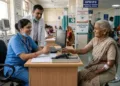
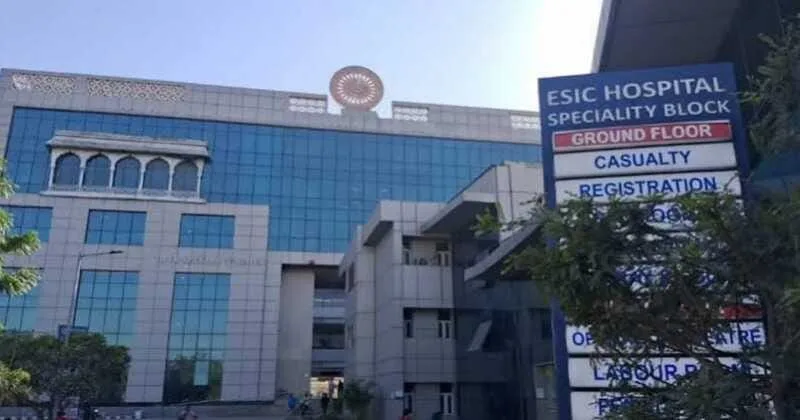
The reach of ESIC’s footprint today would have been unimaginable to the framers of the 1948 Act. The Corporation now runs an extensive network comprising 169 hospitals and 1,603 dispensaries, supported administratively by 65 Regional and Sub-Regional Offices, 612 Branch Offices and 117 Dispensary-cum-Branch Offices. This machinery delivers medical care and cash benefits to insured workers and their families across 728 of India’s 787 districts, meaning the ESI Scheme has already reached more than nine in every ten districts of the country. Alongside this service infrastructure sits an equally significant educational one, with 17 medical colleges, 2 dental colleges, 2 nursing colleges and 3 para-medical colleges all built with the specific purpose of producing skilled, compassionate healthcare professionals who can serve both the insured workforce and the wider public.
Widening India Medical Education Pipeline
India has set itself an ambitious target of creating 75,000 additional medical seats over five years, a goal first announced by Prime Minister Narendra Modi in his 2024 Independence Day address and reaffirmed in the Union Budget 2025-26, as part of a broader push to correct the country’s skewed doctor-to-population ratio and stem the outflow of Indian students seeking medical education abroad. ESIC has positioned itself as a meaningful contributor to this national mission. Today, its 17 medical colleges collectively offer 1,550 MBBS seats at the undergraduate level, complemented by a robust postgraduate ecosystem of 559 MD/MS seats, 182 DNB seats, 17 DrNB seats, 31 DM/M.Ch super-speciality seats and 10 PhD seats. Three additional state-run medical colleges affiliated with ESIC contribute a further 330 MBBS seats to this pool. Beyond the strictly medical stream, 2 ESIC Dental Colleges offer 124 seats, 2 Nursing Colleges offer 120 BSc Nursing seats, and 3 paramedical colleges provide 292 seats for allied health science aspirants. With more medical colleges reportedly in the pipeline, ESIC’s footprint in medical education is set to widen further, opening doors for young Indians who dream of a career in medicine regardless of their economic background.
Beyond Hospitals and Colleges: The Cash Benefit Umbrella
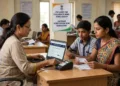
It is easy, in a discussion dominated by hospital counts and seat numbers, to overlook the other half of ESIC’s mandate, the disbursement of cash benefits that cushion workers against loss of income during periods of vulnerability. Under the ESI Act, an insured worker is entitled to sickness benefit during certified illness, maternity benefit for women workers around childbirth, disablement benefit in the event of temporary or permanent incapacity from an employment injury and dependent benefit for the family in the tragic event of a worker’s death due to employment-related causes, alongside funeral expenses benefit and vocational rehabilitation support. These are not abstract entitlements for a daily-wage earner or a factory hand; the assurance that a medical emergency will not translate into total loss of livelihood is often as important as the medical treatment itself. This combination of income protection and healthcare delivery, standing on twin pillars, is precisely what distinguishes the ESIC model from a purely charitable or purely insurance-based approach, and it is this comprehensiveness that has allowed the scheme to expand steadily since its rate of contribution was last revised.
Ward of Insured Persons: Educating the Children of India’s Workforce
Perhaps the most socially transformative feature of ESIC educational architecture is the ‘Ward of Insured Persons (IP) Quota ‘, a reservation carved out specifically for the children of workers covered under the ESI Scheme, across every ESIC-run medical institution. Close to 880 seats are set aside under this quota nationwide, of which roughly 700 are MBBS seats, with the remainder distributed across BDS, BSc Nursing and Paramedical/Allied Health Sciences courses. This is not a token gesture; it is a structural commitment that recognises the workers whose labour sustains India’s factories, shops and establishments and ensures that their sons and daughters are not shut out of the medical profession by cost or circumstance. For a nurse’s child, a factory worker’s daughter or a shop assistant son, the IP Quota can be the difference between an aspiration and an achievement.
Doctors for the Nation: A Growing Legacy of Service
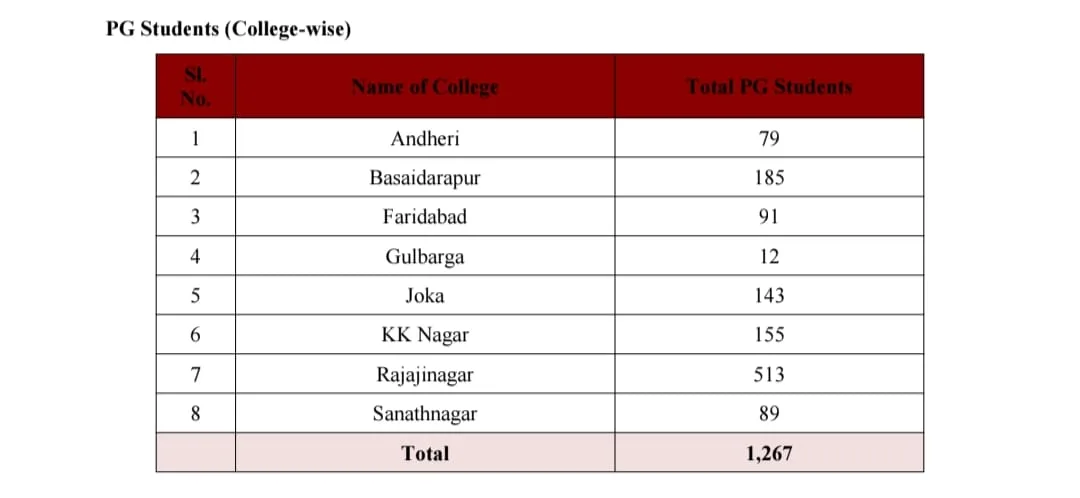
The cumulative results of this effort are striking. ESIC medical colleges have, till date, produced 4,961 doctors for the nation, and of these, 1,682 are children of workers covered under the ESI Scheme who entered through the Ward of IP Quota. More than a third of ESIC doctor output has come from families whose primary connection to the medical profession, until now, may have been as patients rather than practitioners. At the postgraduate level, more than 1,200 students have passed out of ESIC institutions, strengthening the country’s pool of specialised doctors at a time when India needs specialists in disciplines ranging from surgery to psychiatry. Each of these doctors represents not just a personal success story but a small correction to the structural inequities that have historically kept the medical profession the preserve of a narrow, urban and relatively privileged demographic.
Bridging the Doctor-Population Gap: A Genuine National Stake
ESIC contribution acquires even greater significance when placed against India’s broader healthcare workforce challenge. The World Health Organisation recommends a doctor-population ratio of roughly 1:1,000, and while India’s official figures (which include AYUSH practitioners) suggest the country is approaching this benchmark on paper, the distribution remains heavily skewed. Government data has flagged that rural community health centres face vacancy rates as high as 60-70 per cent for specialists such as surgeons, physicians, paediatricians and gynaecologists, and that medical education opportunities remain concentrated in southern and urban India. ESIC model offers a partial but meaningful corrective on two fronts. First, because its hospitals and colleges are explicitly built to serve the industrial and working-class population, they tend to be located closer to factories, industrial estates, and working-class townships rather than exclusively in elite urban centres. Second, the Ward of IP Quota actively diversifies the socio-economic profile of India’s medical graduates, a form of representation that pure merit-based seat allocation alone does not guarantee. In a country still working to close the urban-rural and class-based gaps in access to healthcare, this dual role of ESIC as both a service provider and a talent pipeline deserves far more public attention than it typically receives.
The ESI Scheme: A Self-Financing Model of Solidarity
It is worth remembering that none of this infrastructure is built on subsidy alone; the ESI Scheme is fundamentally a self-financing, contributory model. Employers currently contribute 3.25 per cent of an employee’s wages and employees contribute 0.75 per cent, a combined 4 per cent that has remained unchanged since the rate was last revised in July 2019, down from the 6.5 per cent that prevailed for over two decades before that. Workers earning up to Rs 21,000 a month, or Rs 25,000 for persons with disabilities, are covered under the scheme, and those on very low daily wages are exempted from their own share while their employers continue to contribute on their behalf. This structure means that every hospital bed, every dispensary counter and every medical college seat that ESIC has built has, in a very real sense, been funded by the collective solidarity of India’s organised workforce and the establishments that employ them, a modern echo of the guild-based mutual aid that once sustained India’s craftsmen and traders.
Towards Viksit Bharat 2047
As India counts down to the centenary of its independence in 2047, the challenge of building a healthy, resilient workforce sits at the very heart of the Viksit Bharat vision. A nation cannot be developed if its workers are one illness away from financial ruin, and it cannot be self-reliant in healthcare if it does not train enough of its own doctors to serve its own people. ESIC twin achievement- an expanding web of hospitals and dispensaries that already reaches more than 700 districts and a medical education system that has handed India nearly 5,000 new doctors while consciously reserving space for the children of the very workers it serves- is a template of what welfare-linked nation-building can look like. It is, in its own quiet way, a continuation of an old Indian idea that the health of the labourer is not a private concern but a public trust and that the nation that cares for those who build it will, in turn, be built better by them. As more medical colleges join ESIC network in the years ahead and as the Ward of IP Quota continues to open doors for the sons and daughters of India’s workforce, the Corporation’s journey offers a working model of how social security and human capital formation can be woven into a single institutional thread, one stitched from the same civilisational fabric that first taught India to care for those who labour.