A bizarre social-media claim about the supposed value of human testicles turned into a deadly crime in Bhopal, where a teenage boy was targeted by a group of Islamists who believed they could make crores by selling his body parts. Police say the accused were influenced by an Instagram reel and had already attempted to lure other boys before targeting the victim, Rehan.
The horrifying case came to light on August 10, when police recovered the unidentified body of a teenage boy from the Dhobighat area near Chhota Talab in Bhopal. The victim had sustained multiple injuries caused by sharp-edged weapons.
Police initially registered a murder case against unidentified persons and circulated photographs of the deceased in an attempt to establish his identity.
Five days later, the victim’s mother approached the police while searching for her missing son.
Investigators were able to identify him as Rehan, with a distinctive tattoo on his hand reportedly helping confirm his identity.
The police then began reconstructing his movements in the days leading up to his death and questioning people who knew him.
The investigation eventually pointed to August 6 as the day the murder was planned and carried out.
According to police, two minors approached Rehan at Iqbal Maidan, where he sold pens and keychains, and told him that they needed his help to settle a fight near Khatlapura.
They offered him Rs 100 to accompany them.
Rehan accepted the offer and went with the two minors. The group took him through Ginnauri and Kilol Park towards the secluded Dhobighat area.
Investigators found that 20-year-old Zoheb Khan, described as a second-year BBA student, was communicating with the group over the phone and guiding them during the operation.
Once Rehan reached the isolated location, he was attacked from behind and stabbed repeatedly with a knife and a blade.
Police further found that the accused allegedly removed the teenager’s testicles after killing him and placed them in a polythene bag.
Investigators believe the accused intended to sell the body part based on a bizarre claim they had encountered on social media.
Instagram reel became the murder motive
The investigation into the motive has revealed an extraordinary social-media connection.
According to police, the accused had watched an Instagram reel claiming that human testicles could fetch a huge amount of money. The youngsters believed that the body part could be sold for around Rs 1.2 crore.
Similar claims about the supposed value of human testicles have circulated on social media, with some versions putting the figure as high as Rs 6 crore.
Investigators, however, have found no medical or factual basis for these claims.
What initially appeared to be a bizarre internet rumour became a serious criminal plan. Police suspect that the accused did not merely discuss the reel but began looking for boys whom they believed could become potential victims.
Investigators are now examining the original social-media content and trying to determine how the claim reached the accused and influenced their actions.
Accused had no confirmed buyer
The plan began collapsing after the murder because the group had no confirmed buyer for the body part.
According to the investigation, the accused kept the removed testicles in their possession for several days while trying to find someone who would purchase them.
When they failed to find a buyer, the body part was eventually thrown into the water.
The development has highlighted the apparent lack of understanding among the accused about whether any such market existed in the first place.
Police have so far found no evidence suggesting that the murder was part of an organised organ-trafficking network.
BBA student posed as a doctor
Investigators have also focused on Zoheb’s role in convincing the others that the bizarre claim was genuine.
Police say the second-year BBA student allegedly wore a white apron and presented himself as a doctor. Investigators suspect that the appearance may have helped him establish credibility among the other members of the group.
The police reportedly consulted a doctor during the investigation and found no medical basis for the claim that human testicles could be sold for Rs 1.2 crore.
The investigation has so far pointed towards a group acting on misinformation rather than an established organ-trafficking operation.
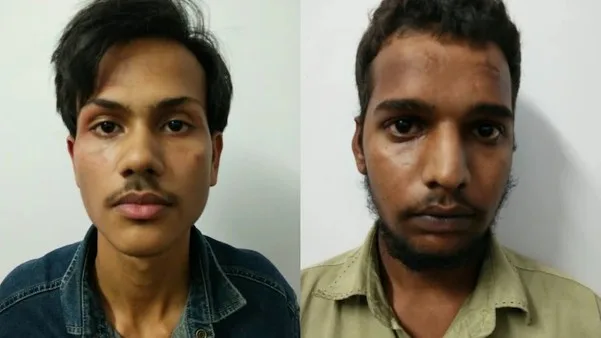
Police have arrested Zoheb Khan, 20, and Aamir Qureshi, 18. Three minors have also been detained in connection with the case.
The knife used in the murder has been recovered.
Police uncover earlier attempts to target boys
The investigation has also raised concerns that Rehan may not have been the group’s first potential victim.
Police have reportedly found evidence of earlier attempts to lure other boys using a similar promise of Rs 100.
In one instance, a boy refused to accompany the group after being approached.
In another case, a potential victim reportedly resisted and managed to escape. Police registered an attempt-to-murder case in connection with that incident.
These findings have prompted investigators to examine whether the accused had been searching for suitable victims for some time before Rehan was targeted.
Police are also questioning the accused to establish when the alleged plan was first conceived and whether all the members of the group were aware of the intended purpose of taking the boys to isolated locations.
Rehan supported his family by selling pens and keychains
Rehan came from a financially vulnerable family and reportedly contributed to the household’s income.
His father had died, while his mother worked as a cleaner at a public toilet. Rehan earned money by selling pens and keychains around Iqbal Maidan and Moti Masjid.
According to the investigation, the accused knew Rehan and may have selected him because of their familiarity with him.
Police believe the group was specifically looking for a boy who met their perceived requirements for the bizarre plan.
What began with an offer of just Rs 100 therefore ended in the brutal killing of a teenager whose family depended on his modest earnings.
Investigation into the source of the reel underway
The Bhopal murder has raised fresh questions about the consequences of misinformation and unverified claims circulating through short-video platforms.
In this case, police suspect that a social-media claim about making crores from a human body part was taken seriously by a group of youngsters and allegedly transformed into a plan to identify and target potential victims.
Investigators are now tracing the source of the Instagram reel and examining how the claim was interpreted by the accused.
Police are also establishing the precise roles of Zoheb Khan, Aamir Qureshi and the three detained minors, while checking whether anyone else was involved.
The probe is further examining the group’s alleged earlier attempts to target boys and whether there were additional victims or attempted victims who have not yet come forward.
The case has exposed how an unverified online claim can move from a digital platform into the real world with devastating consequences. In Bhopal, police say that misinformation about an imaginary Rs 1.2-crore market became the motive behind the killing of a teenager.