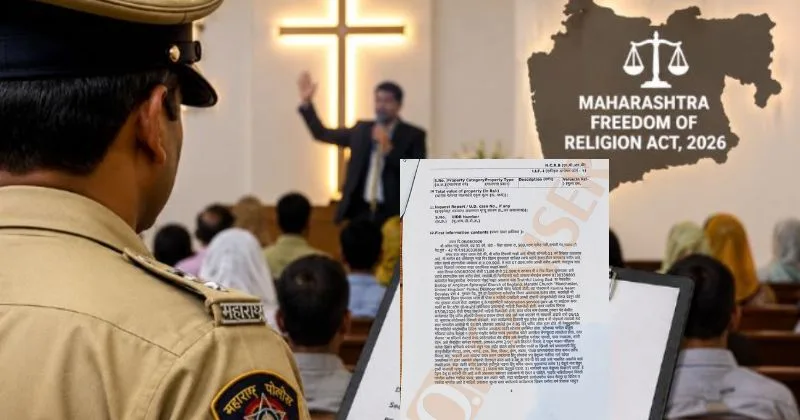
Pune: Maharashtra’s newly enacted Freedom of Religion Act, 2026, has come under the spotlight after Pune Police registered an FIR alleging an attempt to promote conversion to Christianity through a religious programme presented in the form of a traditional Hindu kirtan. The case concerns Pankaj Devnoor, described in the complaint as a British citizen and Bishop, and the organisers of a programme held at Pavitra Naam Devalay in Guruwar Peth, Pune, on August 7.
According to the FIR and the complainant’s statement, Devnoor allegedly used Hindu devotional traditions, including kirtan, abhangs, powadas, bharuds, taal, veena, sitar, tabla and gondhal, while preaching devotion to Jesus. The complainant alleged that statements linking Jesus with healing, rainfall and the way people should live were made during the programme and claimed that the presentation was intended to attract Hindus and encourage them to embrace Christianity.
‘The complaint further mentioned that the event was organised despite the speaker being identified as a foreign national and that the use of Hindu religious forms to convey Christian teachings amounted to what the complainant described as “soft conversion.”
The FIR is significant as it comes shortly after the Maharashtra Freedom of Religion Act, 2026 came into force. The law prohibits unlawful religious conversion through force, fraud, misrepresentation, coercion, undue influence or inducement, and also regulates attempts to convert. The legislation received presidential assent in July and was subsequently brought into effect by the Maharashtra government. (PRS Legislative Research)
Importantly, the allegations in the FIR are claims made by the complainant and remain subject to investigation and judicial determination. The registration of an FIR does not by itself establish that an offence has been committed.
Pune religious conversion case: What the FIR Mentions
The FIR is based on a statement recorded on August 8 by Amit Raju Bhosale, a 31-year-old rickshaw driver from Pune. According to his statement, Bhosale came across a Facebook post about the programme while working at a tea stall on August 7. The post allegedly referred to Pankaj Devnoor as the Bishop of the Anglican Episcopal Church of England and mentioned a Marathi Church in Manchester, United Kingdom.
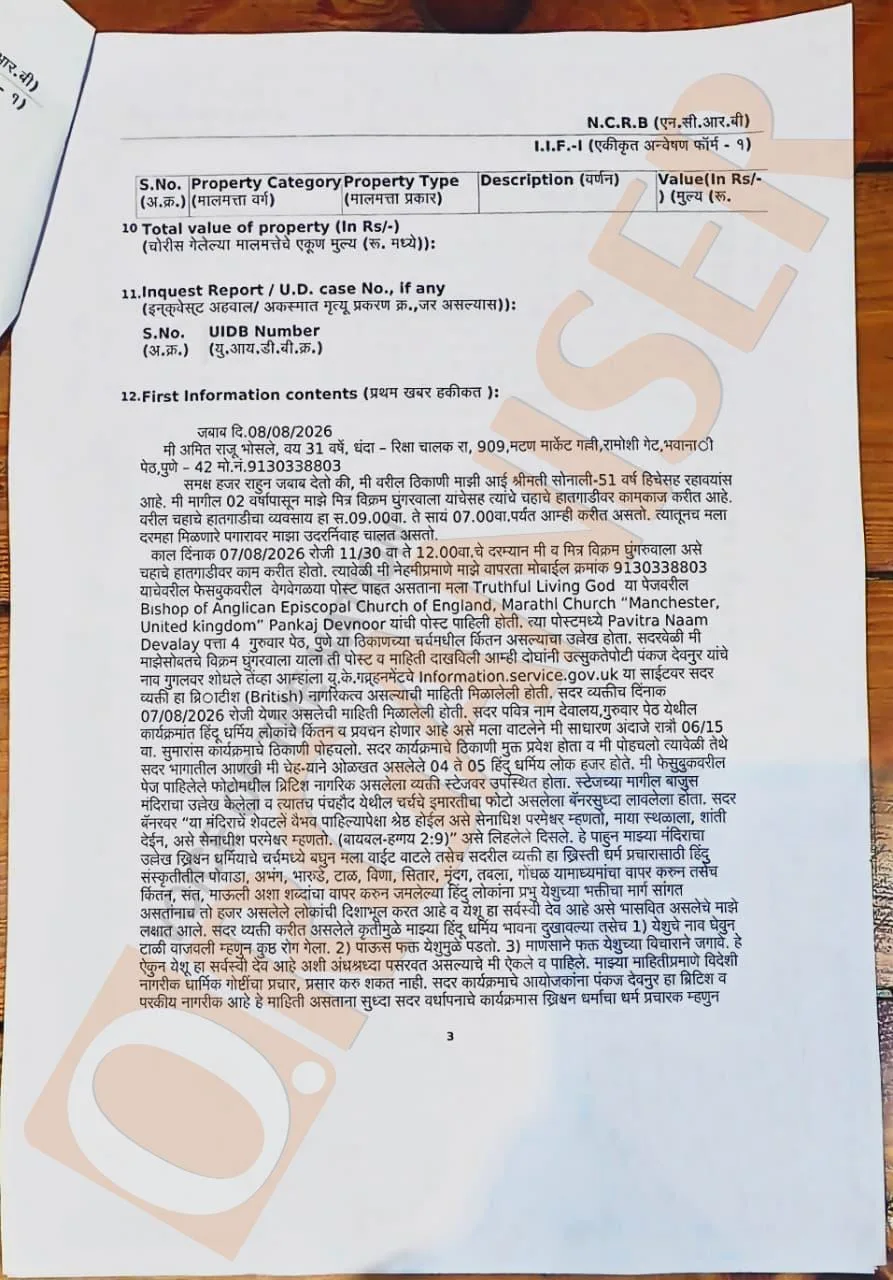
Bhosale stated that he and his friend searched Devnoor’s name online and found information indicating that he was a British citizen. He subsequently went to the programme venue at around 6:15 pm.
According to the FIR, around 80 to 100 people were eventually present at the programme. Bhosale alleged that Devnoor was on stage and that a banner behind him contained Christian religious references, including a reference to the Bible’s Book of Isaiah.
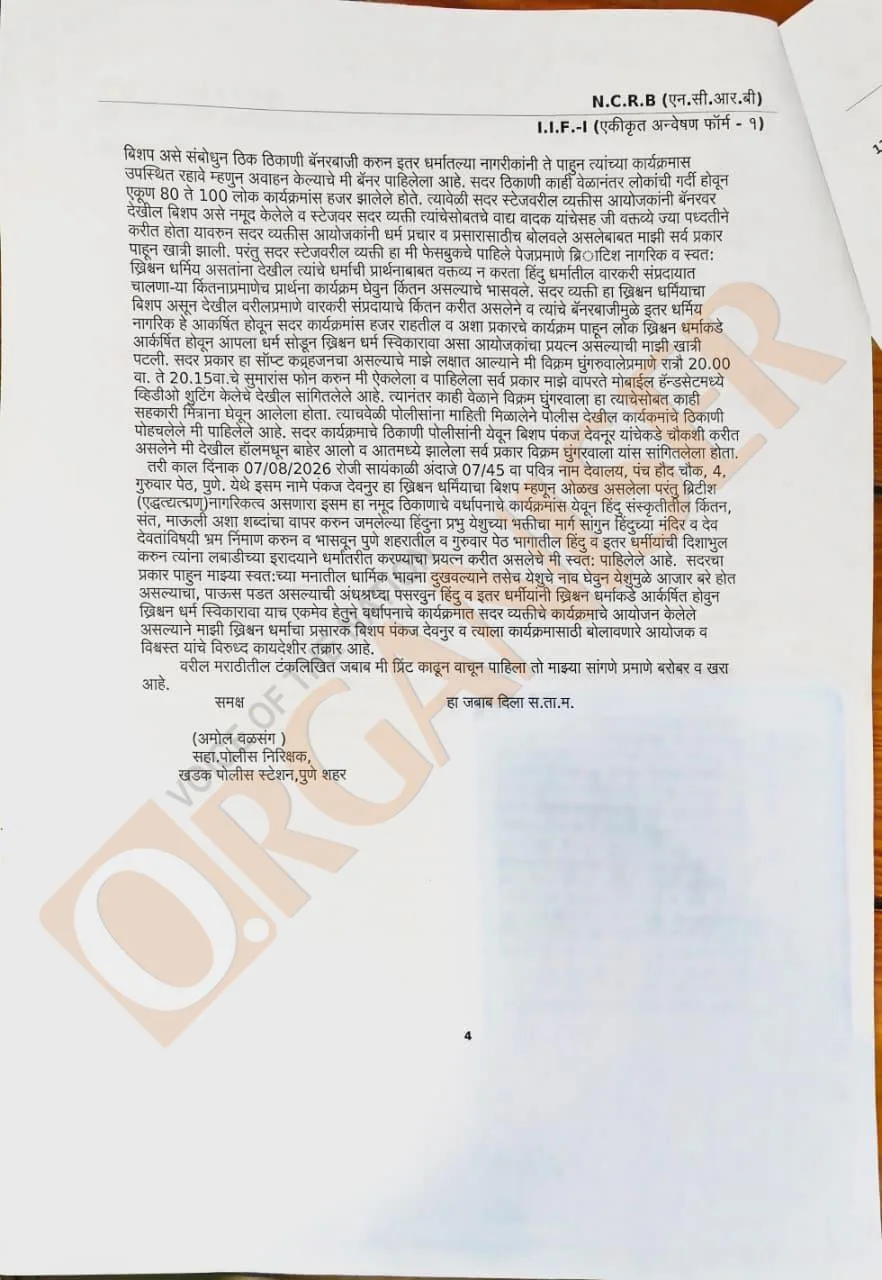
The complainant alleged that the programme was deliberately structured in the form of a traditional Hindu kirtan. He claimed that Devnoor used familiar Hindu cultural and devotional elements while speaking about Jesus.
Among the statements cited in the complaint were claims that taking the name of Jesus and clapping could cure leprosy, that rain occurs because of Jesus and that people should live according to Jesus’ teachings.
Bhosale alleged that such statements were intended to portray Jesus as God and influence people attending the programme. He further alleged that the organisers were attempting to attract Hindus and people of other faiths towards Christianity.
The complainant described the alleged method as a “soft conversion”, arguing that Christian teachings were being presented through Hindu cultural and devotional forms rather than through an overt Christian religious programme.
Police action after the programme
According to the statement, Bhosale informed his friend Vikram Ghungarwala about what he had witnessed and said he had recorded portions of the programme on his mobile phone.
Ghungarwala subsequently reached the venue with some associates. The complainant said police also arrived after receiving information about the programme.
When police began questioning Devnoor, Bhosale said he left the hall and subsequently narrated what he had witnessed.
The complaint names Devnoor as well as the organisers and trustees who allegedly invited him to the programme. The complainant has alleged that the organisers knew that Devnoor was a British national but nevertheless invited him to participate as a Christian religious preacher.
Why the case is significant
The case comes at a crucial time for Maharashtra’s new religious-conversion legislation. The Maharashtra Freedom of Religion Act, 2026 was passed by the state legislature in March and subsequently received presidential assent. The Act was brought into force after the state government issued the required notification. (Akashvani News)
The legislation defines “allurement” broadly, including offers or promises involving material benefits, employment, free education, marriage and “divine healing.” It also prohibits conversion or attempts to convert through force, fraud, misrepresentation, coercion, undue influence or such inducements. (PRS Legislative Research)
Pune Police have already registered the first cases under the new law, making the Pune proceedings an early test of how the legislation will be applied in practice. Reports have described the cases as among the first FIRs registered under Maharashtra’s new Freedom of Religion Act. (The Times of India)
The Pune case will now turn on the evidence collected by investigators, including the contents of the programme, recordings and other material cited in the complaint. Whether the conduct alleged in the FIR meets the legal threshold for an unlawful conversion attempt will ultimately be determined through the investigation and judicial process.