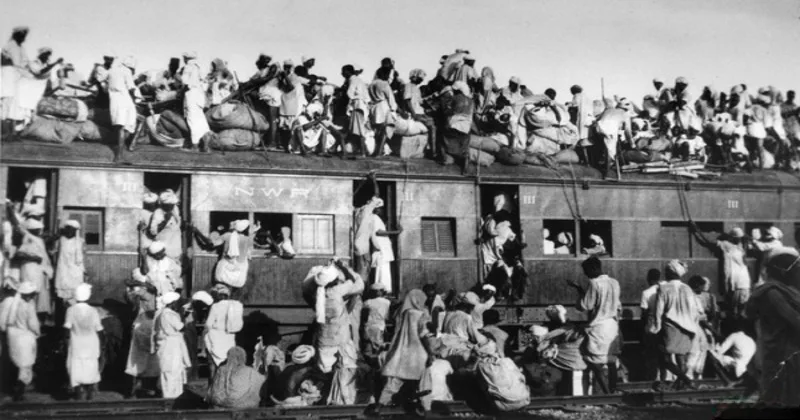
The Partition of India in 1947 was not simply the division of a territory or the creation of two new nations. It was a profound social rupture that transformed families, communities, identities and everyday relationships. The end of colonial rule brought freedom, but it also brought one of the largest forced migrations in modern history. Millions of people were uprooted, countless families were separated, homes and ancestral lands were abandoned and communal violence left deep psychological and social scars.
Nearly eight decades later, Partition remains present in family memories, literature, oral histories and the identities of communities that experienced displacement. Its importance, therefore, lies not only in remembering what happened but also in understanding what it continues to teach us. The lessons of Partition are particularly significant for a diverse democracy such as India, where unity depends upon the ability of different communities to live together with mutual trust and respect.
The first lesson of Partition is that social division has consequences that extend far beyond political boundaries. The Radcliffe Line was drawn as a political boundary, but its consequences entered the most intimate spaces of social life. Villages, towns and cities that had developed through generations of interaction were suddenly divided.
People who had shared neighbourhoods, markets, occupations, languages and cultural practices found themselves on different sides of a newly created international border. The political decision of Partition thus became a social reality for ordinary people. It changed where people lived, whom they trusted and how they understood their own identity.
This reminds us that national unity cannot be created merely through maps and institutions. It must also exist in relationships between citizens. A nation is sustained not only by territory but by social trust. When communities begin to view one another primarily through categories of “us” and “them”, political differences can become social divisions. The experience of Partition demonstrates how difficult it is to rebuild trust once it has been destroyed.
The second lesson is that diversity must be understood as a strength rather than treated as an obstacle to unity. India has always contained multiple languages, religions, castes, regions, traditions and cultural practices. Individuals possess several identities at the same time. A person may belong to a particular religion while also identifying with a language, region, profession, family and nation. These identities overlap and create social connections across communities.
Another major lesson of Partition concerns women. Conventional accounts of 1947 often focus on political leaders, borders, migration and communal violence, but women’s experiences reveal the deeper social consequences of the event. Women faced abduction, sexual violence, forced marriages, displacement and separation from their families. Their bodies were often treated as symbols of community honour. At the same time, patriarchal expectations frequently silenced their experiences.
Partition therefore teaches us that political violence does not affect everyone in the same way. Its consequences are shaped by gender, age, class and social position. Remembering Partition must include the voices of women who experienced violence as well as those who rebuilt their lives after displacement. Their stories are essential for understanding the full social history of 1947.
Partition also teaches an important lesson about displacement and the meaning of home. For millions of refugees, losing a home meant losing much more than property. They lost familiar streets, neighbours, community networks, family histories and cultural landscapes. Migration forced them to reconstruct their social worlds in unfamiliar places.
Yet the refugee experience also represents one of the remarkable stories of resilience in independent India. Refugees rebuilt homes, established businesses, founded educational institutions and created new neighbourhoods. Cities were transformed by their arrival. Communities that had experienced enormous loss contributed significantly to India’s economic and cultural reconstruction. Their history demonstrates that social groups can respond to catastrophe not only through grief but also through adaptation, enterprise and collective rebuilding.
Another lesson is the importance of strong institutions. Partition was accompanied by political uncertainty, administrative disruption, mass migration and communal violence. It demonstrated the vulnerability of ordinary citizens when social order breaks down. In a diverse democracy, therefore, institutions must protect the rights and dignity of every citizen. Rule of law, constitutional safeguards, responsible administration and social accountability are essential for maintaining public trust.
National unity cannot depend entirely upon emotional appeals. It must be supported by institutions that make citizens feel secure and equal. When citizens believe that their rights will be protected regardless of their identity, social trust becomes stronger.
Economic and social interdependence also plays an important role in unity. Before Partition, communities were connected through markets, occupations, trade routes and everyday exchanges. The division disrupted many of these networks. This demonstrates that social harmony is strengthened when people depend upon one another in ordinary life. Schools, workplaces, markets and neighbourhoods can become spaces where differences are encountered not as abstractions but as part of everyday human relationships.
The most important lesson of Partition, therefore, is that unity must be continuously built. It cannot be assumed to exist permanently. It requires dialogue, empathy, responsible citizenship and respect for diversity. The history of 1947 shows the enormous human cost of social division, but the decades since Independence also demonstrate the capacity of Indian society to rebuild and move forward.
As India approaches the centenary of Independence, Partition should be remembered neither through silence nor through inherited bitterness. Forgetting would diminish the experiences of those who suffered; repeatedly reproducing hostility would allow the divisions of the past to control the present. The better approach is to remember critically and constructively.
The generation that experienced Partition inherited a divided landscape. The generations that followed inherited its memories. The responsibility of the present generation is to inherit its lessons. Those lessons are clear: diversity requires respect, historical memory requires responsibility, social harmony requires trust, and national unity requires continuous effort.
Partition cannot be undone, but its meaning can be transformed. The abandoned homes, refugee journeys, family memories and stories of survival can remind us of the value of peace and belonging. The deepest tribute to those who suffered in 1947 is therefore not to preserve the divisions that caused their suffering, but to build a society in which such divisions do not become a source of violence again.
Remembering Partition should ultimately strengthen the resolve to build a united India – an India where diversity does not weaken national identity but enriches it, where history teaches wisdom rather than hatred and where the painful memory of division becomes a lasting commitment to social cohesion.