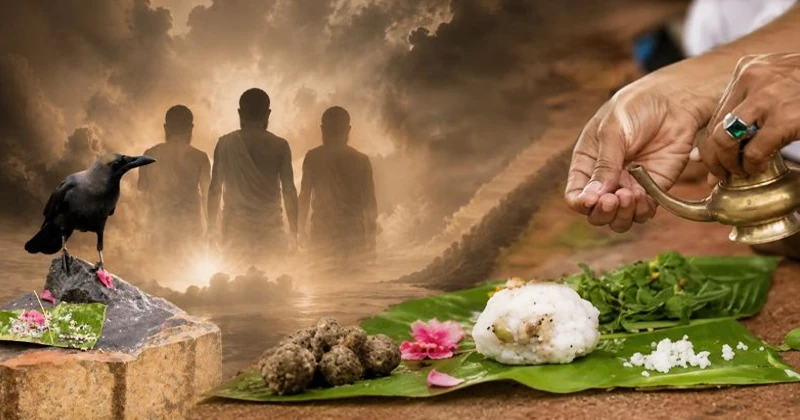
Thiruvananthapuram: Karkkidaka Vavu, one of the most significant days in Keralam’s traditional Hindu calendar, is being observed on August 12, with devotees across the state offering prayers and performing Bali Tharpanam to honour their departed ancestors.
Observed during the Malayalam month of Karkkidakam, which coincides with the South-West Monsoon season, Karkkidaka Vavu is traditionally regarded as a sacred occasion that symbolically connects the living with their departed ancestors.
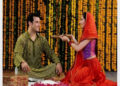
On this day, families perform ancestral rites and offer bali as an expression of remembrance, gratitude and respect for those who have passed away. The rituals are believed to help devotees seek the blessings and peace of their forefathers.
According to Hindu tradition, ancestral worship has been practised since the Treta and Dwapara Yugas, and Bali Tharpanam is regarded as an important sacred ritual for paying homage to departed souls.
Karkkidaka Vavu is associated with the Amavasya, or new moon, that falls during the month of Karkkidakam. In the traditional understanding of the lunar cycle, Amavasya occurs when the Sun and Moon are aligned, after which the Moon gradually moves away from the Sun and the Shukla Paksha, or waxing phase, begins.
The observance holds particular importance in Keralam, where devotees gather at temples, riverbanks and seashores to perform ancestral rites. The day is marked by solemn prayers, offerings and rituals intended to remember and honour generations who came before.
Thousands of devotees are turning to the sacred ritual of Bali Tharppan to remember and honour their departed ancestors. Performed on the new moon day of the Malayalam month of Karkkidakam, the ritual is deeply rooted in Keralam’s religious and cultural traditions. It is regarded as an act of gratitude towards the ancestors.
The word Bali is traditionally understood as an offering of food, while Tharppan signifies an offering made with devotion and purity of heart. A key element of the ritual is the pinda, the symbolic offering made to the departed.
According to Hindu belief, after the soul (atma) leaves the physical or sthoola body, it assumes a subtle form. Bali Tharppan is traditionally understood as a ritual through which the departed soul is offered sustenance and guided towards Pithruloka, the realm associated with ancestors.
The ritual is also regarded in some traditions as the concluding rite connected with the Shodasha Samskaras, and is performed on a prescribed day to remember and honour one’s ancestors.
Why Bali Tharppan is performed near water
Bali Tharppan is traditionally performed at seashores, riverbanks and other water bodies, which are considered especially sacred for ancestral offerings. In Keralam, devotees travel in large numbers to prominent pilgrimage centres to perform the ritual.
Those unable to reach traditional holy sites may also perform the rites at home according to customary practices, often with the assistance of pandits.
The observance is not merely a religious ritual. Still, it is regarded as an expression of filial gratitude and remembrance, the symbolic repayment of the debt owed by the living to those who came before them.
The legend behind Bali Tharppan
One of the traditions associated with the origin of Bali Tharppan centres on a young boy born to a revered Rishi during the Kritha Yuga.
The Rishi was devoted to spiritual discipline, tapas and religious duties. Soon after the child’s birth, his mother passed away. The father raised the boy intending to guide him towards a life of spiritual knowledge and discipline. In time, however, the Rishi too passed away.
By then, the boy had developed considerable spiritual power, but his father’s death left him devastated. Overcome by grief and anger, he wandered through the forest. His rage became so intense that, according to the legend, it threatened even the realms of Dharma and Yama.
The Sun God appeared before him and reminded him that death is inevitable and urged him to abandon his anger. The boy, however, desperately wanted to see his father again. Holding sacred water in his hands and reciting mantras, he even began to invoke curses against Surya and Yama.
At that moment, the gods associated with Pithruloka appeared before him. They comforted the grieving young sage and assured him that he would be able to see his father.
With the intervention of the Sun God and the gods of the ancestors, the father appeared before his son. He explained that he could not return permanently to the earthly world, but offered to grant his son a blessing.
The boy, overcome with emotion, spoke of his gratitude and regret. He remembered how his father had raised him despite the loss of his mother and lamented that he had never been able to repay that affection. He offered fruits to his father with humility and asked for his forgiveness.
The father accepted the offering with the permission of Surya and the gods of the ancestors and blessed his son.
The gods then told the young sage that his father had now become a Pitru, or ancestor. They declared that he would return to the ashram every year to accept the food offered to him with devotion and bless his son.
This legend is traditionally associated with the practice of offering food and prayers to one’s ancestors and is remembered as an illustration of filial devotion, gratitude and duty.
A tradition deeply woven into Keralam life
In Keralam, Bali Tharppan is observed as an important part of traditional Hindu life. Devotees often observe certain preparations before the ritual, including avoiding non-vegetarian food on the preceding day.
On the morning of Karkkidaka Vavu, devotees traditionally wake early, take a ritual bath, wear fresh clothes and proceed to designated locations where pandits prepare the materials required for the offerings.
The ceremony generally involves prayers, mantras and offerings made in remembrance of deceased family members.
For devotees, the ritual represents more than remembrance. It is viewed as an opportunity to express gratitude to parents, grandparents and generations of ancestors whose lives enabled the present generation to exist.
Major Bali Tharppan centres across Keralam
Keralam has hundreds of temples, riverbanks, beaches and sacred sites where devotees perform ancestral rites during Karkkidaka Vavu.
Among the prominent venues in South Keralam are:
- Aluva Manappuram, Ernakulam: Situated on the banks of the Periyar, it is among Keralam’s most prominent centres for Bali Tharppan and attracts large numbers of devotees during Karkkidaka Vavu.
- Thiruvallam Parasurama Swami Temple, Thiruvananthapuram: A prominent temple dedicated to Lord Parasurama, located at the confluence of three rivers and traditionally associated with ancestral rites.
- Varkala Papanasam Beach, Thiruvananthapuram: A major pilgrimage destination where devotees perform rituals for departed ancestors.
- Chelamattom Sree Krishna Temple, Perumbavoor: Another important centre in Ernakulam district where ancestral offerings are performed.
In northern Keralam, important centres include:
- Thirunavaya Sree Nava Mukunda Temple, Malappuram: Located on the banks of the Bharathappuzha, the temple is a major pilgrimage centre for ancestral rituals.
- Ivor Madom, Pampady, Thiruvilwamala, Thrissur: Situated along the Bharathappuzha, this revered riverside site is associated with cremation and ancestral rites.
- Thirunelli Temple, Wayanad: Located near the sacred Papanashini stream, the temple is renowned for ancestral rituals and attracts devotees from different parts of Keralam.
Thousands of devotees are expected to visit these major centres as well as numerous smaller, lesser-known sacred spots across the state to perform Bali Tharppan.
Remembering the debt to the ancestors
At its heart, Bali Tharppan is a tradition of remembrance. The ritual allows families to pause and honour those who came before them, expressing gratitude for the lives, sacrifices and traditions handed down across generations.
For countless devotees in Keralam, Karkkidaka Vavu is therefore not simply another day on the religious calendar. It is a day to remember ancestors as revered beings, seek their blessings and reaffirm the enduring bond between the living and the departed.