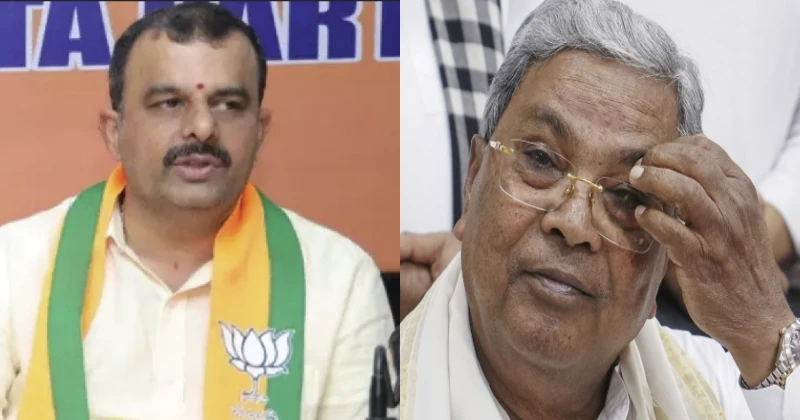
Bengaluru: BJP Karkala MLA V. Sunil Kumar has hit back at former chief minister Siddaramaiah over his recent remarks on the need to cleanse India’s electoral system, arguing that political and administrative reforms must begin at home.
Siddaramaiah had recently spoken about the growing influence of money, caste, religion and muscle power in elections and said the electoral system needed fundamental reform. He had also recalled a time when voters themselves contributed money to support candidates, contrasting it with the present situation where candidates are required to spend heavily to win elections.
Responding to Siddaramaiah’s views, Sunil Kumar said he did not disagree with the former chief minister’s stated objective of bringing greater transparency and accountability to the electoral process. However, he questioned why Siddaramaiah had not raised similar concerns more prominently while in office.
ಮಾಜಿ ಮುಖ್ಯಮಂತ್ರಿ @siddaramaiah ಅವರು ಚುನಾವಣಾ ವ್ಯವಸ್ಥೆ ಶುದ್ಧವಾಗಬೇಕೆಂಬ ಆಶಯದಲ್ಲಿ ಲೇಖನ ಬರೆದಿದ್ದಾರೆ. ನಿಜ. ಭಾರತದಲ್ಲಿ ಚುನಾವಣಾ ವ್ಯವಸ್ಥೆ ಸುಧಾರಣೆಯಾಗಲೇಬೇಕು. ಅದರಲ್ಲಿ ದೂಸ್ರಾ ಮಾತೇ ಇಲ್ಲ. ಸಿದ್ದರಾಮಯ್ಯ ಅವರು ವ್ಯಕ್ತಪಡಿಸಿರುವ ಅಭಿಪ್ರಾಯಕ್ಕೂ ನನ್ನ ವಿರೋಧವಿಲ್ಲ. ಏಕೆಂದರೆ ಚುನಾವಣಾ ಭ್ರಷ್ಟಾಚಾರ ಹಾಗೂ ಮಿತಿ ಮೀರಿದ…
— Sunil Kumar Karkala (@karkalasunil) August 4, 2026
“Electoral reforms are certainly necessary. There is no second opinion about that. Election corruption and excessive expenditure have become a cancer that is slowly weakening the political system. But such reforms must begin from our own doorstep,” Sunil Kumar said in a post on social media.
The Karkala MLA pointed to the high expenditure associated with bypolls during Siddaramaiah’s tenure as chief minister and said the former CM could have used those occasions to highlight the issue of election expenditure.
“Had Siddaramaiah raised this national concern during his own tenure, when by-elections witnessed huge expenditure, the significance of his argument would have been different,” he said.
Sunil Kumar also sought accountability from the Congress leadership over allegations of corruption during its tenure. Referring to the alleged irregularities in the Karnataka Maharshi Valmiki Scheduled Tribes Development Corporation, he questioned the decision to induct former minister B. Nagendra back into the Cabinet.
“If the electoral system has to be cleansed, the cleansing must begin at the doorstep of one’s own house. Allegations of corruption in the Valmiki Corporation led to Nagendra resigning from the ministerial post. His re-induction into the Cabinet sends what message about political morality?” Sunil Kumar asked.
He also referred to allegations surrounding the use of funds in the Valmiki Corporation case. He said serious questions had been raised about whether such money was used for electoral purposes. He questioned why Siddaramaiah had not publicly objected to Nagendra’s return to the Cabinet while simultaneously raising concerns about electoral corruption.
Sunil Kumar further raised questions about the implementation and financial transactions associated with the Gruha Lakshmi scheme. He said allegations and questions regarding the utilisation of thousands of crores under the scheme required greater transparency and accountability from the government.
“Those who speak about accountability must first answer the questions being raised about the schemes and decisions taken during their own administration,” he said.
The BJP MLA also targeted Siddaramaiah over the decision to allocate the Urban Development portfolio to his son, questioning whether the move could create a perception of conflict of interest.
Sunil Kumar referred to the controversy surrounding the Mysuru Urban Development Authority (MUDA) and argued that questions relating to the issue had not completely disappeared from public and political discourse.
“Democracy is not weakened only by problems in the electoral system. Double standards in administration, lack of political morality and a culture of avoiding questions are equally dangerous,” he said.
He maintained that Siddaramaiah’s article on electoral reforms would have had a greater impact had it also addressed corruption allegations and questions concerning governance during his own period in power.
According to Sunil Kumar, the debate should not be restricted to the amount of money spent during elections. Political parties and leaders must also examine the sources of campaign funding, the influence of vested interests and the manner in which elected governments function after coming to power.
He said voters deserve greater transparency from political parties and candidates and that stronger accountability mechanisms within governments should accompany electoral reforms.
While agreeing with the broader principle that election expenditure and the influence of money need to be addressed, Sunil Kumar argued that political leaders cannot demand systemic reform while remaining silent on controversies involving their own governments.
“Reform cannot be selective. If we want to clean the electoral system, political parties must also be willing to examine their own actions, decisions and records. Accountability has to apply equally to everyone,” he said.