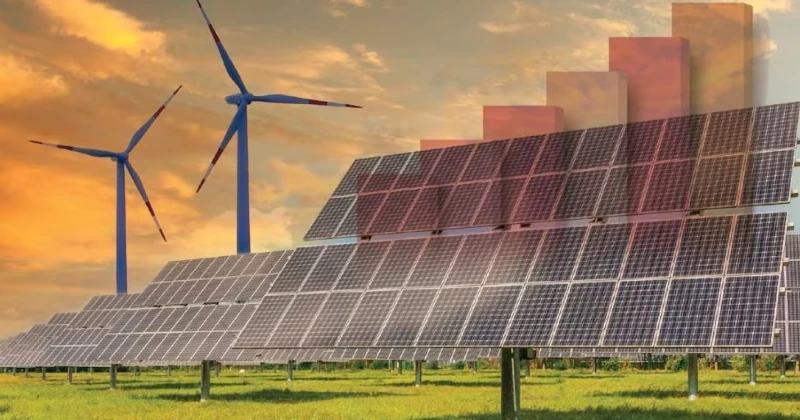
New Delhi: India has crossed a landmark 300 GW of installed non-fossil fuel-based electricity generation capacity, marking a major step forward in the country’s clean energy transition and its commitment to climate action.
As of July 31, 2026, India’s total non-fossil fuel capacity stood at 300.50 GW, accounting for more than 54 per cent of the country’s total installed power generation capacity of around 552 GW. The achievement also means India has already crossed 60 per cent of its ambitious target of achieving 500 GW of non-fossil fuel capacity by 2030.
Solar power continues to be the biggest driver of India’s renewable energy expansion. As of July 31, solar capacity had reached 164.59 GW, a dramatic increase from just 2.8 GW in 2014. Wind power has also expanded significantly, with installed capacity touching 58.14 GW, compared with around 21 GW in 2014. The country’s non-fossil capacity currently comprises:
- Solar: 164.59 GW
- Wind: 58.14 GW
- Hydro (large and small): 57.24 GW
- Bio-power: 11.75 GW
- Nuclear: 8.78 GW
- Total: 300.50 GW
The numbers underline the rapid transformation of India’s power sector, with renewable sources increasingly becoming central to the country’s energy strategy. The pace of capacity addition has accelerated sharply. During 2025-26, India added a record 55.29 GW of non-fossil fuel-based electricity generation capacity. Solar accounted for the lion’s share of the additions, contributing 44.6 GW, while wind power added another 6 GW during the year.
🇮🇳India Achieves Landmark 300 GW Non-Fossil Fuel Power Capacity
In a major milestone for the nation's clean energy transition and climate action targets, India has crossed 300 GW of non-fossil fuel-based installed electricity generation capacity as on 31st July, 2026; over 60%… pic.twitter.com/XFhXMojWii
— PIB India (@PIB_India) August 9, 2026
The expansion in installed capacity has been accompanied by a substantial rise in renewable electricity generation. Renewable energy generation increased from 190.96 billion units (BU) in 2014-15 to 477.79 BU in 2025-26, highlighting the growing contribution of clean energy to India’s electricity mix.
India’s clean energy expansion has been accompanied by efforts to strengthen domestic manufacturing and reduce dependence on global supply chains.
The Production Linked Incentive (PLI) scheme has supported the development of domestic manufacturing of high-efficiency solar PV modules. At the same time, the capacity enlisted under the Approved List of Models and Manufacturers (ALMM) for solar PV modules has crossed the 200 GW mark, compared with just 2.3 GW in 2014.
The push is aimed not only at meeting India’s rapidly growing domestic solar demand but also at building a globally competitive renewable energy manufacturing ecosystem. The latest milestone comes as India increasingly positions its clean energy transition as a pillar of energy security, industrial competitiveness and economic resilience.
Government policy initiatives have focused on expanding renewable generation while strengthening domestic manufacturing, infrastructure and supply chains. The larger objective is to build an Aatmanirbhar energy ecosystem while progressing towards the 500 GW non-fossil capacity target by 2030.
The Ministry of New and Renewable Energy is also pursuing industrial decarbonisation through the National Green Hydrogen Mission, with the broader ambition of positioning India as a global hub for the production, use and export of green hydrogen and its derivatives.
With non-fossil capacity now crossing the 300 GW mark, India has reached a significant waypoint on its road to 2030. The challenge ahead will be to maintain the pace of additions, strengthen grid infrastructure and storage, and translate capacity growth into an increasingly reliable and affordable clean electricity system.