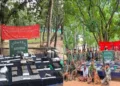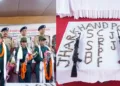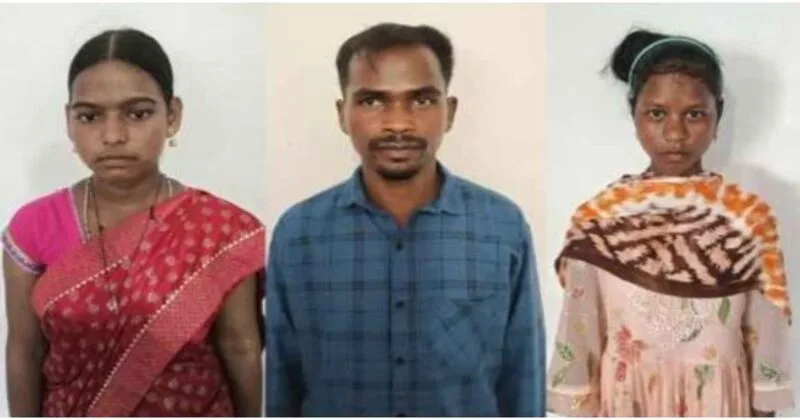
Ranchi: West Singhbhum district in Jharkhand has achieved a significant breakthrough in anti-Maoist operations with the surrender of three active members of the banned Communist Party of India (Maoist) on Friday. Among those who laid down arms is Saluka Kaim, a zonal committee member carrying a bounty of ₹10 lakh, along with his wife Pinki and another woman cadre, Kodomuni Koda. This surrender is considered a major blow to the Maoist network in the Kolhan region, which has been under sustained pressure from security forces.
According to police officials, the surrendered cadres are currently in a safe location undergoing interrogation. Notably, the trio has not yet handed over their weapons, and efforts are underway to trace them. West Singhbhum Superintendent of Police Amit Renu confirmed the surrender, stating that detailed information would be shared after initial questioning is complete.
Background of the Surrendered Maoist Leader
Saluka Kaim, also known as Bhuvneshwar, son of the late Sadhcharan Kaim, is a resident of Kudaburu village under Sonua police station in West Singhbhum district. As a zonal committee member of the banned CPI (Maoist), the Jharkhand government had declared a reward of ₹10 lakh for his capture. A total of 96 criminal cases are registered against him across various police stations. He is accused of involvement in over two dozen major encounters and IED blast incidents, which resulted in injuries to several security personnel and some fatalities. His name also surfaced in an encounter that occurred in March 2026 in the forested, hilly region of Manoharpur.
Police records indicate a total of 109 criminal cases against the three surrendered Maoists, with 96 cases against Saluka Kaim alone. The government had announced a bounty of ₹10 lakh on him. Police state that Saluka had long been a key operator of Maoist activities in the Kolhan region and was considered a close associate of top Maoist leader Misir Besra.
Major cases registered against him include a March 2026 encounter and IED blast in the Marangponga–Kinbir area, where COBRA personnel were injured; two IED blasts in the Jaraikela region in 2025; and IED explosions in the Tonto and Goilkera areas in 2023. He was also linked to an encounter in which Jharkhand Jaguar Sub-Inspector Amit Tiwari and Constable Gautam Kumar were martyred.
Additionally, cases against him include a 2022 murder on suspicion of the victim being a police informer, along with multiple incidents of encounters and IED blasts. In 2021, he was accused in the killing of three Jharkhand Jaguar personnel in the Langi forest. He is also charged with damaging railway tracks during a Bharat Bandh, killing villagers, and setting fire to forest department machinery. Earlier cases from 2020 and 2018 also include serious charges such as kidnapping, murder, attacks on police camps, arson targeting construction equipment, and the killing of civilians.
In-Depth Understanding of the Forest Terrain
Saluka Kaim possessed a strong command of local languages and an in-depth understanding of the forest terrain. He was responsible for managing the entire logistical network, from supplying food and rations to conducting reconnaissance of security forces’ movements.
He was particularly skilled in laying deadly traps, including pressure IEDs and spike holes, to target security personnel. He played a key role in creating a network within the forests of Porahat and Kolhan that facilitated not only the supply of essentials but also intelligence gathering on security operations. His expertise in planting pressure IEDs and setting up concealed spike traps made him a significant threat to forces operating in these regions.
Involvement in Langi Hill Blast Under NIA Investigation
Saluka’s influence and activities were considerable. He was prominently named in connection with the IED blast that occurred on March 4, 2021, in the Langi Hill area, which resulted in the deaths of three Jharkhand security personnel. This high-profile case is currently under investigation by the National Investigation Agency (NIA).
Close Escapes and Final Surrender
Despite being on the radar of security agencies for years, Saluka Kaim managed to evade capture multiple times. In one instance, he narrowly escaped when police surrounded a house where Maoists were hiding. On another occasion, a raid on one of his secret hideouts nearly led to his arrest, but he managed to flee using dense forest cover.
Ultimately, the sustained and coordinated efforts of security forces, combined with the weakening internal structure of Maoist groups, forced his surrender.
Profiles of the Other Surrendered Maoists
Pinki, a resident of Ichagoda under the Goilkera police station in West Singhbhum, was an active member of a Maoist armed squad. She faces eight criminal cases. According to police records, she was involved in a 2019 incident in Kuida village where an under-construction forest department rest house was destroyed using explosives. Authorities believe she has been actively associated with Maoist activities for several years and is reportedly the wife of Saluka Kaim.
The third individual, Kodomuni Koda, also known as Padmini, hails from Rengda Tola Banglasai under the Tonto police station in the same district. She served as a dasta member and carried a reward of ₹1 lakh. She is named in five cases, primarily related to the Tonto Police Station area, including charges under the Explosive Substances Act and the Unlawful Activities (Prevention) Act (UAPA), along with allegations of attempted murder.
Together, the three surrendered Maoists are linked to a total of 109 criminal cases, underscoring their deep involvement in insurgent operations.
Saluka Kaim Had Long Been Synonymous with Fear
In the Maoist-affected Kolhan and Porahat forest regions of Jharkhand, Saluka Kaim had long been synonymous with fear and insurgent dominance. His surrender is being viewed as a major setback for the banned CPI (Maoist) organization. Originally a resident of Kudaburu village in Sonua, Saluka had remained on the hit list of security agencies for an extended period.
In fact, Saluka Kaim served as a crucial shield for top Maoist leaders from other states, such as Misir Besra and Anal Da, who operated within the dense and inaccessible forests of Porahat and Saranda. Owing to his strong command of local languages and his deep understanding of the region’s geography, he effectively functioned as a local network manager for the organization, ensuring coordination, logistics, and safe movement within the forest terrain.
In the early months of 2026, Saluka had entered the Porahat forests from Saranda along with nine armed Maoists. However, sustained pressure from security forces under operations such as Operation Meghalur and Operation Octopus led to the rapid disintegration of his network. Initially, four of his associates surrendered due to mounting pressure. Subsequently, two cadres from Chhattisgarh deserted the group, unable to cope with the harsh living conditions and food scarcity in the forests. This left Saluka with only a handful of associates, significantly weakening his operational capability.
Interrogation Expected to Reveal Key Details on Maoist Structure and Funding
According to police sources, Saluka Kaim has been one of the most notorious Maoist commanders active in the West Singhbhum region for several years. He faces serious allegations, including orchestrating IED blasts targeting security forces, carrying out kidnappings followed by killings, and murdering villagers suspected of being police informers. He is believed to have been involved in more than two dozen armed encounters.
Security agencies assess that the surrender of these three Maoists has dealt a significant blow to the operational network of the CPI (Maoist) in the region, particularly due to the presence of a senior cadre like Saluka Kaim. Officials expect that ongoing interrogation will yield crucial intelligence regarding the organization’s internal structure, funding channels, and the identities and roles of other active members.
Close Associate of Senior Maoist Leader Misir Besra
Saluka Kaim was considered a close associate of senior Maoist leader Misir Besra. He played a central role in leading armed squads, recruiting new cadres, collecting levies, arranging safe shelters, and ensuring the transmission of organizational communications.
He is also accused of involvement in a March 1, 2026, encounter in the Manoharpur area between security forces and Maoists, in which several personnel were injured. Additionally, his name has been linked to multiple incidents, including IED blasts, attacks on security forces, destruction of railway tracks, and killings of civilians suspected of being police informers, spanning April 2025, August 2025, January 2023, and the period between 2021 and 2023.
These attacks resulted in injuries to personnel from the CRPF, Jharkhand Jaguar, and COBRA battalions, and led to several fatalities among the forces. Numerous cases have been registered against him under various sections of the Unlawful Activities (Prevention) Act (UAPA), the Arms Act, the Explosive Substances Act, the Criminal Law Amendment (CLA) Act, and provisions of the IPC/BNS across multiple police stations, including Sonua, Goilkera, Tonto, Toklo, Karaikela, Tebo, Jeteya.
Recent Trend of Surrenders in Jharkhand
This latest development follows a similar mass surrender event on July 28 in Ranchi, where 16 Maoists—11 men and five women—laid down arms at the Jharkhand Police Headquarters in the presence of Director General of Police Tadasa Mishra. Among them was Santosh, also known as Basudev Da, a regional commander with a bounty of Rs15 lakh. Most of these cadres were from the Kolhan-Saranda region, with a few originating from Latehar.
Officials view these surrenders as a positive indicator of the success of sustained anti-Maoist campaigns and rehabilitation policies. Authorities remain hopeful that continued pressure and outreach efforts will encourage more insurgents to abandon violence and reintegrate into mainstream society.
According to the police, sustained anti-Maoist operations carried out over the past few months in West Singhbhum, Seraikela-Kharsawan, and adjoining areas—coupled with the arrests of key Maoist leaders and the implementation of a structured surrender and rehabilitation policy—are now yielding tangible results. Following the recent surrender of 14 Maoists in West Singhbhum, the return of three active cadres, including Saluka Kaim, to the mainstream is considered another major setback for the organization.
Security agencies believe the Maoist network in the Kolhan region is steadily shrinking. Based on the interrogation of the three surrendered cadres, officials expect to obtain crucial intelligence regarding active Maoist members, their hideouts, arms stockpiles, and operational strategies. The police have indicated that more detailed information related to the case will likely be shared in due course.