

NEW DELHI: The false narrative and misinformation that was spread by the opposition over financial irregularities within the Shri Ram Janmabhoomi Teerth Kshetra Trust about the mismanagement of the donation money of Rs 3,300 crore for Ram Mandir stands exposed. The audit confirmed that Rs 3, 300 crore that was collected as donation for the construction of the Ram Mandir in Ayodhya is fully accounted for and there is no mismanagement.
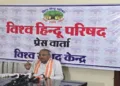
While speaking to Organiser, the International President of Vishva Hindu Parishad, Alok Kumar ji, clearly stated,” Rs 3,300 crore that was collected for the construction of the Ram Mandir, that money is fully accounted and it was deposited in a separate account in State Bank of India and there are no complaints or audit objections regarding this donation. ”
Clearing the air further on the misinformation that was being spread through media by the opposition, Alok Kumar ji categorically told Organiser that, “Diversion of funds, has only occurred in the counting process of the ‘chadhawa’ (a scared offering).” He added that “the counting of the chadhawa amount was the responsibility of the State Bank of India and the entire counting was done by the persons engaged by the bank. ”
According to the sources, the Trust’s finances have been independently audited by external auditors M/s V Sankar Aiyer & Co., with major expenses recorded through formal banking channels. It has been reported that theft of the ‘chadhawa’ was an isolated incident and should not be equated with financial irregularities in the Trust’s overall donation management system.
Rs 3,300 crore donation made to Ayodhya Ram Mandir fully accounted for
The Trust’s major expenditure includes around Rs 1,800 crore towards temple construction and approximately Rs 400 crore for land acquisition, the sources said.
Officials have reportedly said that the major transactions were conducted through banking channels and that there were no cash transactions involved in these expenditures.
The financial records, they said, therefore do not support claims of systemic corruption or large-scale financial mismanagement within the Trust.
What happened in the cash theft case?
The sources said the incident of theft of the chadhawa at Ayodhya’s Ram Mandir triggered questions over donation handling involved cash being manually sorted before it was processed through machines.
According to the officials, six external employees working for Sainik Security Services (SSS) were identified through CCTV footage and subsequently arrested.
SSS had been contracted by the State Bank of India (SBI) for the relevant cash-handling process.
Importantly, officials said none of the six accused had any affiliation with the Shri Ram Janmabhoomi Teerth Kshetra Trust.
The distinction is significant because the alleged theft relates to a specific cash-handling operation, while the broader financial management of the Trust has been subjected to auditing.
Supreme Court monitoring SIT probe
The matter is also being investigated by a reconstituted Special Investigation Team (SIT).
According to the sources, the investigation is being monitored by the Supreme Court of India and is being conducted under the leadership of senior IPS officers.
The ongoing probe is expected to establish the complete circumstances surrounding the cash theft and identify any other individuals who may have been involved.
Officials have emphasised that the investigation into the incident should be viewed separately from the Trust’s overall financial accounts.
No cash payments for Ram Mandir land purchases
Questions were also raised over the cost of land acquired for the Ram Mandir project. Officials have reportedly rejected suggestions that the land purchases involved cash payments. According to the information shared by the sources, 100 per cent of payments for contiguous land acquired for the temple were made through direct bank-to-bank transfers from authorised accounts.
The sources said that some land acquisition costs were higher because of changes in market prices following the Supreme Court’s Ayodhya verdict, as well as the need to settle commercial structures associated with the properties.
The explanation is aimed at addressing concerns over the difference between earlier land values and subsequent acquisition costs.
Ram Mandir donations remain steady
Despite the controversy, officials said there has been no noticeable decline in donations from devotees.
According to official data cited by the sources, monthly Hundi collections remained at around Rs 5 crore on average during the first quarter of the financial year 2026-27.
The figures suggest that the reported cash theft has not resulted in a significant decline in devotees’ financial contributions to the temple.
For many devotees, donations to the Ram Mandir are deeply personal, with contributions often representing a long-standing emotional and religious connection with the temple’s construction.