Meta’s reported admission before senior officials of India’s Ministry of Electronics and Information Technology (MeitY) that “a lot of money was paid to boost certain types of content” may prove to be one of the most consequential disclosures ever made by the social media giant in India.
For years, Meta has defended itself as nothing more than a neutral intermediary a technology platform that merely hosts user-generated content without exercising editorial control. That legal position has enabled Facebook and Instagram to seek “safe harbour” protection under India’s Information Technology Act.
But if the company itself has acknowledged that money was accepted to amplify selected categories of content, the very foundation of that defence comes under unprecedented scrutiny.
The controversy is no longer about the temporary removal of Prime Minister Narendra Modi’s video. It is now about something much bigger whether Meta has been quietly shaping public discourse by deciding which narratives deserve to be seen by millions and which remain buried.
Meeting that changed the narrative
The immediate trigger was the brief removal of Prime Minister Narendra Modi’s video from Facebook and Instagram. Meta restored the post, apologised, and attributed the takedown to an operational error.
However, during a subsequent meeting between senior Meta executives including Global Affairs Chief Joel Kaplan and top MeitY officials, the discussion reportedly expanded far beyond a single moderation mistake. According per sources, Meta apologised for lapses relating to child sexual abuse material (CSAM), deepfake content and operational failures.
STORY | Meta apologises over PM Modi post removal; admits money paid to boost content, govt sources say
Instagram and WhatsApp-owner Meta Platforms Chief Executive Mark Zuckerberg apologised for the temporary removal of Prime Minister Narendra Modi's Facebook post, as company… pic.twitter.com/XkHAcPOHPk
— Press Trust of India (@PTI_News) August 5, 2026
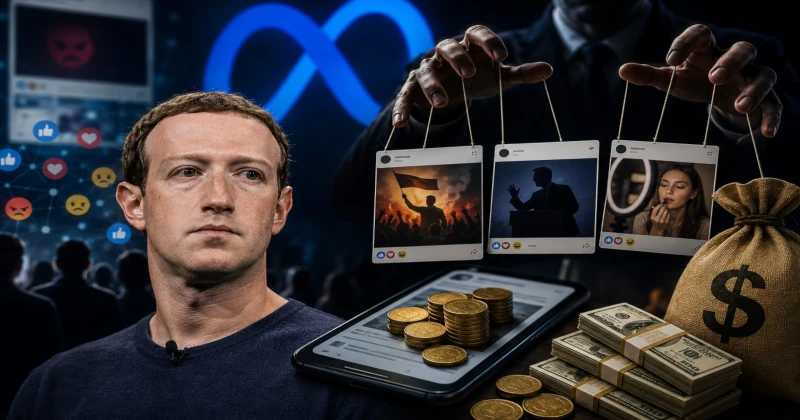
More significantly, company representatives reportedly admitted that substantial amounts of money had been paid to boost certain categories of content and also acknowledged that illegal content had been promoted on its platforms.
The categories of content allegedly discussed during the meeting have not been made public.
If these reported admissions are borne out through regulatory or judicial proceedings, they could fundamentally alter how Meta is viewed under Indian law. Meta has consistently argued that it simply provides digital infrastructure.
But there is an obvious difference between allowing users to upload content and actively deciding which content should dominate people’s feeds. Every day, Facebook and Instagram use recommendation algorithms that determine what users see, what they miss, and what goes viral. Paid boosting dramatically expands the reach of selected posts beyond their natural audience.
And if, as the reported admission suggests, commercial payments influence that amplification, the company is no longer merely transmitting information it is participating in determining the visibility of competing narratives. That distinction sits at the heart of the growing legal debate surrounding Meta’s intermediary status.
Safe harbour or Active publisher?
Sources said government officials informed the Meta delegation that the company cannot automatically seek protection under the intermediary provisions of the Information Technology Act because its systems determine who receives particular content.
Safe harbour protections were designed for entities that merely transmit information without exercising editorial discretion. When algorithms rank, recommend and amplify content and when paid promotion further alters public visibility the platform arguably performs functions that resemble editorial decision-making.
No Indian court has yet ruled that Meta has forfeited its intermediary protection. But the reported admissions have intensified calls for a reassessment of whether existing legal protections remain appropriate for platforms that actively curate and amplify information.
Illegal content and commercial incentives
Perhaps even more troubling is the reported acknowledgement that illegal content had been promoted. Meta has repeatedly highlighted its investments in artificial intelligence, automated detection systems and thousands of moderators tasked with removing harmful material.
Yet the company has continued to face criticism worldwide over the spread of child sexual abuse material, financial scams, manipulated media, hate speech and misinformation. If illegal content was amplified through recommendation systems or promotional mechanisms, it raises difficult questions about whether engagement and revenue incentives can sometimes outweigh platform safety.
Long-running trust deficit
The present controversy also revives older concerns about Meta’s governance and content moderation. When Facebook launched its independent Oversight Board in 2020, the body was presented as a quasi-judicial mechanism to review difficult moderation decisions.
The Board immediately attracted political scrutiny. Critics pointed out that several members had previously worked with or been associated with organisations perceived as politically progressive or aligned with liberal policy circles. Some commentators argued that this raised questions about the Board’s ideological balance, while others defended its independence and diversity.
One appointment generated particular controversy in parts of the Middle East: Yemeni activist and Nobel Peace Prize laureate Tawakkol Karman. Karman has publicly expressed support for the Muslim Brotherhood, describing it as a victim of state repression. The Muslim Brotherhood is designated as a terrorist organisation by several countries, including Egypt, Saudi Arabia and the United Arab Emirates, but it is not designated as such by all jurisdictions.
Her appointment drew criticism from several Arab commentators and public figures, who questioned whether her political positions were compatible with the neutrality expected of an oversight body responsible for reviewing content moderation decisions affecting the region. Supporters, however, argued that the Board’s role was to uphold human rights principles rather than represent governments’ political positions.
The episode stated a broader concern on, who decides what billions of people can see online, and what values guide those decisions?
India’s biggest digital gatekeeper
India is Meta’s largest market by user base. Hundreds of millions of Indians rely daily on Facebook, Instagram and WhatsApp for political information, public debate, business communication and news.
When Meta’s recommendation systems elevate particular content, those decisions influence public opinion on an enormous scale. Most users assume that viral content became popular because millions voluntarily chose to engage with it.
If visibility is influenced by commercial arrangements rather than organic public engagement, users may never realise that what appears “popular” has been actively promoted. That is precisely why regulators worldwide from the European Union to Australia and the United States have increasingly shifted their attention from content moderation alone to algorithmic accountability.
Parliament and Government tighten scrutiny
The Parliamentary Standing Committee on Information Technology, chaired by BJP MP Nishikant Dubey, reportedly sought an apology from Meta CEO Mark Zuckerberg over the temporary removal of the Prime Minister’s video and pressed for stronger action against child sexual abuse material and content demeaning women.
Government officials also questioned Meta’s failures in tackling deepfakes and unlawful content during the MeitY meeting. Sources indicate that Meta is expected to be called again for further discussions.