
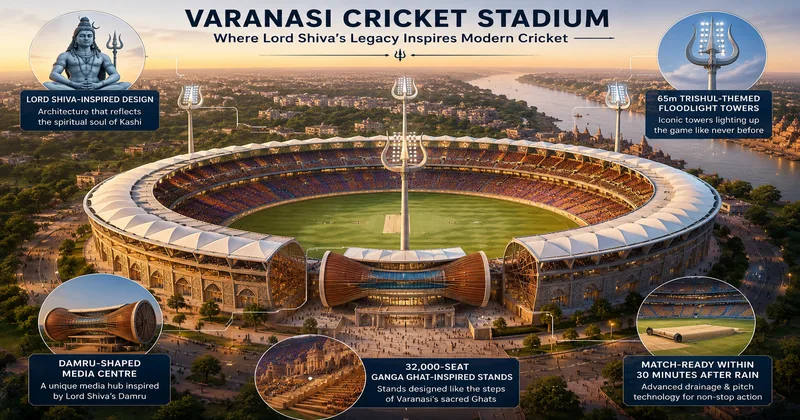
Varanasi, one of India’s oldest and most revered cities, is set to add another landmark to its iconic landscape: a world-class cricket stadium designed to reflect the spiritual and cultural identity of Kashi. Located in the parliamentary constituency of Prime Minister Narendra Modi, the upcoming Varanasi Cricket Stadium is being envisioned as far more than a sporting venue. Its architecture seeks to bring together cricket, tradition and the timeless symbolism associated with Lord Shiva.
What a stunning view! The upcoming Varanasi Cricket Stadium in PM Narendra Modi's parliamentary constituency. 💖
• Lord Shiva-inspired design
• Damru-shaped media centre
• 65m Trishul-themed floodlight towers
• 32,000-seat Ganga Ghat-inspired stands
• Match-ready within 30… pic.twitter.com/ohPVZLJhs6— Megh Updates 🚨™ (@MeghUpdates) August 4, 2026
With its striking design inspired by the religious and cultural heritage of Varanasi, the stadium promises to offer a distinctive visual identity unlike conventional cricket grounds. From a Damru-shaped media centre to towering Trishul-inspired floodlights, several elements of the stadium have been designed to evoke the spiritual character of the holy city.
A Stadium Inspired by Bhagwan Shiva
The most striking feature of the upcoming stadium is its Bhagwan Shiva-inspired architectural theme. Varanasi, also known as Kashi and the city of Mahadev, has a deep association with Bhagwan Shiva. The stadium’s design draws from this heritage, giving the sporting complex an unmistakable connection with the city’s identity.
Instead of following a purely contemporary architectural style, the proposed design incorporates motifs and forms associated with Shiva and the spiritual landscape of Kashi. The result is expected to be a stadium where the modern spectacle of cricket meets the traditional imagery of one of India’s most culturally significant cities. This approach also makes the stadium more than just a venue for matches. It has the potential to become another architectural symbol of Varanasi, reflecting the city’s heritage while presenting it through a modern sporting infrastructure.
Damru-Shaped Media Centre Adds a Unique Identity
One of the most eye-catching elements is the Damru-shaped media centre. The Damru, traditionally associated with Bhagwan Shiva, holds a special place in Hindu symbolism. Its distinctive shape has been incorporated into the stadium’s architecture, creating a feature that immediately connects the venue with its spiritual inspiration.
The media centre is expected to serve as an important operational hub during matches, accommodating journalists, broadcasters and other media professionals. Yet its architectural form gives it an additional significance, transforming a functional component of the stadium into a visual representation of Varanasi’s cultural heritage.
The Damru-inspired structure could become one of the stadium’s defining visual features, particularly when viewed from a distance or from aerial perspectives.
65-Metre Trishul-Inspired Floodlight Towers
Another dramatic feature of the stadium is its 65-metre-high floodlight towers inspired by the Trishul. The Trishul, or trident, is one of the most recognisable symbols associated with Bhagwan Shiva. Incorporating the form into the stadium’s floodlighting infrastructure gives an otherwise functional structure a strong cultural identity.
At night, when the stadium is illuminated for a cricket match, these towering structures are expected to create an especially striking skyline. The combination of powerful floodlights and Trishul-inspired architecture could make the stadium visually distinctive even beyond match hours. The design demonstrates how modern infrastructure can incorporate traditional symbolism without losing its practical purpose.
32,000 Seats Inspired by the Ghats of the Ganga
The seating area is another element designed to connect the stadium with Varanasi. The venue is planned to accommodate around 32,000 spectators, with the stands drawing inspiration from the famous ghats along the Ganga.
The ghats are inseparable from Varanasi’s identity. Stretching along the sacred river, they represent centuries of religious traditions, ceremonies, gatherings and everyday life. Translating this visual character into the stadium’s seating design creates a direct architectural link between the cricket ground and the city surrounding it. For spectators, this could create an atmosphere unlike that of conventional cricket venues. Instead of simply sitting inside a modern stadium, fans would experience a setting that visually recalls one of the most recognisable landscapes of Varanasi.
Designed for Cricket, Built for the Monsoon
While the stadium’s cultural identity is likely to attract attention, its modern sporting infrastructure is equally significant. One of the most important features highlighted for the venue is its ability to become match-ready within around 30 minutes after rain.
Rain interruptions are among the biggest challenges faced by cricket venues, particularly during India’s monsoon season. A lengthy delay can disrupt an entire day’s schedule, frustrate spectators and affect players and broadcasters.
A facility designed to recover quickly after rainfall could therefore provide a major operational advantage. The emphasis on rapid recovery reflects a broader shift in modern stadium design, where infrastructure is increasingly being developed not only for spectator experience but also for uninterrupted sporting activity.
More Than a Cricket Ground
The proposed stadium represents a broader transformation taking place in Varanasi. Over the years, the city has continued to develop modern infrastructure while retaining its ancient cultural character. The cricket stadium fits into this larger narrative, bringing a major sporting facility to a city internationally recognised for its temples, ghats, music, spirituality and heritage.
Cricket has an enormous following across India, and a modern international-standard venue in Varanasi could further strengthen the city’s position as a destination for major sporting events. For local cricket enthusiasts, the stadium could also create new opportunities to watch high-level matches closer to home. Hosting major domestic and international fixtures could bring players, fans, broadcasters and visitors to the city, potentially providing a boost to tourism and the local economy.
A Meeting Point of Tradition and Modernity
What makes the Varanasi Cricket Stadium particularly interesting is the way its proposed architecture attempts to combine two seemingly different worlds. On one side is modern cricket, with advanced sporting infrastructure, large-scale spectator facilities and technology-driven match operations. On the other is Kashi, a city whose identity is deeply rooted in ancient traditions and the symbolism of Bhagwan Shiva. The Damru-shaped media centre, Trishul-inspired floodlights and Ganga Ghat-inspired stands are designed to bring these two worlds together. Rather than creating a generic modern stadium that could belong to any city, the project seeks to give the venue a distinctly Varanasi identity.
When completed, the stadium could become one of the newest landmarks associated with Varanasi. The city already possesses an extraordinary collection of cultural and religious landmarks, from the Ganga ghats and ancient Mandirs to its historic lanes and traditional architecture. A modern cricket stadium may seem like a very different addition to this landscape, but its design seeks to ensure that it remains connected to the city’s character.
Its Shiva-inspired elements could make it instantly recognisable, while its sporting facilities could establish it as an important venue on India’s cricket map. For a city where tradition and modernity constantly exist side by side, the stadium could become another expression of that unique identity.
As Varanasi continues to evolve while preserving its centuries-old identity, this upcoming cricket stadium could stand as a powerful representation of that transformation, a modern sporting landmark carrying the unmistakable spirit of Kashi and Mahadev.