In what is being observed as one of the most comprehensive administrative turnarounds in state governance, Uttar Pradesh is quietly dismantling its legacy of paper-heavy, intermediary-driven welfare delivery. Led by Chief Minister Yogi Adityanath and spearheaded by Minister of State (Independent Charge) Asim Arun, the state’s Social Welfare and SC/ST Welfare departments are replacing the old, slow-moving bureaucratic machinery with a streamlined digital model.
The shift is evident in the state’s day-to-day operations. Rather than requiring marginalized citizens to navigate endless paperwork, the state is leveraging Direct Benefit Transfer (DBT), Artificial Intelligence (AI), and unified databases to proactively extend benefits to those who need them most.
The technocrat at the helm
The driving force behind this digital push is Asim Arun. A former Indian Police Service (IPS) officer of the 1994 batch, an alumnus of St. Stephen’s College, Delhi and a post-graduate in Public Policy from the University of British Columbia, Canada, Arun’s career has bridged ground-level security operations with academic policy design. Having previously commanded the elite UP-112 emergency response network during the testing times of the pandemic, Arun transitioned to politics in 2022, bringing a distinct technocratic approach to social welfare.
Under his stewardship, the ministry has moved from passive, application-based distribution to an active, tech-driven model. “With the help of technology, accuracy is ensured in data verification and beneficiary identification,” Minister Arun noted during a recent briefing on state reforms. “This helps curb malpractices and guarantees that benefits reach genuine citizens on time”.
Historic allocations in a record-breaking budget
The state’s policy priorities are backed by solid financial commitments. In the Uttar Pradesh State Budget for the Financial Year 2026-27, Finance Minister Suresh Khanna proposed a record overall budget of Rs 9,12,696.35 crore. Within this massive allocation, social and marginal welfare received historically high funding to ensure that UP’s march toward a $1 trillion economy lifts all segments of society:
- Social welfare department: Allocated Rs 14,953 crore, representing an 8 percent increase over the previous fiscal year
- Old age & farmers’ pensions: Earmarked Rs 8,950 crore, currently supporting 67.5 lakh beneficiaries at Rs 1,000 per months
- SC & ST educational scholarships: Proposed Rs 977 crore for pre-matric and post-matric academic relief
- General category scholarships: Outlaid Rs 950 crore, expanding financial support for economically weaker sections (EWS)
- OBC Welfare: Allocated Rs 3,402 crore, with Rs 3,060.50 crore directly funding student scholarships
- Divyangjan (Differently-Abled) Empowerment: Earmarked Rs 2,140 crore, raising the monthly pension to Rs 1,000 for more than 11 lakh beneficiaries
- Minority Welfare: Earmarked Rs 2,058 crore, including Rs 500 crore to implement multi-sectoral projects in high-minority districts
Algorithmic governance: AI and the family ID
The absolute cornerstone of the state’s modern welfare delivery is its digital infrastructure, designed to eliminate leakages, duplicate records and the corrupt middlemen of the past:
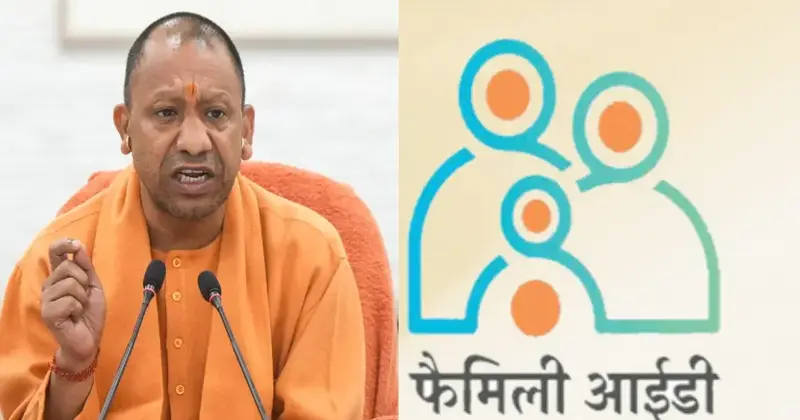
The 12-digit family ID
Launched in late 2022, the Family ID acts as a unified database linking 3.6 crore families and 15 crore Aadhaar-validated individuals.1 Because eligibility criteria—like income, domicile, and caste—are determined at the family level, this central database automatically identifies eligible but unregistered citizens and enrolls them into the state’s 180 central and state DBT programs. Simultaneously, the system has successfully identified and removed duplicate, ghost or ineligible accounts, protecting taxpayer funds.
Artificial intelligence in verification
In 2026, the department began running workshops to integrate AI algorithms into program monitoring. These tools cross-match records in real-time, instantly flagging fraudulent submissions while accelerating paperless, automated processing for high-volume schemes like pensions, family benefits and scholarships.
Automated BPL “auto-pensions”
The ministry is currently developing an automated pension software. Once fully operational, eligible senior citizens living under the Below Poverty Line (BPL) threshold will automatically start receiving pension disbursements the day they turn 60. This completely removes the need for physical applications, middleman verification or repetitive visits to local offices.
From forest floors to premier classrooms: Empowering SC/ST communities
UP’s tribal and SC welfare policies have moved beyond short-term handouts toward sustainable asset creation and high-quality educational access:
Land reforms and basic utilities: Under Chief Minister Yogi Adityanath, the state has granted official land rights to over 23,000 forest-dwelling tribal families across 13 districts. By registering these claims in official records, the government has integrated remote tribal communities with modern amenities, including clean drinking water, electricity, ration cards and universal healthcare under the Ayushman Bharat PM-JAY scheme.
Educational infrastructures: To ensure that tribal children have access to top-tier schooling, the government runs nine specialized Ashram Paddhati Schools in remote districts like Lakhimpur Kheri and Balrampur, providing free residential education to over 2,000 students. This is supported by state-funded Eklavya Model Residential Schools (EMRS)1, with more than 1.5 lakh tribal students receiving academic scholarships and fee reimbursements.
SC/ST Entrepreneurship: Operating in coordination with the National Scheduled Castes Finance and Development Corporation (NSFDC), the state has expanded credit limits to Dalit entrepreneurs by raising the annual family income eligibility ceiling to Rs 5 lakh1. Under the PM-AJAY initiative, the state has launched a specialized portal and mobile app to track grants-in-aid, allowing SC/ST youth to track self-employment fund disbursements transparently.
Progressive social engineering: Targeted upliftment
The Ministry of Social Welfare has demonstrated acute sensitivity to gender equality and vulnerable demographics, launching specific, data-backed interventions:
Mukhyamantri Samuhik Vivah Yojana
This flagship mass marriage program aims to alleviate the massive financial burdens of weddings and dowry demands for economically weaker families. The government recently raised the financial assistance to Rs 1.01 lakh per couple (including Rs 60,000 transferred directly to the bride’s account) and increased the eligible family income ceiling to Rs 3 lakh. Since 2017, the scheme has supported the marriages of over 4.7 lakh daughters from poor families, including 2.2 lakh Dalit and 1.3 lakh backward-class brides.
Transgender rights and safety
Backed by a proposed budget of Rs 200 crore, the state has drafted the progressive Uttar Pradesh Transgender Persons (Protection of Rights) Rules, 20261. Key reforms under Minister Arun include issuing national identity cards linked to Ayushman health insurance, opening “Garima Grah” shelter homes for skill training, setting up dedicated protection cells at police stations and launching call centers staffed entirely by transgender operators.
Support for destitute women
In June 2026, the state government initiated a comprehensive survey to identify survivors of instant triple talaq and acid attacks. This effort ensures that these vulnerable women are prioritized for permanent housing under the Pradhan Mantri or Mukhyamantri Awas Yojana and linked directly to the Ayushman Bharat PM-JAY health insurance program.
Breaking Barriers: CM Abhyudaya Yojana
Perhaps no program highlights the state’s commitment to social mobility more than the Mukhyamantri Abhyudaya Yojana. Designed to bridge the deep divide between high-cost private coaching and meritorious, low-income students, this government-funded initiative provides completely free, high-quality coaching for competitive exams like UPSC, UPPCS, JEE and NEET.
Operating across 156 specialized coaching centers in all 75 districts, the program utilizes a hybrid learning model where students study locally, accessing study materials and mock tests without needing to migrate to expensive urban education hubs. Classes are conducted by senior civil servants (IAS, IPS, and PCS officers) alongside guest lecturers and subject matter experts.
The results have been highly encouraging. Since its launch in 2021, the program has registered over 82,209 students and produced remarkable success stories: 46 students have cleared the UPSC Civil
Services, 121 have qualified for the UPPCS and hundreds of others have successfully entered the defense and police forces.
Headline to the future: Maximum governance
The evolution of social welfare in Uttar Pradesh under Yogi Adityanath and Minister Asim Arun represents a fundamental shift toward transparent, technology-driven public service. By systematically implementing AI verification, the 12-digit Family ID and automated pension software, the administration has successfully minimized leakages, putting resources directly into the hands of those who need them most.
As the state moves closer to its developmental milestones, this combination of technical efficiency and targeted demographic inclusion provides a scalable model of social justice and inclusive growth for the rest of the nation.