देवीं वाचमजनयन्त देवास्तां विश्वरूपाः पशवो वदन्ति ॥11॥
devīṃ vācamajanayanta devāstāṃ viśvarūpāḥ paśavo vadanti ||11|| RV Mandal –
8, Sukta – 100
Language originates from the ultimate reality and is spoken by human beings.
Language is not a human construct but a manifestation of the ultimate reality. Thus, language originates from it and serves as a sacred bridge between the ultimate reality and humanity.
अनादिनिधनं ब्रह्म शब्दतत्त्वं यदक्षरम् ॥
anādinidhanaṃ brahma śabdatattvaṃ yadakṣaram || Vakyapadiya, Brahma‑kāṇḍa (Book 1), verse 1.1
Bhartṛhari, in his Vākyapadīya, stated that language (śabda) is identical with the Absolute.
Bhartṛhari asserted that language (śabda) is not merely a tool for communication but is, in fact, identical with the Absolute. Language (Śabda) is the fundamental principle underlying both thought and existence. He stated that ultimate reality reveals itself through language. Thus, language is not a secondary or derivative phenomenon, but the very expression of the Absolute itself.
It is quite immaterial—and indeed insignificant—to discuss whether this language is more ancient or more modern than others. Any particular language has its origins in another language, and is influenced by one or many languages. Further, the grammatical structure of a particular language can differ considerably from that of other languages.
जनां विभ्र̍ती िहुधा वववा̍चसां नाना̍धमााणां पृविवी य̍िौकसम्॥45॥
janaṃ bibhra̍tī bahudhā vivā̍casaṃ nānā̍dharmāṇaṃ pṛthivī ya̍thaukasam||45|| Atharva Veda, Kanda 12, Sukta 1 (Prithvi Sukta)
O beloved Motherland, upon your soil, people speak different languages.
Thus, in Bharat all of our languages that have originated on sacred soil and are rooted in our culture and tradition are sacred to us. These are not just languages and their expressions; they also represent the culture, tradition, and history of the people.
Historically, our languages have served as a unifying force for our civilisation. They have fostered cultural integration rather than division. Throughout Bharat’s long history, spiritual leaders—Sadhus, Sannyasis, and pilgrims—have traversed the length and breadth of the land, and have used Bharatiya languages to connect and integrate communities.
Ādi Jagadguru Shankaracharya, born in Kalady, Kerala, undertook an extraordinary pilgrimage across Bharatvarsha to revitalise Hindu Dharma and establish the four mathas (monastic centres) in the four cardinal directions of Bharat. Despite the many languages spoken in the regions he visited, Adi Shankaracharya faced no barriers. In fact, he was welcomed by all and accepted as a Jagadguru.
Similarly, Jagadguru Ramanujacharya, born in Sriperumbudur in the present-day Tamil Nadu, also embarked on a grand pilgrimage across Bharatvarsha. His spiritual journey, which lasted several decades, included visits to major sacred sites and engagement with diverse communities. Like Shankaracharya, Ramanujacharya’s teachings deeply influenced people from various linguistic and cultural backgrounds. Language was never a limitation—it served as a bridge, as his teachings were conveyed with clarity, compassion, and devotion.
In fact, ordinary grihastha devotees have also travelled on foot to the Char Dhams since ancient times and have been welcomed everywhere and have never faced any problems or difficulties due to language.
These examples affirm that language in Bharat has been, historically, a means of connection and enlightenment, and not fragmentation. In fact the core literature of all Bharatiya languages are strikingly similar with themes involving Dharma, Moksha, Jnana, Ram, Krishna, Shiva, and Shakti. Bharatiya languages have served as expressions of regional richness and a shared civilisational ethos.
Consider Ramayana. The story of Shri Ram has been repeated in almost all Bharatiya languages, with important examples as follows: Sanskrit – Valmiki Ramayana, Tamil – Kamba Ramayanam, Telugu – Ranganatha Ramayanam, Kannada – Kumudendu Ramayana, Malayalam – Adhyatma Ramayanam, Bengali – Krittivasi Ramayan, Assamese – Saptakanda Ramayana, Odia – Dandi Ramayana, Avadhi – Ramcharitmanas by Tulsidas, Marathi – Bhavarth Ramayan etc. Likewise, the Ramayana has also been preserved and passed down in numerous folk languages and oral traditions, including Santhali, Bhili, Gondi and many others.
Consider another example – that of the Bhagavad Gītā. The Bhagavad Gītā has been translated and interpreted in numerous languages of Bharat, often through poetic and philosophical renderings that resonate deeply with local traditions. In Sanskrit, it has been accompanied by extensive commentaries by Ādi Śaṅkarācārya. In Marathi, the most famous rendering is the Jñānēśwarī (also known as Bhāvārtha Dīpikā), composed by Sant Jñānēśwar— a profound poetic commentary that brought the Gītā’s wisdom to the masses. In Tamil, it has been rendered by scholars such as Bharathiar. In Telugu, Gītā Makarandam by Swami Vidyaprakashananda. In Kannada, notable versions include those by Śrī Vidyāraṇya. Bengali, Gujarati, Malayalam, and several other Bharat’s languages also have their own revered translations and commentaries.
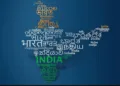
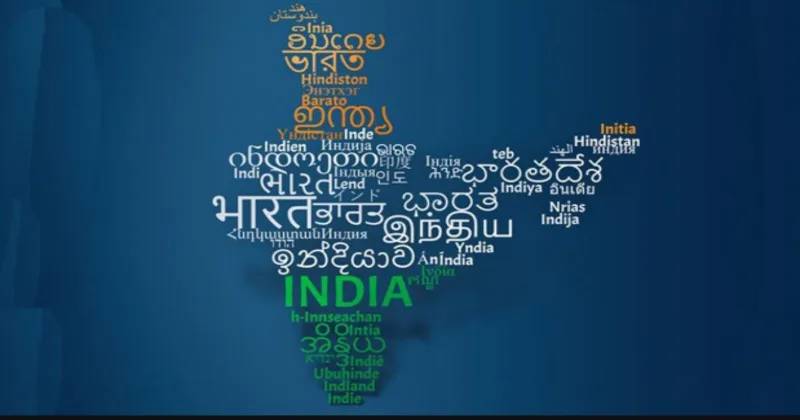
Bharat is an incredibly diverse country, showcasing a splendid variety of cultures, intricate dance forms, captivating drama, exquisite art, delectable cuisine, and traditional dress. It is home to a multitude of languages, with twenty-two officially sanctioned by the Bharat Government. Furthermore, the 2011 Census revealed the remarkable linguistic landscape of the nation, identifying 121 major languages and 1369 unique mother tongue dialects. However, all such diversity is an expression of our one civilisational ethos of Bharatvarsha, which is anchored in the notion of ekatmata. In fact, all such diversity is a reflection of the Vaidik verse:
रू॒पंरू॑पं॒ प्रति॑रूपो बभूव॒ तद॑स्य रू॒पं प्र॑ति॒चक्ष॑णाय ।
इन्द्रो॑ मा॒याभिः॑ पुरु॒रूप॑ ईयते यु॒क्ता ह्य॑स्य॒ हर॑यः श॒ता दश॑ ॥ 18॥ (RV, Mandal – 6, Sukta – 47)
rūpaṁ-rūpam pratirūpo babhūva tad asya rūpam praticakṣaṇāya |
indro māyābhiḥ pururūpa īyate yuktā hy asya harayaḥ śatā daśa ||
In contrast, language has been the basis of division in the West. The origins of such thought can be traced back to the story of the Tower of Babel in the Bible (Genesis 11:1–9). According to that story, God created different languages to sow division in humanity, thereby rendering them incapable of reaching the heavens through collective effort. Likewise, languages have served as the basis of nation states for modern thinkers. Such linguistic nationalism in Europe originated with the rise of Romantic thinkers and corresponding political movements. Now, many politicians in Bharat are borrowing this European idea and have been dividing people and creating conflict. However, this idea—i.e., linguistic nationalism—is entirely alien to Bharat.
Thus, it is imperative that patriotic citizens of the country remain aware and united, as self-serving politicians and individuals, who are indeed steered by Bharat’s enemies, are insidiously introducing divisive concepts and artificially engineering language nationalism to divide the nation.