Bengaluru: In a significant ruling reinforcing the sanctity of Hindu marriage, the Karnataka High Court has observed that a Hindu marriage is not merely a contractual relationship but a sacred sacrament that cannot be dissolved simply because one spouse has lost interest in continuing the marital relationship. The court dismissed a husband’s appeal seeking divorce, holding that a lack of interest in cohabitation alone cannot be treated as a valid ground for dissolving a marriage under the Hindu Marriage Act.
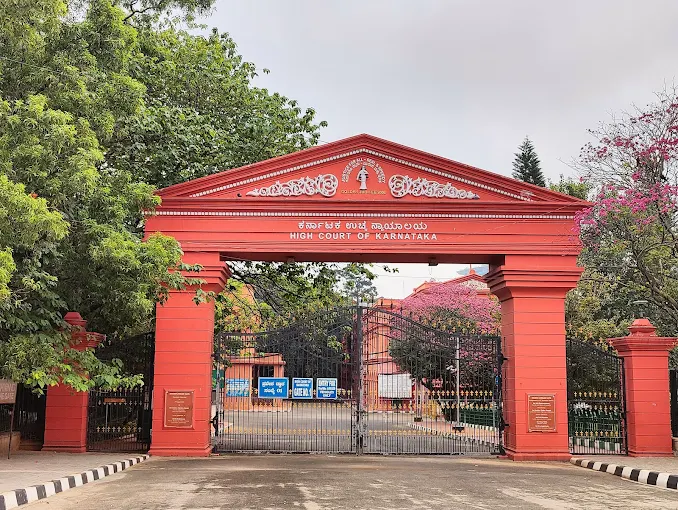
A Division Bench comprising Justice D.K. Singh and Justice T.M. Nadaf upheld the order passed by the Mysuru Family Court, which had rejected the husband’s divorce petition while allowing the wife’s plea for restitution of conjugal rights under Section 9 of the Hindu Marriage Act, 1955.
The case pertained to an inter-caste love marriage solemnised on December 15, 2003. After more than two decades of marriage, during which the couple had a daughter who is now almost an adult, differences arose between the spouses, eventually leading to prolonged litigation.
Initially, the husband approached the Family Court seeking dissolution of marriage, while the wife sought restitution of conjugal rights. After hearing both petitions together, the Family Court dismissed the divorce plea and directed restoration of marital life by allowing the wife’s petition.
Subsequently, the husband filed a fresh petition under Section 13(1A) of the Hindu Marriage Act, contending that despite the decree for restitution of conjugal rights, the couple had not resumed cohabitation for more than a year.
He argued that the marriage had irretrievably broken down and claimed that he had repeatedly requested his wife to return, but she had failed to respond.
The wife, however, denied the allegations. She informed the court that she had always treated her husband and his parents with love and respect. She further stated that she had followed the family’s customs, including performing religious rituals and cooking on the upper floor of the house as instructed by her in-laws. She also maintained that she had never insisted on living separately or quarrelled with her husband or his family members.
While examining the appeal, the High Court noted that the husband’s allegations of cruelty had already been rejected by the Family Court for want of evidence.
More importantly, during the proceedings, the husband himself admitted that he had not resumed cohabitation because he was no longer interested in continuing the marital relationship.
Taking serious note of this admission, the Division Bench, in its order dated July 15, held that such a personal lack of interest could not, by itself, constitute a legal ground for divorce.
The court observed that Hindu marriage is a sacred institution founded on social and moral obligations rather than a contractual arrangement that can be terminated at the will of either spouse.
It emphasised that a spouse cannot seek dissolution of marriage solely because he or she has lost interest in continuing the relationship, particularly when no legally sustainable ground such as cruelty or desertion has been established.
The Bench further held that permitting divorce in such circumstances would undermine the very principles governing Hindu marriage under law. It found no infirmity in the Family Court’s reasoning and concluded that the husband had failed to make out a case warranting interference.
Accordingly, the Karnataka High Court dismissed the husband’s appeal and affirmed the Family Court’s order, reiterating that marriage under Hindu law carries enduring legal and social responsibilities and cannot be dissolved merely on the basis of a unilateral decision to withdraw from the relationship.