Sonam Wangchuk, widely recognised as an engineer, education reformer and environmental activist from Ladakh, has remained a prominent public figure for his work in sustainable development, education reforms and climate-related initiatives. Over the years, however, his public profile has also been marked by a series of controversies involving allegations related to national security, foreign funding compliance, public statements, environmental initiatives and land-related projects. These developments have repeatedly placed him at the centre of public and legal scrutiny.
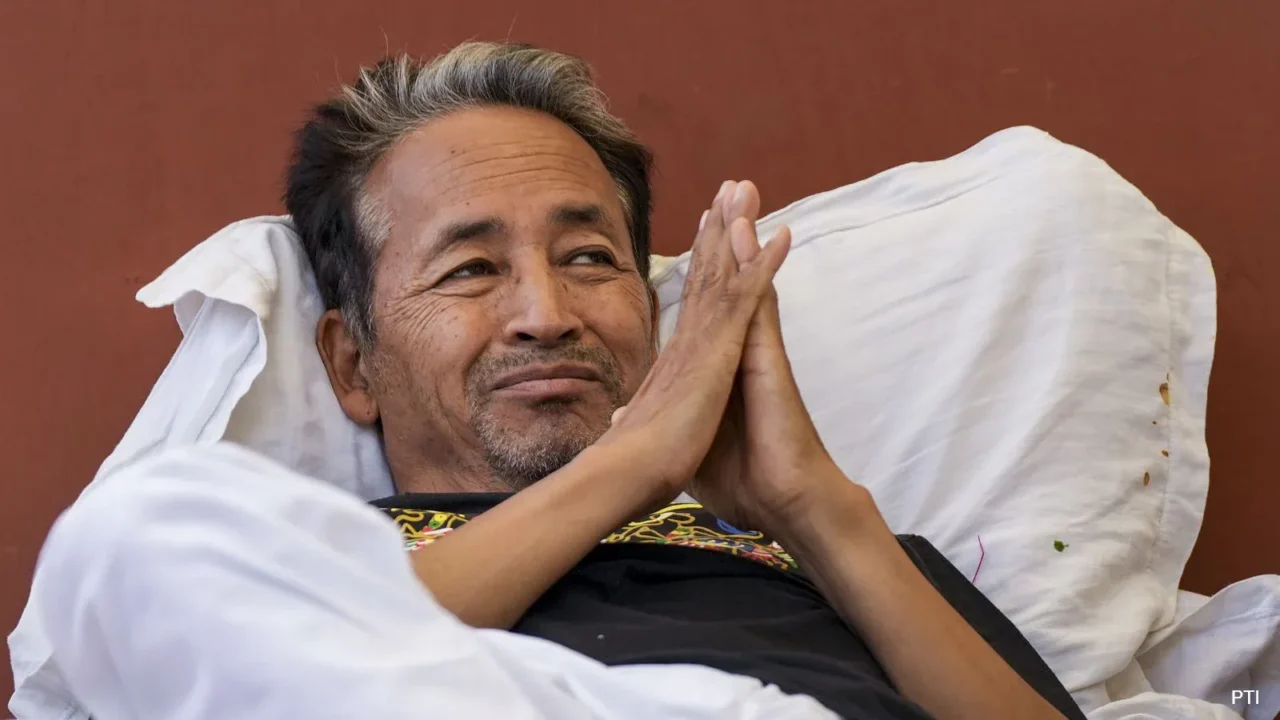
The activist returned to national attention in 2026 after launching an indefinite hunger strike at Delhi’s Jantar Mantar over alleged irregularities in the NEET-UG medical entrance examination. As the protest gained momentum, judicial intervention followed with the Delhi High Court seeking responses from the Centre and the Delhi Government regarding his medical condition, while supporters announced a march to Parliament. The renewed attention also brought earlier controversies surrounding Wangchuk back into focus.
The period between 2023 and 2026 witnessed multiple developments involving official investigations, administrative actions and public criticism. These ranged from the cancellation of his NGO’s FCRA licence and allegations of foreign funding violations to accusations relating to inflammatory speeches, national security concerns, remarks involving Hindu deities and criticism over environmental and institutional projects in Ladakh. Together, these incidents shaped the broader public discourse surrounding the activist beyond his work in education and environmental conservation.
This report examines the major controversies involving Sonam Wangchuk. It covers allegations that his statements incited violence in Leh, his detention under the National Security Act (NSA), the cancellation of his NGO’s FCRA licence, allegations of financial irregularities, remarks involving Hindu deities, and criticism related to his environmental initiatives and land-related projects.
NEET-UG Hunger Strike Brings Sonam Wangchuk Back into National Focus
Sonam Wangchuk came into the national spotlight after launching an indefinite hunger strike at Jantar Mantar in New Delhi over alleged systemic irregularities and question paper leaks in the NEET-UG medical entrance examination.
On 28 June 2026, he officially began his indefinite hunger strike at 2:00 PM. As the protest continued, the matter reached the judiciary. On 16 July 2026, the Delhi High Court directed the Centre and the Delhi Government to submit an urgent response to a petition seeking his transfer to a government hospital and permission to administer a liquid diet to protect his life.
Meanwhile, protesters announced an organised march to Parliament on 20 July 2026, coinciding with the upcoming legislative sessions.
Sonam Wangchuk: Engineer, Education Reformer and Environmental Activist
Sonam Wangchuk is an Indian engineer, education reformer, innovator, environmentalist and activist from Ladakh. Born on September 1, 1966 in Uleytokpo, near Alchi in Ladakh, he is known for his contributions to education reform, sustainable development and climate innovation.
He completed his Bachelor of Technology (B.Tech) in Mechanical Engineering from the National Institute of Technology (NIT), Srinagar, then known as the Regional Engineering College, in 1987. He later pursued studies in earthen architecture at the CRATerre School of Architecture in Grenoble, France.
In 1988, Wangchuk co-founded the Students’ Educational and Cultural Movement of Ladakh (SECMOL) with the objective of reforming education in the region. He subsequently established the SECMOL School, which focuses on practical learning, life skills and sustainable living. He is also known for developing the Ice Stupa, an artificial glacier technique designed to store winter water and gradually release it during the spring planting season.
Beyond his work in education and environmental innovation, Wangchuk has a significant presence on social media. His official account on X (@Wangchuk66) has 542.7K followers with 1,225 posts. His Instagram account (@wangchuksworld) has 2.9 million followers and 522 posts, while his YouTube channel (@SonamWangchuk66) has 1.85 million subscribers with 199 videos. His official Facebook page, Sonam Wangchuk, has 2.6 million followers.
Sonam Wangchuk is not the inventor of Ladakh’s Ice Stupa
While Sonam Wangchuk popularised the conical Ice Stupa, a technique that uses vertically directed water to freeze into tower-like structures, Padma Shri Chewang Norphel is widely recognised as the pioneer of Ladakh’s artificial glacier technology. Norphel developed horizontal artificial ice-freezing fields decades earlier, with Wangchuk’s Ice Stupa technique building upon the principles of water conservation and artificial ice storage demonstrated through Norphel’s work.
Over the years, Norphel has constructed more than 15 artificial glaciers across Ladakh. His largest project, located in Phuktsey village, measures approximately 1,000 feet in length, 150 feet in width and 4 feet in depth. The project was developed at an initial cost of ₹90,000 and supplies water to an entire village of around 700 residents.
While Sonam Wangchuk has emerged as the internationally recognised face of Ladakh’s environmental movement through initiatives such as the Ice Stupa and his public campaigns, Chewang Norphel pioneered the region’s artificial glacier technology decades before it gained global attention.
Known as the “Ice Man of India,” Padma Shri Chewang Norphel developed artificial glaciers to address Ladakh’s seasonal water scarcity. He also built more than 300 irrigation canals and contributed to bringing water to nearly 20,000 acres of land. Despite these contributions, his work has remained comparatively less known among the wider public.
Centre Revokes SECMOL’s FCRA Licence
The Union Ministry of Home Affairs cancelled the Foreign Contribution (Regulation) Act (FCRA) licence of SECMOL, the NGO founded by Sonam Wangchuk, on 25 September 2025, following findings of alleged financial irregularities and violations of foreign funding regulations.
The action followed allegations that the organisation had mixed domestic and foreign funds in violation of FCRA provisions. Investigators also alleged that a grant received from Sweden was utilised to finance studies on “national sovereignty,” which the government considered to be against the national interest.
The Central Bureau of Investigation (CBI) also initiated an inquiry into the Himalayan Institute of Alternatives, Ladakh (HIAL) to examine alleged foreign remittances amounting to Rs 1.68 crore that were routed into Sonam Wangchuk’s personal bank accounts. The inquiry further examined alleged transfers of Rs 3.23 crore to overseas entities.
The action formed part of a multi-agency investigation into alleged unauthorised foreign transactions, financial irregularities and violations of India’s statutory financial laws. State authorities also invoked the National Security Act (NSA) as part of the measures taken in connection with the investigation.
Major Controversies Surrounding Sonam Wangchuk
The detailed 07 Incidents: A Profiling of Sonam Wangchuk (2023-2026).
1. Inflammatory Speeches and Alleged Incitement to Violence
Sonam Wangchuk came under controversy after delivering speeches that were alleged to be inflammatory and provocative. The speeches included references to referendums and plebiscites, internationalised the Ladakh issue, and drew comparisons between Ladakh and regions in China and Pakistan.
The speeches were cited as having incited violent protests and raised concerns relating to public order and national security.
2. Leh Administration Raises National Security Concerns Over Sonam Wangchuk’s Activities
Sonam Wangchuk came under scrutiny after the Leh District Magistrate informed the Supreme Court that his activities were prejudicial to national security, public order and the maintenance of essential services.
The administration alleged that Wangchuk had instigated violent protests in Leh that resulted in the deaths of four people and injuries to more than 100 others. It also cited his alleged foreign links and activities as matters of serious national security concern.
3. Ladakh DGP Alleges Links Between Arrested Pakistani Spy and Sonam Wangchuk
Ladakh Director General of Police S.D. Singh Jamwal stated that an arrested Pakistani intelligence operative had links with Sonam Wangchuk and was allegedly transmitting sensitive information across the border.
The DGP also raised concerns over Wangchuk’s visits to Pakistan and Bangladesh, bringing his foreign connections under official scrutiny.
4. Centre Cancels SECMOL’s FCRA Licence Over Alleged Foreign Funding Violations
The Centre cancelled the Foreign Contribution (Regulation) Act (FCRA) licence of SECMOL, the NGO founded by Sonam Wangchuk, after identifying multiple alleged violations of India’s foreign funding regulations.
The Ministry of Home Affairs (MHA) flagged the receipt of ₹4.93 lakh from a Swedish organisation in a local bank account instead of the designated FCRA account. The investigation also examined other foreign transactions linked to the organisation.
The action raised questions over SECMOL’s compliance with India’s foreign funding laws.
5. Sonam Wangchuk Accused of Fueling Unrest in Ladakh
Sonam Wangchuk came under controversy over allegations that he fuelled unrest in Ladakh through a campaign that invoked the Arab Spring and Nepal’s Gen Z protests.
The campaign was alleged to have escalated tensions in the region and culminated in incidents of violence, arson and stone-pelting in Leh, resulting in the deaths of four people and injuries to several others.
6. Remarks on Lord Ram and Goddess Sita Trigger Controversy
Sonam Wangchuk sparked controversy after making remarks about Lord Ram and Goddess Sita during a public address. He stated that Lord Ram rescued Goddess Sita from Ravan but later “put her up for sale in the open market.”
The remarks drew criticism for invoking Hindu deities while criticising the Modi government.
7. Ice Stupa Project and HIAL Land Allotment Draw Criticism in Ladakh
Sonam Wangchuk’s Ice Stupa project and the Himalayan Institute of Alternatives, Ladakh (HIAL) came under criticism from villagers in Ladakh over environmental and land-related concerns.
Residents alleged that the Ice Stupa project left behind plastic waste, disrupted downstream water supply and adversely affected groundwater recharge. Villagers from Phyang also demanded the cancellation of 1,200 kanals of land allotted to HIAL, alleging that the institute had failed to establish the promised university within two years and had secured the land on the basis of false promises.
The series of incidents between 2023 and 2026 reflects how Sonam Wangchuk’s public profile extended beyond his work as an education reformer and environmental activist into a range of controversies involving official investigations, administrative actions, public criticism and legal scrutiny. Allegations relating to national security, foreign funding compliance, public speeches and institutional activities repeatedly brought him into the national spotlight.
The developments also illustrate how issues connected to activism can intersect with questions of governance, financial regulation, public order and environmental accountability. As Wangchuk’s 2026 NEET-UG hunger strike once again placed him at the centre of national attention, the earlier controversies surrounding his activities continued to form an important part of the broader public record, highlighting the significance of these developments in understanding his evolving public profile.