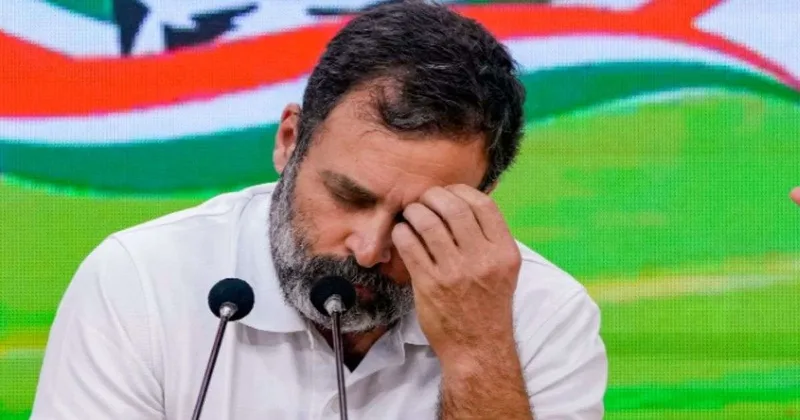
Congress leader Rahul Gandhi has been vocal in attacking the Centre over issues ranging from paper leaks to unemployment and governance. Yet, despite Sonam Wangchuk’s prolonged hunger strike at Delhi’s Jantar Mantar, Rahul Gandhi did not visit the protest site or join the agitation, prompting questions over the Congress’s political strategy.
Instead of participating in the demonstration, Rahul launched the party’s ‘Chhatron Ki Goonj’ campaign, positioning Congress as the principal political voice on issues affecting students. The move came even as Wangchuk’s protest gained national attention and opposition leaders from several parties extended support.
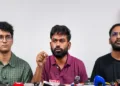
According to reports citing party sources, Congress consciously avoided allowing the Wangchuk agitation to become the focal point of its political campaign. The party reportedly feared that directly joining the protest could elevate the Campaign for Judicial Accountability and Reforms (CJP) and its founder, Abhijeet Dipke, as the primary face of the movement rather than the Congress.
Sources quoted in media reports also suggested that Rahul Gandhi told party colleagues he respected Wangchuk and his demands but believed the political leadership of the students’ movement should remain with the Congress instead of shifting to Wangchuk or Dipke.
Congress’s Anna Hazare Lesson
The reported strategy reflects a lesson Congress says it learned from the 2011 Anna Hazare anti-corruption movement. During the UPA government, the party’s engagement with the agitation was followed by the emergence of the Aam Aadmi Party, which later became a major political rival in Delhi and Punjab.
Reports say Congress appears keen to avoid a repeat of that experience by supporting issues raised by protesters while ensuring that independent movements do not overshadow the party’s own political campaigns.
Rahul Gandhi’s decision not to visit Jantar Mantar has nevertheless fuelled several political questions:
If Congress supported Wangchuk’s demands, why did its top leadership stay away from the protest site?
Why did Rahul Gandhi not publicly meet Wangchuk during his hunger strike?
Why did Congress not extend organisational support to the CJP-led agitation while backing the underlying issues?
Was the decision driven by political caution rather than solidarity with the protest?
The Congress has not officially stated that it stayed away because of concerns over CJP’s growing influence. However, reports citing party sources indicate that avoiding another “Anna Hazare moment” was an important strategic consideration.