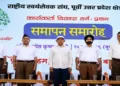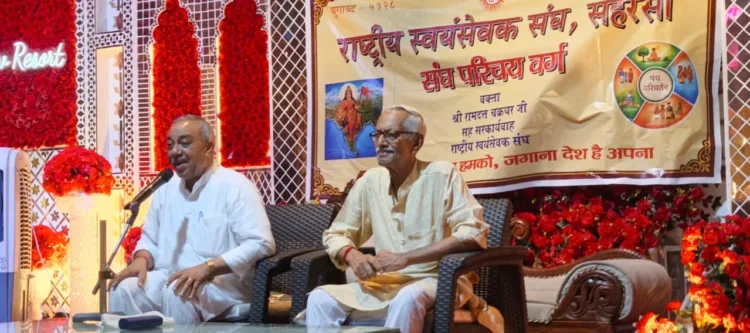
Nation-building, environmental awareness, and the constructive responsibilities of the Sangh in society, said Rashtriya Swayamsevak Sangh (RSS) Sah Sarkaryavah Ramdatt Chakradhar while addressing a youth and students at a seminar on ‘Environmental Protection and the Role of the Rashtriya Swayamsevak Sangh’ organised at the local Dev Resort in Saharsa.
Explaining the scientific and practical importance of the environment, the Sah Sarkaryavah said that just as water and food are essential for human existence, pure air (oxygen) is equally necessary. Recalling the global COVID-19 pandemic, he said that during that crisis humanity experienced the true importance of oxygen very closely. The only effective way to protect future generations from such crises is large-scale tree plantation.
Highlighting the inseparable relationship between Bharatiya culture and nature, Ramdatt Chakradhar said that Sanatan Dharma has, for centuries, regarded nature as divine and prescribed its protection.
He called upon the youth and student community of the country to take a special pledge. He said that every young person should fulfil his or her responsibility towards environmental protection by planting at least ten saplings every year, and should not merely plant them but also take responsibility for their care until they grow into trees.
During the seminar, he prominently presented before the students the idea of the Sangh’s Panch Parivartan, describing it as a new guiding mantra for transforming society and strengthening the nation.
Making the youth aware of their national responsibilities, he said that until the spirit of “Nation First” is fully awakened in every citizen, Bharat cannot attain Param Vaibhav (supreme glory). It is through the awakening of civic duties that Bharat can once again be established on the seat of Vishwaguru.
Among those present at the programme were District Sanghchalak Satish Chandra Verma, Prant Sah Pracharak Praveer, Vibhag Pracharak Sumit, Major Dr Gautam Kumar, Gyanu, Ashish Tinku, Randhir Bhagat, Manish Chaupal, Vijay Singh, and Ranjit Das, along with many distinguished citizens, social workers, and a large number of students from the region.