BHUBANESWAR: The traditional Rajaprasad Bije ritual was performed at the Shree Jagannath Temple in Puri on the occasion of Trayodashi Tithi (following the Kshaya of Dwadashi) as part of the centuries-old Anasara tradition. During the sacred ceremony, Daitapati servitors and other temple servitors conveyed the message to Gajapati Maharaja Dibyasingha Deb that Mahaprabhu Jagannath, Mahaprabhu Balabhadra and Devi Subhadra had fully recovered after undergoing the traditional healing process.
The ritual marks an important phase in the annual cycle of Mahaprabhu Jagannath’s rituals, following the Anasara period when the deities remain away from public view after the Snana Yatra. According to tradition, after the deities consume the Dashamula Modaka Mahaaushadhi, prepared by the Raj Vaidya (royal physician), the message of their recovery is formally communicated to the Gajapati Maharaja at Srinaar, the royal palace of Puri.
Traditional Procession Carries Sacred Items to Srinaar
As part of the Rajaprasad Bije ceremony, Patimahapatra, Daitapati and Deulkarana servitors reached Srinaar in a traditional ceremonial procession accompanied by the sound of bells, ceremonial umbrellas and Kahali (traditional wind instruments).
The servitors carried silver plates containing sacred items, including Karala, sandalwood paste and Patadori, which had been ritually associated with the divine body of the deities. Upon their arrival at the royal palace, Gajapati Maharaja Dibyasingha Deb touched and accepted the sacred items as per the age-old tradition before returning them to the servitors.
The ritual was performed under the supervision of the Raj Purohit. Following the completion of the ceremony, other daily rituals were conducted at Srimandir, and offerings of Chakata and Pana Bhoga were made to the deities.
After the completion of the Rajaprasad Bije ritual, the Jaya-Vijaya Gate of the temple was reopened for devotees. In keeping with tradition, servitors were also honoured with ceremonial shawls.
Rath Yatra Represents Universal Devotion, Says Gajapati Maharaja
Speaking to the media after the ritual at Srinaar, Gajapati Maharaja Dibyasingha Deb highlighted the spiritual significance of the Jagannath Rath Yatra, describing it as a unique occasion when devotees get the opportunity to have the darshan of Mahaprabhu Jagannath outside the sanctum of the temple.
He said Mahaprabhu Jagannath is not limited to Odisha or India but is worshipped across the world. The Rath Yatra, he added, has evolved into a global festival of faith where people from different regions, communities and countries participate with devotion and unity.
#WATCH | Puri, Odisha: On the Rath Yatra, Erstwhile King of Puri, Gajapati Maharaja Dibyasingha Deb says, "… Lord Jagannath himself commanded the king that you have to follow my festivals in this manner… Jyeshtha Purnima every year is celebrated as snan yatra… Because he is… pic.twitter.com/1qSadgSMPS
— ANI (@ANI) July 12, 2026
“Mahaprabhu Jagannath himself commanded the king that his festivals should be observed in this manner,” the Gajapati Maharaja said, adding that the Snana Yatra and Rath Yatra provide devotees an opportunity to have direct darshan of the Mahaprabhu without restrictions.
He said the festival brings together people of different nationalities, religions and communities in a shared spirit of devotion and love. However, he emphasised that the rituals must always be conducted according to the traditions and commands associated with Mahaprabhu Jagannath.
Gajapati Maharaja Advises Servitors for Smooth and Safe Rath Yatra
With preparations underway for the upcoming Rath Yatra, the Gajapati Maharaja placed special emphasis on maintaining discipline and ensuring a smooth experience for devotees.
He advised Daitapati servitors to ensure that the Pahandi procession and chariot rituals are conducted in an organised manner so that devotees can have safe and uninterrupted darshan of the deities.
The Gajapati Maharaja instructed that unnecessary crowding on the chariots should be avoided and that no servitor should stand in front of the deities or between their sacred arms during rituals.
He recalled that excessive presence of servitors on the chariots had caused difficulties during chariot pulling in the previous year. To prevent a repeat of such situations, necessary measures have been discussed during meetings of the Temple Managing Committee.
He also expressed satisfaction over the participation of temple administration officials and police personnel along with servitors during the Rajaprasad Bije programme, saying that better coordination among all stakeholders would help ensure the successful conduct of the Rath Yatra.
Rath Pulling Can Continue After Sunset if Required: Gajapati Maharaja
The Gajapati Maharaja said that if required, the pulling of chariots can continue even after sunset with the use of traditional torchlights while maintaining religious customs and practices.
He said the priority is to ensure the safety of devotees and the smooth completion of the festival. Coordination between servitors, temple authorities, police and administration will play a crucial role in managing the massive gathering during the festival.
Rath Yatra Preparations Enter Final Phase
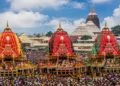
Meanwhile, preparations for the world-famous Jagannath Rath Yatra have entered the final stage, with artisans and servitors working on the construction and decoration of the three majestic chariots of Mahaprabhu Jagannath, Mahaprabhu Balabhadra and Devi Subhadra.
The three chariots are rebuilt every year according to traditional customs and rituals. The Maharana servitors, who are responsible for chariot construction, said the work is being carried out under the supervision of designated temple servitors while strictly following established practices.
The construction process began after the customary rituals performed on Akshaya Tritiya, followed by the preparation and assembly of the three grand chariots.
The Jagannath Rath Yatra 2026 is scheduled to begin on July 16, 2026, with the grand procession moving towards the Gundicha Temple. The nine-day festival will conclude with the Bahuda Yatra (return journey) on July 24, 2026, while the deities are scheduled to return to the main temple on July 27, 2026 after the Niladri Bije ritual.
Gajapati Maharaja Reiterates Stand on ISKCON Rath Yatra Dates
On the issue of Rath Yatra celebrations organised by ISKCON outside the traditional scriptural calendar, Gajapati Maharaja Dibyasingha Deb said that the organisation has been advised several times to conduct the festival according to the prescribed dates mentioned in scriptures.
He said that since the advice was not followed, he no longer participates in ISKCON programmes. He also clarified that he has never granted permission for Rath Yatra celebrations held outside the traditional schedule.
Snana Yatra Lamp Incident Was Not an Omen, Says Gajapati
Addressing concerns over a lamp going out during the Snana Yatra, the Gajapati Maharaja said the incident should not be interpreted as an inauspicious sign.
He described it as a normal occurrence and urged devotees not to engage in unnecessary speculation regarding religious rituals.
On the development work at Gundicha Temple, he said major beautification and restoration efforts are underway after several years. Some remaining work inside and outside the temple premises will be completed after the conclusion of the Niladri Bije ritual.
He expressed confidence that devotees will be able to see Gundicha Temple in a renewed form next year.
The Gajapati Maharaja concluded by appealing for collective cooperation from servitors, administration, police and devotees to ensure that the 2026 Rath Yatra is conducted peacefully, safely and in accordance with the rich traditions of Mahaprabhu Jagannath’s culture.
Odisha Police Conduct Chariot-Pulling Mock
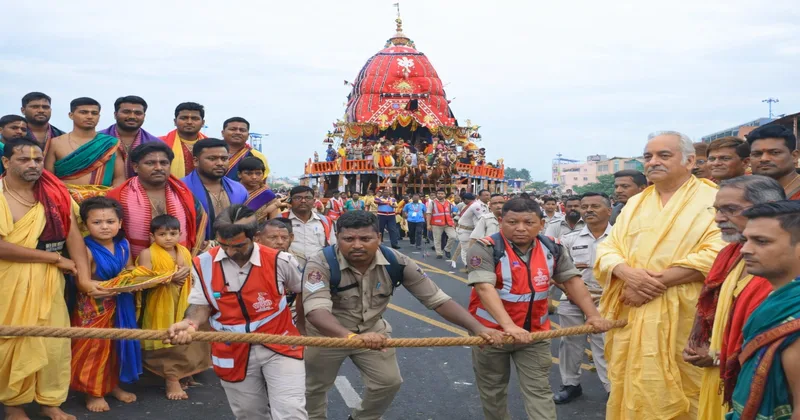
Odisha Police on Monday intensified preparations for the annual festival by conducting a comprehensive chariot-pulling mock drill in Puri and organising emergency response exercises to ensure the safety and security of lakhs of devotees expected to participate in the grand event.
Preparation is the key to safety.
Ahead of #RathYatra2026, Odisha Police conducted a comprehensive mock drill in #Puri to test emergency response, crowd management, and inter-agency coordination. With over 13,000 police personnel deployed, every measure is being taken to ensure a… pic.twitter.com/3KA7p0BRym— Odisha Police (@odisha_police) July 13, 2026
The large-scale mock drill was held at the Reserve Ground in Puri under the direct supervision of Eastern Range Deputy Inspector General (DIG) Pinak Mishra, who is in charge of security inside the Shree Jagannath Temple. Puri Collector Dibyajyoti Parida, Superintendent of Police Prateek Singh, senior police officials, and personnel from the Odisha Police and paramilitary forces also participated in the exercise.
The drill was aimed at testing operational preparedness, strengthening coordination among various agencies and ensuring the smooth and incident-free pulling of the three chariots during the annual festival.
Focus on Crowd Management and Emergency Response
The exercise simulated various scenarios that could arise during the chariot procession, including crowd management, emergency response and coordination between security agencies.
Officials said the objective was to fine-tune response mechanisms and ensure that security personnel are fully prepared to handle the massive influx of pilgrims expected to arrive in Puri for the nine-day festival.
The Rath Yatra attracts millions of devotees from across India and abroad every year, making it one of the country’s largest religious gatherings and requiring extensive security arrangements.
Apart from personnel deployment, authorities have strengthened surveillance, communication systems and emergency response protocols to ensure seamless coordination among police, district administration, temple authorities and other agencies.
Beach Safety Measures Intensified as Tourist Footfall Rises
Alongside security preparations for the temple and chariot procession, authorities have also stepped up safety measures along the Puri sea beach, which witnesses a huge influx of pilgrims and tourists during the Rath Yatra.
On Monday, members of the Puri Lifeguard Association conducted a series of mock rescue drills to improve preparedness for emergencies that may occur due to rough sea conditions or overcrowding on the beach.
The drills included demonstrations of rapid rescue techniques, safe retrieval of persons caught in the sea, administering first aid on the shore and coordinating medical assistance for injured or distressed visitors.
Officials said the exercise was designed to improve response time, strengthen teamwork among lifeguards and ensure swift action during emergencies.
With coordinated efforts involving the Odisha Police, district administration, temple authorities, paramilitary forces, lifeguards and emergency services, the state government aims to ensure that the annual chariot festival is conducted in a peaceful, secure and well-organised manner, allowing millions of devotees to participate safely in one of India’s largest and most revered religious celebrations.