India’s efforts to bridge the digital divide and bring technology-driven services to rural communities have earned international recognition at one of the world’s most prominent digital development forums. The Department of Telecommunications’ (DoT) flagship initiative, Samriddh Gram: Integrated Phygital Service Delivery Model Enabled by BharatNet, has been awarded the World Summit on the Information Society (WSIS) Prize 2026 under the category of Action Line C6, Enabling Environment.
The award was presented during the WSIS Forum 2026 in Geneva, acknowledging India’s innovative approach to leveraging digital public infrastructure and broadband connectivity to transform the lives of rural citizens.
The recognition is particularly significant because the WSIS Prizes are regarded as one of the most respected global platforms for identifying and celebrating projects that use Information and Communication Technologies (ICTs) to advance sustainable development and improve people’s lives.
For India, the award is not merely a recognition of a single project. It represents growing international acknowledgement of the country’s broader Digital India vision and its success in creating scalable digital solutions capable of addressing complex socio-economic challenges.
What are the WSIS Prizes?
The World Summit on the Information Society process is led by the International Telecommunication Union (ITU), the United Nations agency responsible for information and communication technologies.
Every year, the WSIS Prizes recognise innovative projects from around the world that effectively use technology to support sustainable development goals and improve governance, inclusion and public service delivery.
Projects undergo a rigorous evaluation process involving international screening, expert assessment, public voting and final adjudication by a panel of experts.
Winning a WSIS Prize places a project among the most impactful ICT-driven development initiatives globally.
The recognition of Samriddh Gram under Action Line C6 is particularly noteworthy because the category focuses on creating an enabling environment for digital transformation, including infrastructure, policy frameworks and institutional systems that support inclusive digital development.
The award demonstrates that India’s approach to digital governance and rural development is increasingly being viewed as a model with global relevance.
Minister Calls it a Global Recognition of Digital India
Union Minister for Communications and Development of North Eastern Region Jyotiraditya M. Scindia hailed the achievement as another milestone for India on the global stage.
Reacting to the award, Scindia said the recognition reflects the international community’s appreciation of Prime Minister Narendra Modi’s vision of an inclusive Digital India where the benefits of technology reach even the most remote corners of the country.
According to the minister, Samriddh Gram exemplifies how digital connectivity can be transformed into meaningful opportunities for citizens. He noted that BharatNet-powered village-level service centres are enabling access to healthcare, education, banking and livelihood opportunities that were previously difficult to access in many rural areas.
Scindia also highlighted that the award reinforces India’s growing leadership in Digital Public Infrastructure (DPI), a model that has already attracted attention worldwide through initiatives such as Aadhaar, UPI and DigiLocker.
He said the success of Samriddh Gram demonstrates that solutions designed to address India’s unique developmental challenges can also serve as models for other countries seeking to expand digital inclusion.
Understanding the Samriddh Gram Initiative
At its core, Samriddh Gram is a rural transformation programme built upon BharatNet, India’s flagship rural broadband infrastructure project.
The initiative is based on the idea that connectivity alone is not sufficient to transform lives. Internet access must be accompanied by meaningful services that improve quality of life and create economic opportunities.
To achieve this objective, Samriddh Gram has established Samriddhi Kendras, which serve as integrated village-level service centres. These centres combine digital services with physical assistance, creating what officials describe as a “phygital” model of service delivery.
The term phygital refers to the integration of physical and digital systems to ensure that technology remains accessible even for those with limited digital literacy.
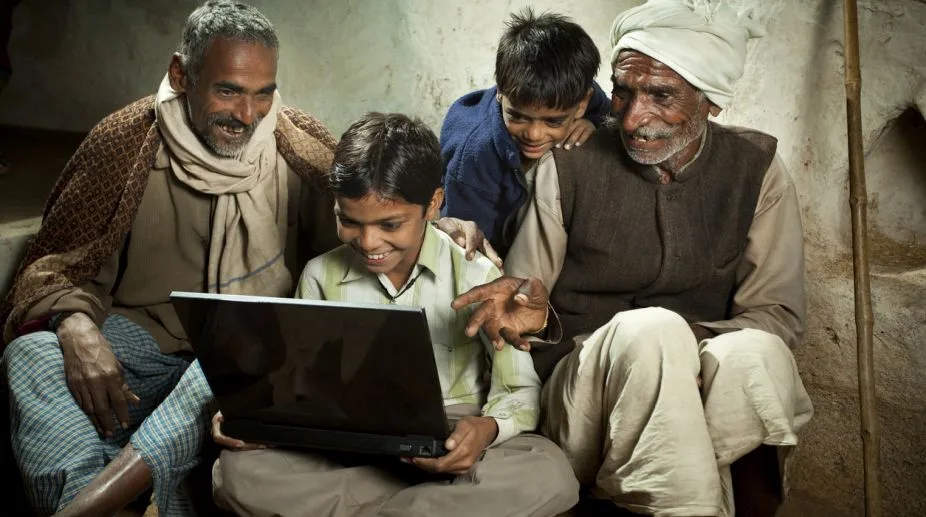
Through these centres, rural residents can access a wide range of services without having to travel to urban centres or navigate complex digital platforms on their own.
The approach seeks to make technology inclusive, accessible and relevant to local needs.
Transforming Healthcare in Villages
Healthcare is one of the most important service areas supported under the Samriddh Gram model.
Access to quality healthcare remains a challenge in many rural regions due to shortages of medical professionals and healthcare infrastructure. Samriddh Gram addresses this gap by leveraging digital technologies to bring healthcare services closer to citizens.
Through telemedicine facilities, villagers can consult doctors remotely without the need to travel long distances. The initiative also incorporates Health ATMs that provide diagnostic services and facilitate basic health screenings.
In addition, access to affordable medicines is supported through linkages with PM Jan Aushadhi Kendras.
The integration of digital health services is helping reduce barriers to healthcare access while improving convenience and affordability for rural communities.
By connecting healthcare professionals with patients through digital platforms, the initiative is contributing to more inclusive healthcare delivery.
Expanding Educational Opportunities
Education forms another major pillar of the Samriddh Gram model.
The initiative seeks to address educational disparities between urban and rural areas by introducing technology-enabled learning solutions.
Smart classrooms equipped with digital learning tools are helping improve educational outcomes for students in villages. These facilities enable access to high-quality educational content and interactive learning experiences.
The project also supports advanced skill development through technologies such as Augmented Reality (AR) and Virtual Reality (VR). These tools create immersive learning environments that can improve understanding and enhance practical training.
By leveraging digital technologies, Samriddh Gram is helping rural students gain access to learning opportunities that were previously available primarily in urban centres.
The initiative is also contributing to workforce development by providing skill-building opportunities aligned with emerging economic requirements.
Supporting Agriculture Through Technology
Agriculture remains the primary livelihood source for millions of rural households. Recognising this reality, Samriddh Gram incorporates a range of digital solutions aimed at improving agricultural productivity and sustainability.
Farmers can access IoT-enabled soil testing services that provide insights into soil health and nutrient requirements. This information enables more informed decision-making and efficient use of agricultural inputs.
The initiative also supports drone-assisted spraying of fertilisers and pesticides, helping farmers adopt modern agricultural practices while reducing labour requirements.
App-based smart irrigation systems are being promoted to improve water management and enhance agricultural efficiency.
These technology-driven interventions are helping farmers increase productivity while reducing operational costs and resource wastage.
The integration of digital tools into agriculture represents a significant step towards modernising rural livelihoods.
Advancing Financial Inclusion
Financial inclusion is another key component of the Samriddh Gram ecosystem.
Village-level centres provide access to banking services through Banking Correspondents, allowing citizens to conduct financial transactions without travelling to distant bank branches.
The initiative also integrates Common Service Centre (CSC) services, enabling residents to access a range of government and financial services through a single platform.
These facilities are particularly important in rural areas where access to formal financial institutions may be limited.
By bringing banking and financial services closer to citizens, Samriddh Gram is helping promote financial inclusion and reduce dependence on informal financial systems.
The initiative also supports digital payments and broader participation in the formal economy.
Creating New Livelihood Opportunities
Beyond public service delivery, Samriddh Gram is helping generate economic opportunities for rural communities.
The initiative provides e-commerce support for local products, enabling artisans, entrepreneurs and producers to access wider markets. By connecting rural producers with digital marketplaces, the project helps create new income streams and strengthen local economies.
The availability of digital infrastructure also encourages entrepreneurship by reducing barriers to market access and business development.
In many villages, improved connectivity is creating opportunities for new service providers, digital enterprises and community-level economic activities.
This economic dimension is a critical component of the programme’s broader objective of rural transformation.
BharatNet: The Foundation of the Initiative
The success of Samriddh Gram is closely linked to BharatNet, the world’s largest rural broadband connectivity programme.
Launched to provide high-speed internet access to rural India, BharatNet has become the backbone of the country’s rural digital infrastructure.
According to the Department of Telecommunications, more than 2.17 lakh Gram Panchayats have been made service-ready and connected through BharatNet.
This extensive connectivity network has created the foundation upon which initiatives such as Samriddh Gram can operate.
The project demonstrates how broadband infrastructure can generate broader socio-economic benefits when combined with local facilitation, service integration and community participation.
Rather than viewing connectivity as an end in itself, Samriddh Gram uses BharatNet as a platform for delivering meaningful services and opportunities.
A Rigorous Global Selection Process
The journey to winning the WSIS Prize involved a highly competitive international selection process.
Samriddh Gram was evaluated through multiple stages, beginning with project submission and international screening. It subsequently advanced through global public voting, where more than 2.2 million votes were cast across all nominated projects worldwide.
The initiative was selected among the top five Champion Projects in its category before undergoing final evaluation by the WSIS Expert Committee.
Among the 18 award categories under WSIS Prizes 2026, only two Indian projects were selected as Champion Projects.
Samriddh Gram went one step further by emerging as the Global Winner in its category, underscoring the strength and impact of the initiative.
Supporting Sustainable Development Goals
Beyond digital inclusion, Samriddh Gram contributes to several United Nations Sustainable Development Goals (SDGs).
The initiative promotes better healthcare access, quality education, financial inclusion, livelihood generation, innovation and reduced inequalities. It also supports digital empowerment and community development in rural areas.
By integrating multiple services through a single platform, the project addresses interconnected developmental challenges rather than treating them as isolated issues.
This holistic approach has been a key factor behind its international recognition.
Global Model for Rural Digital Transformation
The WSIS Prize 2026 recognition positions Samriddh Gram as one of India’s most successful examples of rural digital transformation. More importantly, it demonstrates how Digital Public Infrastructure can be leveraged to create tangible improvements in people’s lives.
The initiative illustrates that rural broadband networks can deliver benefits far beyond internet access when combined with healthcare, education, financial services, agriculture and livelihood support.
As India continues to expand BharatNet and strengthen its digital ecosystem, Samriddh Gram offers a blueprint for how connectivity can be transformed into opportunity, inclusion and prosperity.
The award also signals that India’s approach to Digital Public Infrastructure is gaining global acceptance as a scalable and effective development model. For rural communities across the country, it serves as evidence that digital transformation is no longer confined to cities but is increasingly becoming a driver of growth and empowerment in villages as well.