In 1971, India played the most pivotal role in the liberation of East Pakistan from the genocide of the Pakistan Army. Indian armed forces fought a two-front war with Pakistan on the eastern and western borders with Pakistan from December 3 to December 16, 1971. India handed Pakistan its most humiliating defeat when our forces captured Dhaka and approximately 93,000 Pakistani soldiers surrendered, the largest military surrender since World War II.
But this victory came at a great sacrifice from the Indian armed forces, with 3843 personnel killed in action and 9851 war-wounded. While India returned all the Pakistani Prisoners of War, the fate of 54 Indian POWs held with Pakistan is still unresolved. India officially recognised Bangladesh(erstwhile East Pakistan) as an independent and sovereign nation on 6 December 1971 though it formally achieved its independence on 16 December 1971. Both India and Bangladesh still celebrate Victory Day (Vijay Diwas) on 16 December every year.
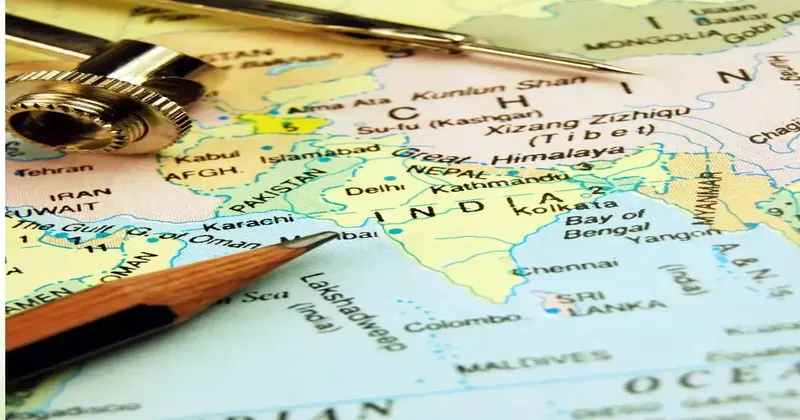
Then there is a country called Seychelles that gained independence from the British colonial rule on June 29, 1976. Though India did not play a direct role in the independence struggle of Seychelles, but India always provided the moral support. India was one of the first nations to recognise Seychelles as an independent sovereign nation upon its independence on 29 June 1976. Seychelles is an archipelago of 115 islands in the Indian Ocean, off East Africa and is located about 3200 kms from India.
It has a population of approximately 135,000 but Seychelles proudly describes itself as a “rock of dependability for India in the Indian Ocean Region”. This island nation celebrated its 50th Independence Day recently on 29 June and invited Indian Prime Minister Narendra Modi as the Guest of Honour. Seychelles also bestowed its highest presidential award the ‘Guardian of the Blue Horizon’ to PM Modi.
Around the same time, Bangladesh PM Tarique Rahman broke the convention and made his first foreign visit to China from June 24 to 26, after coming to power in February this year. Both the countries upgraded their diplomatic relationship to a ‘comprehensive strategic cooperative partnership’. Simply put, Bangladesh is trying to become another cabal of China to India’s east, as is Pakistan to India’s west. The agreements on the Mongla Port and Teesta River Project are clearly aimed at compromising the security of India.
In addition, there is also a proposal to make China-Myanmar-Bangladesh Economic Corridor, similar to the ongoing China-Pakistan Economic Corridor (CPEC). Even more unthinkable has been the restoration of military relations between Bangladesh and Pakistan, after the ouster of Sheikh Hasina regime in August 2024. In the last two years, Bangladesh has become a mirror image of East Pakistan, posing another front on India’s east. Much to the discomfort of India, the atrocities on the Hindu minority in Bangladesh still continues.
The stark difference in India’s diplomatic relations with Bangladesh and Seychelles points to a new pattern in the foreign relations. The different shades of diplomacy force us to revisit our foreign policy towards India’s immediate neighbours. While the diplomatic relations with Pakistan remains strained, our other immediate neighbours also share uneasy relationship with India.
This is strange because India does not follow any expansionist agenda and respects the territorial integrity of its neighbours. Our immediate neighbours like Nepal, Bangladesh, Myanmar and Sri Lanka have fallen prey to the economic debt trap of China. China has used every opportunity to expand its military footprint opposite India under the garb of dual-purpose infrastructure projects. The threat manifestation in our neighbourhood through China’s String of Pearls policy is a stark reality.
India has religiously followed the spirit of its foreign policy towards the immediate neighbours described as ‘Neighbourhood First’. The four contours of this policy are: preserve regional stability, prevent hostile security alignments near its borders, deepen economic cooperation and maintain influence through development projects. India has also been the first responder to all the neighbours for the disaster relief. Though India still pursues this policy sincerely, the immediate neighbours have sought new alignments, particularly with China.
This is surprising because India is also being sought as a reliable partner around the globe, as evident from the tour of PM Modi to Indonesia, Australia and New Zealand. In my opinion, a time has come to recalibrate India’s approach towards its immediate neighbours. India’s friendly foreign policy has been taken for granted by its immediate neighbours. India does not believe in coercion but it has to balance hard national security interests with the emerging geopolitical realities in our neighbourhood. The response of Iran towards its neighbours in the ongoing West Asia conflict is an important lesson in safeguarding the national security interests.