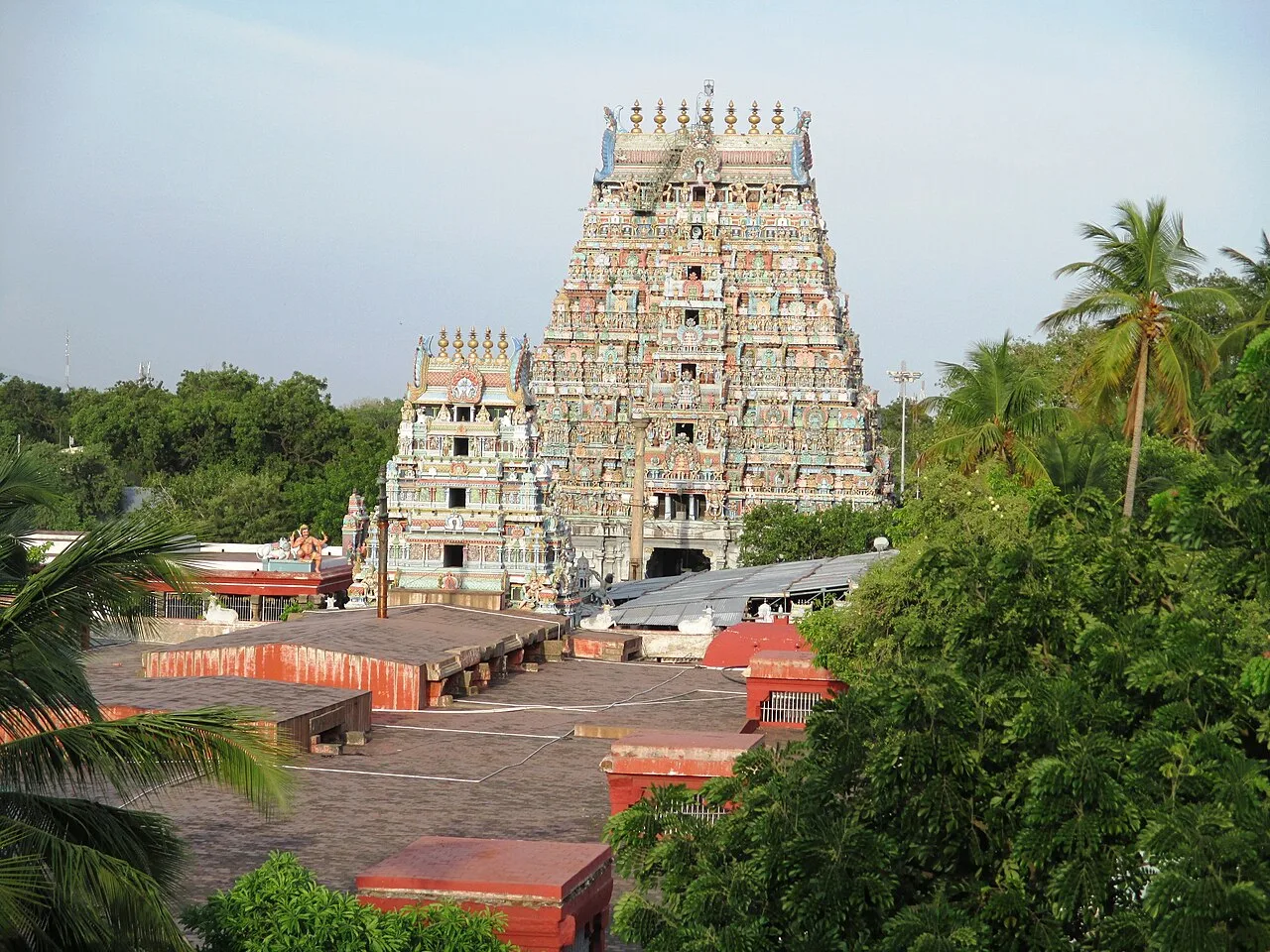
Temple activist T.R. Ramesh has strongly criticised the TVK government led by Chief Minister C. Joseph Vijay, alleging that the HR&CE Department is handing over 3,085 acres of land belonging to four temples in and around Karur, valued at over ₹25,000 crore, to encroachers. He condemned the move, calling it a serious threat to temple properties and demanding immediate intervention to protect the lands.
Taking to his social media handle X, Ramesh said: “Major act of treachery against temples by the TVK Government after coming to power. 3,085 acres of land belonging to four temples and worth more than ₹25,000 crore in and around Karur are being handed over to the encroachers by the @tnhrcedept. Shameless act of betraying Hindu temples by TVK. This atrocity was not carried out even by the DMK. @CMOTamilnadu @RameshOffcl.”
Major Act of treachery against Temples by the TVK Government after coming to power.
3085 acres of lands belonging to 4 temples and worth more than ₹25,000 Crores in and around Karur are being handed over to the encroachers by the @tnhrcedept
Shameless ACT of betraying… pic.twitter.com/WnS6TouuqB
— trramesh (@trramesh) July 10, 2026
The Opposition has criticised the TVK government and Chief Minister Joseph Vijay for allegedly aiding encroachers. The controversy centres on the HR&CE Department’s order lifting the registration ban on 3,085 acres of land across four major temples, sparking sharp backlash.
Tamil Nadu BJP president Nainar Nagendran accused the government of assisting land mafias by revoking registration bans on properties belonging to the Pugazhimalai Subramaniya Swamy Temple and the Kalyana Pasupatheeswarar Temple in Karur. He condemned the move as an “unprecedented betrayal” committed under a spiritual facade.
Ramesh has tagged the government communication from T.G. Vinay, Commissioner, HR&CE, to the Joint Commissioner, HR&CE, Tiruppur, vide Letter No. C.No. 2920545/2026/M2, dated 09-07-2026. The communication states that under the Tamil Nadu Minor Inams (Abolition and Conversion into Ryotwari) Act, 1963, applications were submitted in the names of temples, but later pattas were issued to private individuals for lands granted under the Ryotwari settlement. The HR&CE Assistant Commissioner and Executive Officers had written to Sub-Registrars to prohibit the registration of all such lands under the Prohibitory Module. The communication further states that the embargo has now been revoked.
It is stated that nearly 3,360 patta holders are involved, covering 3,064.65 acres of land belonging to the Pugazhimalai Balasubramaniya Swamy Temple, Karur Kalyana Pasupatheeswarar Temple, Mariamman Temple and Magudeswarar Temple.
Nainar Nagendran publicly condemned the ruling TVK government, citing concerns over the HR&CE Department’s move to lift registration restrictions on 3,085 acres of land belonging to these temples, allegedly paving the way for encroachers. He said the lifting of the embargo has become the subject of strong objections from the BJP and devotees.
Nainar Nagendran said: “A day before the Chief Minister visited Karur to hand over appointment orders to the families of stampede victims, based on the recommendations of the District Collector, the Joint Commissioner of HR&CE issued an order lifting the embargo. On the same day (July 9), the Commissioner, at lightning speed, issued the final orders. How is it possible for three different government departments to process files with such speed? What is the background behind this move? Why is the government so keen on handing over temple lands to private persons who are encroachers? It should show the same speed in implementing welfare measures for the people and addressing the needs of the poor.”
Ram Ravikumar, one of the petitioners in the Thiruparankundram temple Deepam issue and president of Hindu Tamizhar Katchi, said: “The announcement to hand over temple lands to encroachers poses a threat to the safety and protection of temple properties in Tamil Nadu. These lands relate to properties categorised under the Minor Inams (Abolition and Conversion into Ryotwari) Act, 1963, under Sections 8(2)(i)(a) and 8(2)(i)(b). These provisions are purely for Ryotwari patta purposes. A patta is only a revenue administration document; it is not a document granting ownership. This legal position has been upheld by courts. The Supreme Court and various High Courts have consistently held that Patta, Chitta and Adangal (Pahani), which are official land records maintained by the Revenue Department, do not establish ownership of land. The authority to determine ownership in disputed cases rests with the civil courts.”
Explaining further, Ravikumar said: “The Madras High Court has repeatedly held that it is the duty of the HR&CE Department to protect temple properties and free them from encroachments and illegal transactions. The department is the custodian of temple properties and must not alienate them in any manner.”
He further said: “No civil court has passed any order determining title or ownership. Removing the embargo amounts to the fence eating the crops. The purpose of the HR&CE Act, 1959, is to protect temple properties. Therefore, no action should go against the spirit of the Act. Such actions will be viewed as a betrayal of the faith of devotees and of the deity. It is also against Articles 25 and 26 of the Constitution of India. Under Article 300A of the Constitution, ownership disputes must be resolved through due legal process. Before ownership claims are settled, the government cannot, through administrative orders, lift embargoes. Such decisions raise several questions. We urge the TVK government to revoke these orders immediately. Every parcel of land must be subjected to legal scrutiny as per the rules. Cases relating to temple lands should be pursued before the civil courts, and until they are decided, registration, transfer and sale of temple properties should not be permitted. The TVK government should clarify the basis on which these orders have been issued.”
Stressing his point, Ravikumar said: “Temple properties are not merely entries in temple records; they are endowments meant for generations. They cannot be allowed to pass into private hands through an administrative order. If the government fails to withdraw this order, we will move the courts and launch democratic protests, which are our dharmic rights.”
The lifting of the registration ban on over 3,000 pattas (land titles) covering more than 3,000 acres of temple-owned land in Karur district is being viewed by many as an electoral manoeuvre rather than a purely administrative decision.
Critics say easing restrictions on these properties provides significant relief to influential encroachers and landholders who wield substantial voting power in the region, instead of prioritising the recovery of temple lands.
HR&CE Minister Ramesh has stated that strict action will be taken against anyone involved in encroaching upon temple lands, as well as those who support or assist such encroachments, without any favouritism.