Few industries in India combine heritage and innovation as seamlessly as the toy sector. Rooted in traditions that date back nearly 5,000 years, India’s toy-making legacy stretches from the ancient cities of the Indus Valley Civilisation to modern manufacturing facilities producing toys for global markets.
Archaeological excavations at Harappa and Mohenjo-Daro have revealed clay carts, animal figurines, wheeled toys and handcrafted play objects that demonstrate the ingenuity of ancient Indian artisans. These discoveries suggest that toys were not merely objects of entertainment but also reflected social life, creativity and craftsmanship in early Indian civilisation.
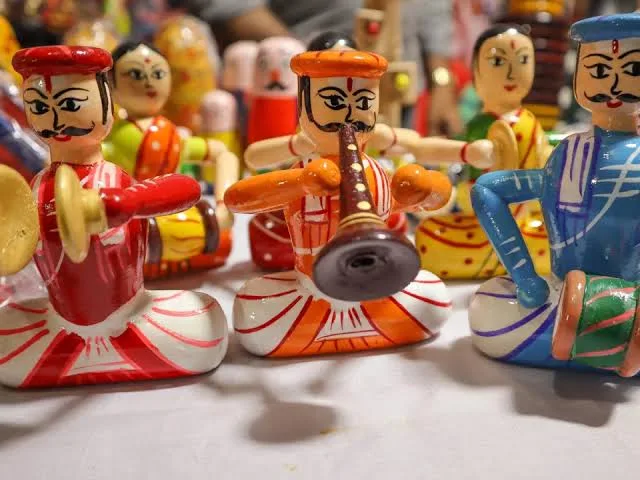
Over centuries, toy-making evolved into a vibrant cottage industry spread across different regions of the country. Wooden toys from Karnataka, leather toys from Madhya Pradesh, dolls inspired by epics such as the Ramayana and Mahabharata, and handcrafted figurines from Tamil Nadu became symbols of India’s rich artistic traditions.
Today, that centuries-old heritage is being revitalised through technology, innovation, policy support and global market integration, giving rise to a new growth story for India’s toy industry.
For decades, India’s toy market remained heavily dependent on imports, particularly low-cost products from East Asia. Domestic manufacturers often struggled to compete due to fragmented production, limited scale, lack of standardisation and inadequate global market access.
Over the last few years, however, the sector has witnessed a dramatic transformation.
Government initiatives focused on promoting domestic manufacturing, strengthening quality standards, supporting traditional artisans and encouraging innovation have significantly altered the industry landscape.
As a result, India is increasingly being viewed not merely as a large consumer market for toys but as a potential global manufacturing hub capable of supplying quality products to international markets.
The transformation aligns closely with the broader vision of building a self-reliant manufacturing ecosystem under the Atmanirbhar Bharat initiative and increasing India’s share in global value chains.
Rising domestic demand fuels growth
One of the strongest drivers of growth in the toy industry is India’s expanding domestic market.
India possesses one of the world’s youngest populations, creating sustained demand for toys, educational products and recreational learning tools. Rising household incomes, rapid urbanisation and increased spending on child development have further expanded the market.
Parents today are increasingly viewing toys as educational aids rather than merely recreational products. This shift has led to growing demand for products that encourage creativity, analytical thinking and skill development.
Particularly notable is the rising popularity of STEM-based toys that focus on Science, Technology, Engineering and Mathematics. These products help children develop problem-solving abilities, logical reasoning and technical skills at an early age.
The demand for educational toys has grown significantly alongside increased awareness about experiential learning and cognitive development.
In addition, changing consumer preferences have created opportunities for innovative products, licensed character toys, activity kits, puzzles, robotics kits and interactive learning systems.
Technology reshaping the toy landscape
Technology is becoming a defining feature of the modern toy industry.
Manufacturers are increasingly investing in smart toys that incorporate advanced technologies such as Artificial Intelligence (AI), Augmented Reality (AR) and Virtual Reality (VR).
These technologies enable interactive experiences that combine learning with entertainment, creating products that appeal to digitally connected children.
Smart toys can respond to voice commands, adapt to learning patterns and provide personalised educational experiences. Augmented reality features allow physical toys to interact with digital environments, enhancing engagement and learning outcomes.
The growing integration of technology is opening new avenues for Indian manufacturers to compete in premium segments of the global toy market.
At the same time, the emergence of India’s electronics manufacturing ecosystem is helping toy companies access components, design capabilities and technological expertise domestically.
National action plan for toys
A major catalyst behind the sector’s recent growth has been the National Action Plan for Toys (NAPT), launched by the Government of India in 2020.
The initiative was designed to transform India into a global toy manufacturing destination while promoting toys rooted in Indian culture, heritage and values.
The plan encourages the development of toys inspired by Indian history, folklore, science, traditional knowledge systems and educational themes.
Beyond cultural promotion, the policy focuses on strengthening indigenous manufacturing, supporting toy clusters, improving quality standards, encouraging innovation and increasing exports.
The initiative brought together multiple ministries, state governments, industry associations, educational institutions and startups to create an integrated ecosystem for toy manufacturing and innovation.
Industry observers regard NAPT as one of the most comprehensive interventions undertaken for the toy qsector in recent decades.
One of the most significant reforms introduced under the policy framework was the implementation of the Quality Control Order (QCO) for toys.
The order made Bureau of Indian Standards (BIS) certification mandatory for both domestic and imported toys.
The move was aimed at ensuring safety, quality and reliability while protecting consumers from substandard products.
According to official data, BIS had granted 1,786 licences to domestic manufacturers and 56 licences to foreign manufacturers under Indian toy safety standards as of May 2026.
Mandatory certification has helped improve product quality across the industry and enhanced confidence among consumers and international buyers.
Importantly, the policy provides exemptions for registered artisans and authorised users of Geographical Indication (GI)-tagged products, ensuring that traditional toy-making communities are not burdened by compliance requirements designed primarily for industrial-scale production.
This balanced approach has allowed traditional craftsmanship and modern manufacturing to coexist and thrive.
Tariff reforms encourage domestic manufacturing
Trade policy interventions have also played an important role in strengthening domestic production.
Customs duties on imported toys were increased from 20 Percent to 60 Percent in 2020 and subsequently raised to 70 Percent in 2023.
Additionally, customs duties on components used in electronic toys were revised to 20 Percent in the Union Budget for 2025-26.
These measures significantly reduced the pricing advantage previously enjoyed by imported products and encouraged greater investment in local manufacturing.
The higher tariff regime created opportunities for Indian manufacturers to expand capacity, improve product quality and compete more effectively in the domestic market.
The policy shift also encouraged multinational companies and domestic firms to explore local sourcing and production options.
The impact of these reforms is increasingly visible in India’s export performance.
According to official figures, toy exports across major categories, including HSN codes 9503, 9504 and 9505, rose from US$152.7 million in 2017-18 to US$384.7 million in 2025-26.
This represents growth of more than 151.9 Percent within eight years.
The increase reflects growing international acceptance of Indian-made toys and demonstrates the sector’s improving competitiveness.
Exports of electronic and non-electronic toys nearly tripled during the period, rising from US$77.35 million to US$200.89 million.
The United States emerged as the largest destination for Indian toy exports, highlighting the sector’s ability to meet quality and safety requirements in one of the world’s most demanding consumer markets.
Other major export destinations include the United Kingdom, Poland, the Netherlands and Germany.
The diversification of export markets has reduced dependence on any single region and strengthened the industry’s resilience.
Growth across multiple product segments
Export growth has not been limited to traditional toy categories.
Video game consoles and related products recorded significant expansion, with exports increasing from US$15.68 million in 2017-18 to US$46.75 million in 2025-26.
Similarly, exports of festive and entertainment articles increased from US$59.69 million to US$137.03 million during the same period.
The broad-based growth across categories suggests that Indian manufacturers are expanding beyond conventional toys and entering higher-value segments.
This diversification is helping create a more robust and competitive industry structure.
Perhaps the most striking indicator of the sector’s transformation is the dramatic shift in India’s trade balance.
Imports of traditional and educational toys declined by 66 Percent during the period, reflecting the success of policies aimed at encouraging domestic manufacturing.
As a result, India recorded a trade surplus of US$152 million in 2025-26 across major toy categories.
This marks a remarkable turnaround from the trade deficit of US$213.01 million recorded in 2017-18.
The shift from net importer to net exporter highlights the growing strength of India’s manufacturing ecosystem and its ability to compete internationally.
Employment generation and economic impact
The toy industry’s contribution extends beyond exports and trade performance.
The sector is increasingly emerging as an important source of employment, entrepreneurship and livelihood generation.
Employment in the Games and Toys sector under NIC Code 324 more than doubled from 8,685 workers in 2018-19 to 17,693 workers in 2023-24.
The expansion reflects growing manufacturing activity, increasing investment and the emergence of new enterprises.
The industry also supports thousands of artisans, self-help groups, micro-enterprises and small manufacturers across rural and semi-urban India.
For many traditional toy-making communities, renewed market demand has created fresh economic opportunities while helping preserve cultural heritage.
Recognising that future competitiveness depends on innovation, the government has launched several initiatives to nurture design and product development capabilities.
One of the most prominent initiatives is Toycathon, launched in 2021.
The programme brings together students, educators, designers, startups and innovators to develop toys inspired by Indian culture, traditions, history and educational needs.
Toycathon has helped create awareness about indigenous toy development and encouraged young innovators to contribute to the sector.
Building on its success, the government organised the first Electronic Toy Hackathon, or e-Toycathon, in 2025.
The initiative focused specifically on electronic toys and sought to strengthen India’s capabilities in emerging technology-driven toy segments.
Strengthening electronic toy manufacturing
To further support innovation in electronic toys, the Ministry of Electronics and Information Technology established the e-Toys Laboratory at the Centre for Development of Advanced Computing (C-DAC) in Noida.
The facility provides specialised training to young engineers and entrepreneurs in electronic toy design, prototype development, testing and product certification.
The laboratory aims to create a pipeline of skilled professionals capable of designing globally competitive electronic toys.
By integrating electronics manufacturing with toy production, India is seeking to move beyond traditional manufacturing and capture opportunities in higher-value segments.
While technology and innovation drive future growth, traditional toy-making remains a crucial pillar of the industry.
The One District One Product (ODOP) initiative has provided significant support to district-specific toy clusters by improving branding, packaging, marketing, technology adoption and export promotion.
Several traditional toys have also received Geographical Indication status, strengthening their market identity and protecting artisanal knowledge.
Notable examples include Channapatna Toys and Dolls from Karnataka, Leather Toys of Indore in Madhya Pradesh, and the Thanjavur Doll of Tamil Nadu.
GI recognition helps preserve unique cultural traditions while creating premium branding opportunities in domestic and international markets.
For artisans, these initiatives provide better market access, improved incomes and greater visibility.
Quality awareness and consumer confidence
Efforts to improve quality standards have also extended beyond certification requirements.
The Bureau of Indian Standards organised initiatives such as Manak Manthan in April 2026 to promote awareness about updated toy safety standards.
These programmes help manufacturers understand compliance requirements and encourage adoption of best practices.
Improved quality standards are increasingly becoming a competitive advantage for Indian products in international markets where safety regulations are stringent.
Policy measures have also sought to improve affordability and stimulate demand.
The reduction in Goods and Services Tax (GST) on toys from 12 Percent to 5 Percent lowered costs for consumers and encouraged wider adoption of educational and developmental toys.
Lower taxation has benefited both consumers and manufacturers by supporting market expansion.
In parallel, India’s expanding network of Free Trade Agreements has opened new export opportunities.
Trade agreements with the UAE, Australia, EFTA countries, New Zealand, Oman and the United Kingdom provide zero-duty market access for Indian toy exports in partner countries.
These agreements enhance the competitiveness of Indian products and strengthen access to high-value international markets.
Districts as export hubs boost local manufacturing
The Districts as Export Hubs initiative is further supporting growth by identifying regions with strong export potential.
More than ten districts have been identified for toy and doll exports, enabling focused interventions to improve infrastructure, logistics, marketing and export readiness.
The initiative helps local industries connect with global supply chains while promoting balanced regional development.
India’s toy industry today stands at the intersection of tradition and technology. What began thousands of years ago with handcrafted clay figurines in the Indus Valley has evolved into a dynamic manufacturing sector increasingly integrated with global markets.
Strong policy support, improved quality standards, rising exports, innovation-driven initiatives, growing domestic demand and enhanced market access are reshaping the industry’s future.
The sector’s transformation from an import-dependent market to a trade-surplus industry demonstrates the effectiveness of coordinated reforms and industry participation.
As India continues to strengthen manufacturing capabilities and expand its global footprint, the toy industry is emerging as a compelling example of how traditional craftsmanship and modern innovation can work together to create sustainable economic growth, generate employment and showcase India’s cultural heritage on the world stage.