India’s handloom and handicraft traditions are among the oldest and most diverse in the world. From the intricate Banarasi silk weaves of Uttar Pradesh and the delicate Pashmina shawls of Kashmir to the tribal metalwork of Dokra artisans and the vibrant folk art traditions of Uttarakhand, the country’s handmade products represent centuries of cultural knowledge, craftsmanship and community identity.
For generations, these crafts have not only preserved India’s cultural heritage but have also provided livelihoods to millions of families, particularly in rural and semi-urban areas. However, despite their artistic value and global appeal, artisans have often struggled with limited market access, dependence on intermediaries, fluctuating incomes and the challenges posed by a rapidly digitising economy.
Recognising these challenges and the need to integrate traditional industries with modern commerce, the Government of India launched Indiahandmade, a dedicated e-commerce platform designed specifically for artisans and weavers. Developed by the Digital India Corporation under the Ministry of Textiles and launched in 2023, the platform seeks to bridge the gap between India’s traditional craft ecosystem and the expanding digital marketplace.
Today, Indiahandmade is emerging as a significant initiative in the government’s broader vision of promoting digital inclusion, strengthening rural livelihoods and building an Atmanirbhar Bharat while ensuring that India’s centuries-old craft traditions remain relevant in the modern economy.
Economic importance of India’s handloom and handicraft sector
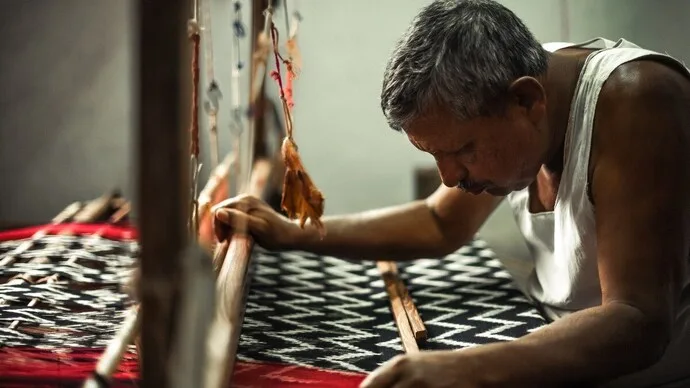
India’s handloom and handicraft sector occupies a unique position in the country’s economy. Unlike large industrial sectors that rely heavily on mechanisation, the handloom and handicraft industry is labour-intensive and deeply rooted in local communities. It provides employment opportunities across villages, small towns and remote regions where alternative livelihood options may be limited.
The sector is one of the largest sources of non-farm rural employment in India and plays an important role in supporting household incomes. According to official estimates, India is home to approximately 64.66 lakh handloom and handicraft artisans and weavers. These artisans are engaged in a wide range of traditional occupations, including weaving, embroidery, pottery, wood carving, metalwork, bamboo craft, textile printing, jewellery making and decorative arts.
One of the most significant features of this sector is the substantial participation of women. As of August 2025, women accounted for 71 Percent of handloom weavers and nearly 64 Percent of the overall artisan population. This makes the handloom and handicraft industry one of the most important sectors for women’s employment and economic empowerment in India.
For many women in rural areas, traditional crafts provide an opportunity to earn income while continuing to work from home or within their local communities. As a result, strengthening the sector contributes not only to economic growth but also to gender inclusion and social empowerment.
Bringing traditional crafts into the digital economy
The rise of e-commerce has transformed the way consumers purchase goods and how businesses reach markets. While large brands and organised retailers have rapidly embraced digital platforms, many traditional artisans remained excluded from these opportunities due to limited digital literacy, technological barriers and a lack of access to online marketplaces.
Indiahandmade was conceived as a solution to this challenge. The platform has been designed to help artisans and weavers directly connect with buyers across the country, eliminating many of the barriers that traditionally limited their market reach.
By creating a dedicated marketplace for handmade products, the platform allows artisans to showcase their work to a wider audience while reducing dependence on middlemen. This direct connection between producers and consumers helps artisans retain a greater share of the value generated by their products and improves opportunities for fair compensation.
The initiative reflects a broader shift in policy thinking, where technology is viewed not as a replacement for traditional industries but as a tool to strengthen and modernise them. Through Indiahandmade, traditional craftsmanship is being integrated into the digital economy without compromising its authenticity or cultural significance.
Marketplace dedicated to India’s handmade heritage
Unlike general e-commerce platforms that primarily focus on mass-produced products, Indiahandmade has been created specifically to celebrate and promote handcrafted goods.
The marketplace hosts a diverse collection of products that reflect the extraordinary range of India’s artistic traditions. Consumers can browse and purchase handmade apparel, home decor products, furnishings, paintings, handcrafted furniture, religious artefacts, stationery items, musical instruments, jewellery, bags, footwear and a variety of lifestyle products.
The platform provides artisans with a dedicated space where craftsmanship, heritage and authenticity are the central focus. This specialised approach not only enhances visibility for artisans but also allows consumers to discover products that may otherwise remain confined to local markets.
By offering a digital storefront to thousands of traditional craftspeople, Indiahandmade is helping preserve skills that have been passed down through generations while creating new economic opportunities for artisan communities.
Promoting Geographical Indication and ODOP products
One of the most distinctive features of Indiahandmade is its emphasis on promoting region-specific products that represent India’s cultural and geographical diversity.
The platform gives special prominence to Geographical Indication (GI)-tagged products. GI tags are granted to products whose quality, reputation or characteristics are closely linked to a specific geographical region. Such products often carry historical significance and reflect unique local knowledge and craftsmanship.
Among the GI-tagged products showcased on the platform are Aipan art from Uttarakhand, pure Pashmina shawls from Kashmir, Dokra decorative products produced by tribal artisans and traditional Mundu garments from Kerala. By providing dedicated visibility to these products, Indiahandmade helps preserve regional identities while enabling artisans to access broader markets.
The platform also supports the government’s One District One Product (ODOP) initiative, which seeks to promote unique products associated with specific districts across India. Through dedicated ODOP sections, consumers can access products such as Tangail sarees, Banarasi silk items, Ikat textiles, Tussar silk sarees, Chanderi silk fabrics and terracotta handicrafts.
The integration of GI-tagged and ODOP products into a national digital marketplace not only enhances their visibility but also contributes to local economic development by expanding market opportunities for traditional producers.
Empowering artisans through Digital inclusion
A key objective of Indiahandmade is to make digital commerce accessible to artisans who may have little or no prior experience with online selling.
Recognising that many traditional craftspeople operate on a small scale and may not possess the resources or technical expertise required to navigate mainstream e-commerce platforms, Indiahandmade offers a simplified onboarding process. The platform provides guidance and support to help artisans create digital storefronts, upload product catalogues and manage online transactions.
One of the most notable features of the platform is its flexible registration framework. Artisans who do not possess GST registration can still join the platform using an Enrolment ID. While such sellers are permitted to conduct transactions only within their home state, the provision significantly lowers entry barriers for small artisans and first-time digital entrepreneurs.
This inclusive approach ensures that the benefits of digital commerce are not restricted to larger enterprises but are also accessible to individual artisans, self-help groups and small producer collectives.
Building trust for buyers and sellers
Trust remains one of the most important factors in online commerce. To encourage consumer confidence and create a reliable marketplace, Indiahandmade has incorporated several buyer-friendly features.
Customers purchasing products through the platform benefit from free shipping, secure payment systems, purchase protection mechanisms and dedicated buyer support services. These features help ensure a safe and convenient shopping experience while encouraging consumers to choose authentic handmade products.
For artisans, the platform provides a trusted environment where they can interact directly with customers and build long-term relationships. By ensuring transparency in transactions and reducing dependence on intermediaries, Indiahandmade creates a more equitable ecosystem for both buyers and sellers.
Preserving heritage through entrepreneurial success stories
The impact of Indiahandmade can also be seen through the growing number of artisan enterprises that have successfully embraced digital commerce while preserving traditional craftsmanship.
Among them is Santarms, which offers a range of handcrafted products including wooden décor items, scented candles, terracotta diyas, marble idols and handloom sarees. The enterprise represents how traditional artisans can leverage digital platforms to reach customers far beyond their local markets.
Another example is Dastkar Craft, which represents the work of more than 500 artisans engaged in producing cane and bamboo products. By blending traditional skills with contemporary designs, the enterprise has created products suited to modern lifestyles while preserving centuries-old craft traditions.
Similarly, Villages Craft focuses on everyday handloom essentials such as cotton towels, gamchas and bedsheets. The enterprise demonstrates how traditional weaving practices can continue to remain commercially viable when supported by modern market access.
These success stories highlight the growing potential of digital commerce to sustain artisan livelihoods while preserving India’s rich cultural heritage.
Supporting Atmanirbhar Bharat through craft-based entrepreneurship
Indiahandmade aligns closely with the vision of Atmanirbhar Bharat, which seeks to strengthen domestic production, promote local industries and create sustainable livelihood opportunities.
The platform not only supports economic self-reliance among artisans but also encourages consumers to purchase locally made products. By promoting indigenous craftsmanship, Indiahandmade contributes to the broader objective of building resilient local economies while reducing dependence on imported goods.
The initiative also strengthens India’s creative economy by supporting micro-entrepreneurs, family-run craft enterprises and community-based production systems. These enterprises often represent traditional knowledge systems that have been preserved over generations and continue to contribute to the country’s cultural and economic diversity.
As India continues its journey towards becoming a digitally empowered society and knowledge economy, initiatives such as Indiahandmade demonstrate how technology can be used to strengthen traditional sectors rather than replace them. The platform represents a unique blend of heritage and innovation, bringing together centuries-old craftsmanship and modern digital tools.
Looking ahead, Indiahandmade plans to onboard more than 60 lakh artisans and weavers, significantly expanding its reach across the country. Such an expansion has the potential to create one of the world’s largest digital ecosystems dedicated to handmade products.
The initiative is expected to generate greater market opportunities, improve artisan incomes, strengthen women’s economic participation and preserve traditional skills for future generations. At a time when global consumers are increasingly seeking authentic, sustainable and handcrafted products, Indiahandmade offers a platform through which Indian artisans can showcase their creativity and craftsmanship to a wider audience.
By weaving tradition into the fabric of the digital economy, Indiahandmade is not merely creating an online marketplace. It is building a bridge between India’s rich cultural heritage and its digital future, ensuring that the stories, skills and traditions of millions of artisans continue to thrive in the decades ahead.