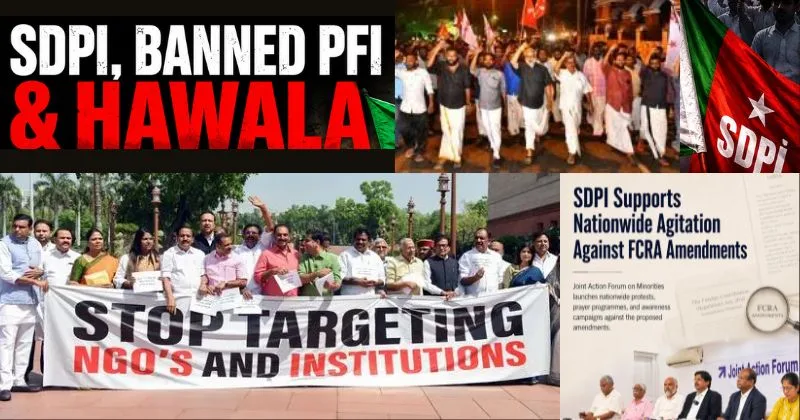
SDPI's Big FCRA Plot Brewing in Keralam: How Radical Muslim Outfit Plans Massive Civil Society Mobilisation Under UDF
What began as opposition to the Centre’s proposed FCRA amendments is fast evolving into a coordinated political campaign in Keralam. With SDPI actively bringing together civil society organisations, minority bodies and advocacy groups, the state has become the epicentre of resistance to the Bill. This is not mere opposition but a calculated plot to mobilise minority civil society networks, religious institutions, and NGOs on a massive scale — with indirect political cover from the Muslim League led Congress’ UDF.
SDPI has emerged as one of the most vocal opponents. The party has thrown its full weight behind the Joint Action Forum on Minorities, participating in press conferences, supporting nationwide protests (including a National Protest Day on July 3, 2026), signature campaigns, and fasting/prayer programs. SDPI leaders have described the amendments as “draconian and unconstitutional,” claiming they target minority rights and civil society organisations.
After the PFI ban, hardcore Islamist radicals and PFI elements have regrouped under the SDPI umbrella. What they fear most now is the FCRA crackdown. For years, these groups allegedly built a vast foreign-funded empire using foreign entities. 2016 demonetisation delivered a major blow to their hawala networks. Now, stricter FCRA rules threaten to completely dry up their primary source of foreign funds — money they are using to fuel radicalisation, jihadi activities, and anti-national agendas.
Behind the loud cries of “minority rights” and “civil society mobilisation” lies a desperate attempt to shield this ecosystem from scrutiny. For these radical elements, FCRA is not just regulation — it is a nightmare that could finally cut off the oxygen of foreign money.
SDPI has been one of the most vocal opponents of the 2026 FCRA amendments, calling them “draconian” and joining JAFM campaigns. This aligns with the fear that stricter asset control, designated authority, and monitoring will hit foreign funding pipelines hard.
The FCRA Trigger: The Union Government’s push for FCRA 2.0 — including stricter real-time monitoring, tighter rules on foreign funding, and provisions to curb misuse of funds by NGOs — has sparked fierce resistance. The Kerala Assembly (currently under UDF) passed a resolution urging the Centre to withdraw key amendments, citing threats to NGO autonomy and minority institutions.
SDPI has emerged as one of the most vocal opponents. The party has thrown its full weight behind the Joint Action Forum on Minorities, participating in press conferences, supporting nationwide protests
Shielding Opaque Networks: SDPI is fiercely opposing the FCRA amendments not for genuine civil society concerns, but to protect organisations and institutions heavily dependent on foreign funding from stricter transparency and accountability.
Fear-Mongering on Assets: The party is aggressively hyping “asset confiscation” fears to create panic, even though the provisions only target misuse of foreign funds — raising suspicions they want to shield properties built with external money from scrutiny.
Playing the Minority Victim Card: By joining the Joint Action Forum on Minorities and labelling the bill “draconian”, SDPI is pushing a victimhood narrative to mobilise Muslims and minorities, turning a transparency reform into an “attack on minorities”.
Self-Serving Resistance: While claiming to protect schools, hospitals, and orphanages, SDPI is actually fighting to avoid tighter compliance, licence renewals, and administrative oversight that could expose irregularities in foreign-funded operations.
Undermining National Security: Under the garb of “civil society rights”, SDPI is mobilising massive resistance against a law meant to prevent foreign funds from threatening India’s sovereignty and public order.
SDPI says that the restrictions on transferring foreign funds and the proposal to reduce the limit on administrative expenses from 50% to 20%, which could affect welfare programmes, healthcare services, education and disaster relief activities.
Leveraging the state’s large network of Christian institutions, charitable trusts, educational societies, and social service organisations, SDPI and its allies are aggressively mobilising through the Joint Action Forum on Minorities (JAFM).
